E-Paper



RRTS may start ops in Delhi by January 2025, trial underway
The RRTS between Delhi and Meerut may start operations in January 2025. Currently, 42km is open, with trains offering advanced amenities.

 Prefer HTon Google


The Regional Rapid Transit System (RRTS) between Delhi and Meerut, which is currently partially open, may begin operations from the Capital as early as January 2025, officials with the National Capital Region Transport Corporation (NCRTC) — the agency executing the project — have said.
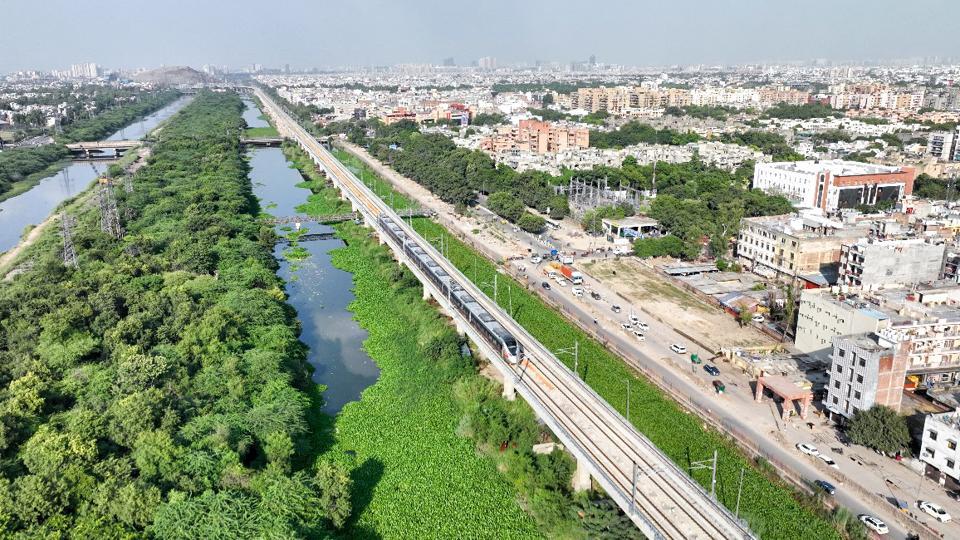
Trains operating on the corridor have been named Namo Bharat, and boast of amenities such as CCTV monitoring, emergency communication facilities, onboard Wi-Fi, and a fire detection system, among others.
At present, only a 42km section of the 82km RRTS corridor is open — all of it in Uttar Pradesh — but officials said the first phase of trials till the New Ashok Nagar station in Delhi are nearly complete, and NCRTC is set to start the process of applying for the certification from Commissioner for Metro Rail Safety (CMRS) — the last step after metro rails are allowed to operate.
“The trial runs of Namo Bharat trains between Sahibabad and New Ashok Nagar are progressing well. The team is working towards operationalising this section by the New Year, and creating seamless integration between RRTS stations, the Delhi Metro, railway stations and ISBTs. We anticipate this section will not only strengthen connectivity across the NCR but also boost ridership significantly,” NCRTC spokesperson Puneet Vats said.
Trial runs for Namo Bharat trains between Sahibabad to Anand Vihar, and then further to New Ashok Nagar started in the first week of October, officials said — about a month ahead of schedule. These trials will gradually be extended to Sarai Kale Khan too.
However, the entire 82km section — stretching one on side till Sarai Kale Khan and the other till Modipuram — will only be ready by around mid-2025, officials said.
Once fully operational, the system — built at a cost of ₹30,000 crore — is expected to cut the travel time between Delhi and Meerut down to an hour, using trains that zip past at an operational speed of 160kmph, and will likely cater to about 800,000 passengers.
Officials said NCRTC is currently conducting evaluations to assess the trains’ integrated performance and their coordination with various subsystems such as tracks, signalling, platform screen doors (PSDs), and overhead power supply systems. Extensive trial runs, including high-speed tests, are planned over the next few months, they said.