
 E-Paper



What Manila asked, Delhi can lead on
This article is authored by Manan S Bhatt, military historian and veteran of the Indian Navy.

 Prefer HTon Google


Fourteen merchant ships were trapped in the Great Bitter Lake when the Suez Canal shut in June 1967. They remained there for eight years. The crews improvised, printed stamps, and even held the Bitter Lake Olympic Games. That story should be read as a reminder. When narrow waterways close, ships stop moving. But crews do not disappear from the problem.
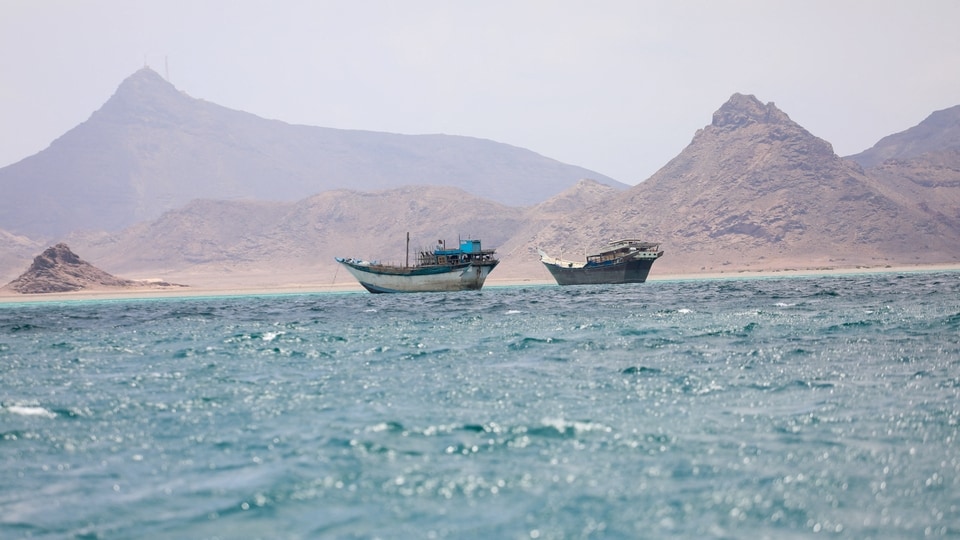
The International Maritime Organization last counted about 6,000 seafarers aboard nearly 500 ships in and around the Gulf on July 23. India has a direct stake in their safety. It supplies 311,936 of the world’s merchant seafarers, second only to the Philippines. Around 23,000 Indians work in these waters. Nine have been killed since the present conflict began in late February. On July 16, the Directorate General of Merchant Shipping barred Indian crews from sailing Hormuz routes.
The disruption is not limited to one chokepoint. Hormuz was effectively closed on March 4 after US and Israeli strikes began under Operation Epic Fury. Bab el-Mandeb closed again on July 20, after the Houthis declared a blockade of Saudi Arabia. Most reopening proposals come with a warship attached. That may be necessary in some situations, but it is not the only available instrument.
History offers a useful caution. The US Navy escorted reflagged Kuwaiti tankers under Operation Earnest Will from July 1987. The ships were largely protected, but the wider Tanker War continued for 14 more months. What ended the attacks was not convoying alone. It was Ayatollah Khomeini’s decision in July 1988 to accept a UN Security Council resolution he had rejected as a “poisoned chalice”. The ceasefire began on August 20. Earnest Will continued for five more weeks.
Closure also has an economic cost. James Feyrer of Dartmouth used the eight-year Suez shutdown as a natural experiment and found that India’s trade-weighted sea distance rose by 30.6%. This time, the cost is visible in Indian kitchens. India imports 60% of the LPG it consumes, and 90% of those imports pass through Hormuz.
International law provides strong principles, but it does not by itself move stranded ships. In 1949, the International Court of Justice held that a State may pass through an international strait without seeking permission. Iran’s demand for transit clearance through a newly-created Persian Gulf Strait Authority fails that test and runs contrary to Article 38 of UNCLOS. Yet the same court also warned against unilateral military action in the Corfu Channel minesweeping case. That is why diplomacy matters.
There was one arrangement this year that worked, even if briefly. Bahrain, Japan, Panama, Singapore and the UAE proposed a safe-corridor framework to the IMO Council. Oman and the IMO opened that corridor on June 24: two temporary routes beside the traffic separation scheme, slots issued by the IMO, no tolls and no naval escort. In three and a half days, 115 ships and about 2,500 seafarers came out. Then a vessel was struck off Oman, and the evacuation stopped.
That corridor now needs diplomatic weight behind its guarantees: a written undertaking from Tehran, a neutral observer such as Oman, and a declared policy that interference with the corridor will be treated as a diplomatic breach, not a naval target.
India is well placed to help shape such an arrangement. It has already shown that talking to Tehran can produce practical results. In March, after external affairs minister S Jaishankar’s conversations with Iran, Indian-flagged carriers including Shivalik and Nanda Devi carried 92,700 tonnes of LPG through the strait to Mundra and Kandla. On March 26, Iran’s foreign minister listed India among “friendly” nations whose vessels would be allowed transit.
That experience gives New Delhi a platform to build on. The next step could be to convert successful case-by-case passage into a broader written understanding covering Indian crews, irrespective of the flag under which they sail. Modern shipping is global: Indian seafarers often serve on foreign-flagged vessels, but their safety remains an Indian concern.
The Philippines has already demonstrated one possible route. In April, Manila negotiated directly with Tehran and obtained safe and unhindered passage for Philippine ships and crews. India has a comparable stake and strong channels into several relevant capitals. It can seek a similar assurance while also supporting the Omani corridor.
India has maritime credibility, relationships across the Gulf, and a direct humanitarian interest in protecting its seafarers. It co-sponsored Resolution 2817 and chairs the Indian Ocean Naval Symposium, where Oman sits in the HADR working group. Few countries are better placed to argue that this is not about taking sides, but about getting civilian crews out of danger.
Two constructive steps are worth pursuing. First, India should seek what Manila obtained: a formal undertaking from Tehran covering Indian crews. Second, India should put its diplomatic weight behind restarting the Omani humanitarian corridor, the only arrangement this year that has actually moved ships and seafarers out of danger.
This is an opportunity for India to use relationships, credibility and quiet diplomacy to solve a practical problem. A formal safe-passage understanding would protect Indian citizens, support global trade, and reinforce India’s role as a responsible maritime power.
(The views expressed are personal)
This article is authored by Manan S Bhatt, military historian and veteran of the Indian Navy.


