
 E-Paper



Transparency can bolster trust in government data
Surveys are critical for public policy as they tell us whether where government programmes are working, and where shortfalls exist which need to be addressed

 Prefer HTon Google


The debate over India’s latest Gross Domestic Product (GDP) numbers highlighted something important: Numbers as consequential as GDP must command public trust. That trust depends on making the methodology and data sources accessible, and allowing independent experts to examine them. The ministry of statistics and programme implementation (MoSPI) deserves credit for putting out discussion papers on the new methodology.
Over the last decade, several publicly funded surveys have been released late, only partly released, or not released at all. These surveys are critical for public policies as they tell us whether people are becoming better off, whether children are healthier, whether young people are finding jobs and where government programmes are working.
Take the National Family Health Survey (NFHS). Fieldwork for NFHS-6 was completed in December 2024, but the national and state fact sheets appeared only in May 2026. More than 20 months after fieldwork ended, the detailed national report is still awaited and the unit-level data are not yet available to researchers. The previous four rounds, NFHS-2 through NFHS-5 (despite Covid disruptions), produced national reports in roughly 10-13 months. If childhood anaemia is worsening, obesity is rising, fertility patterns are changing or Caesarean-section rates are climbing, states need to know in time to adjust programmes and budgets. A health survey released two years after the event is obviously less useful for making decisions today.
The 2017-18 Household Consumer Expenditure Survey, a key source for understanding household spending, living standards and poverty, was never released. The government cited serious data-quality problems and inconsistencies with other sources, while leaked findings reportedly suggested a decline in real rural consumption. If a publicly funded survey has shortcomings, explain them and, wherever possible, release the data with appropriate caveats so that researchers can examine it. Not releasing it at all leaves everyone poorer in information.
The Seventh Economic Census is another example. Fieldwork began in 2019, but the national results were not published because of serious concerns about data quality. Covid no doubt made the exercise more difficult. Even so, when an exercise of this scale fails, there should be some public accounting of what went wrong, what can still be salvaged, and what lessons have been learnt.
Employment data offer a more encouraging contrast. The first Periodic Labour Force Survey (PLFS), covering 2017-18, became controversial over the timing of its release and was eventually published in May 2019. Today, PLFS data come out much more regularly. That shows that long delays are not inevitable.
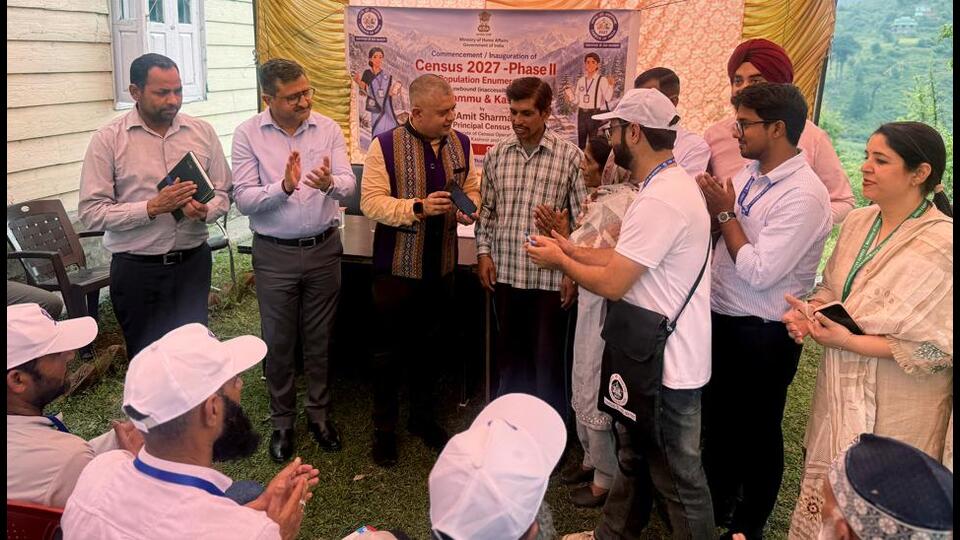
Then there is the largest gap of all: the population census. Covid understandably postponed Census 2021. But the delay continued well beyond the pandemic. Census 2027 is now under way. Until the new numbers become available, much of our planning still depends on a population picture drawn in 2011. A great deal has changed since then. India has urbanised rapidly, people have migrated, fertility has fallen and the population has aged.
Government programmes themselves now generate enormous quantities of useful information, and we are not making enough use of it. PM-JAY is a good example. Its millions of hospital admissions generate a wealth of information on diseases being treated, procedures performed, utilisation, costs and differences across districts and hospitals. These data can help run the scheme better by identifying unusual treatment patterns, detecting possible fraud and abuse, monitoring access and improving benefit-package design. Administrative data can sometimes provide such signals much earlier than periodic surveys. In the early years of PM-JAY, we used these data extensively for analytical work and also shared them with researchers. There is considerable scope today to make much more anonymised and de-identified PM-JAY data routinely available for research and public-policy analysis.
Tuberculosis, immunisation, maternal and child health, non-communicable diseases and other national programmes all generate large amounts of information. Combined with data emerging from the Ayushman Bharat Digital Mission, these could give us a more timely understanding of how India’s health system is functioning. Aggregated and properly anonymised data can be made public, while more detailed datasets can be made available to accredited researchers under controlled conditions.
There is also an opportunity here for AI. Good AI systems need good data. Much of the health data used to develop AI tools today comes from populations very different from India’s. Our disease patterns, languages, clinical practices and health care settings are enormously diverse. Properly anonymised Indian datasets could help AI tools work better for Indian patients.
Tax systems, agriculture programmes, schools, transport networks and welfare schemes generate huge amounts of administrative data every day. Surveys and administrative data are not substitutes. Administrative data tell us what is happening within a programme; surveys tell us what is happening to people, including those whom the programme may never reach. If the two tell different stories, that difference itself deserves examination.
To be fair, things have improved. NHA plans to make PMJAY data available for research soon. Consumption surveys have resumed. Labour-market data are released more often. MoSPI is modernising several statistical series, and Census 2027 is being conducted digitally. But, technology also means that data can now be collected and processed far more quickly. We should thus expect faster dissemination. Publicly funded data should, as far as possible, become public data. Major surveys should have clear release dates. Reasons for any delay should be explained. If there are quality concerns, say so openly. If methodology changes, explain the change and provide comparable historical series wherever feasible. Anonymised unit-level data should be made available to researchers within a reasonable period.
Statistical standards and release calendars should, as far as possible, be insulated from day-to-day political and administrative pressures. Uncomfortable data are often the most useful data a government can receive. They tell us where we need to act. What matters is that people trust the process, and that the vast amount of data India now generates is actually used to improve their lives.
Indu Bhushan was the founding CEO of Ayushman Bharat PM-JAY. The views expressed are personal


