
 E-Paper



In Bihar, women learn to demand health care
Women today are becoming a crucial link between the health system & the people. This could be all the more impactful with greater participation from men

 Prefer HTon Google


In an ideal situation, strong public health systems must ensure women have access to affordable and high-quality health care, preventive services, and timely treatment, reducing their dependence on costly private care. This is particularly critical in Bihar, where out-of-pocket expenditure on maternal health care averages ₹2,067 in public health facilities, compared with a staggering ₹25,600 in private facilities. This is especially concerning given Bihar’s high levels of multidimensional poverty.
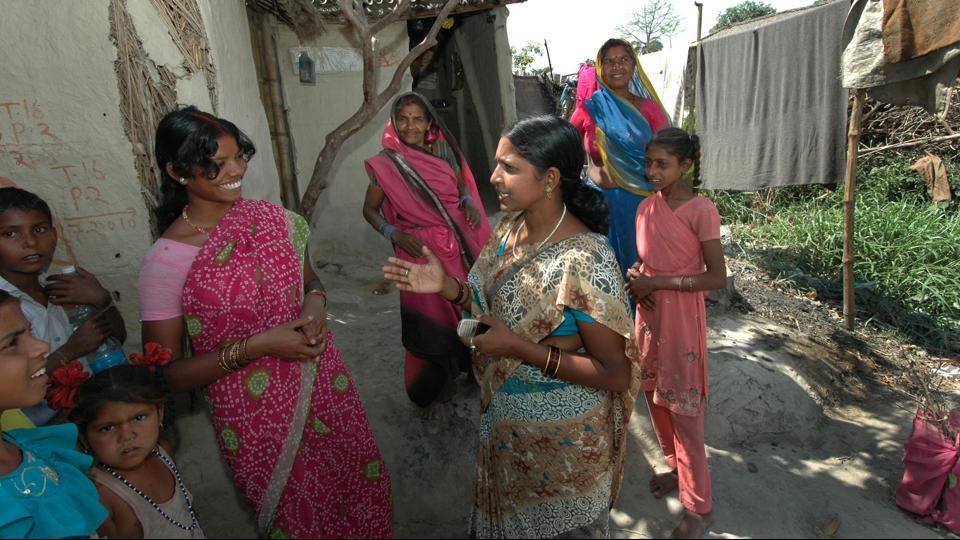
But change is underway in Bihar, where women are at the forefront of seeking health care, no longer content to be passive beneficiaries. The now formidable combination of ASHA, ANM, and anganwadi teams is leading the charge on this.
In a Patna village, an ASHA reminds a pregnant woman to go for her check-up. In Muzaffarpur, another woman talks to families about how family planning is not the responsibility of only women. A woman ward councillor elsewhere speaks to parents about the importance of immunisation. Such interventions are slowly changing how health is perceived and sought by women.
Women today are becoming a crucial link between the health system and the people it serves. This could be all the more impactful with greater participation from men. This was demonstrated by the Patient Stakeholder Platform (PSP), a community platform led by the Community Health Officer (CHO) at the Ayushman Arogya Mandir.
Manoj Kumar Arora, sarpanch of Chanduara in Punpun block of Patna district, says, “The health facility has now come closer than before. People are coming forward for health care themselves. Panchayat members, health workers and other people from the village kept interacting with families. Men were also included in health-related discussions and decisions. Gradually, seeking health services became a habit.”
The network of PSP members now ensures that the process of social mobilisation and peer education has gone beyond ASHAs and anganwadi workers — to Jeevika women, panchayat representatives, teachers, ward members, and others who are part of the community.
Since August 2024, 311 PSPs have become active across 21 districts of Bihar, bringing together 5,610 members. It is this mix of women and men, and the health system and community that gives the PSP its strength.
Gudiya Devi, a Jeevika member and a PSP member in Hasanpura, Siwan, said, “Through Jeevika, I was already working with communities on health and nutrition, but my understanding was limited to a few issues. Joining the PSP exposed me to a much wider range of health issues. Today, I am able to identify health concerns beyond nutrition, discuss them directly with families and connect them with appropriate services.”
In Muzaffarpur, Putul Kumari, an ASHA and PSP member, encouraged Rita, a pregnant woman, to go for regular antenatal check-ups. For Putul, the support was not simply about getting Rita to access ante-natal care (ANC). It was about asking: Did she register early? Is she completing her ANC? Has she been screened for a high-risk pregnancy? If a risk is identified, is she receiving the care she needs?
In Bihar, 99.1% of pregnant women were registered during FY26, while 86.8% received at least four ANC visits. Among identified high-risk pregnancies, 79.3% received appropriate treatment.
For women, the work continues beyond the health centre. It happens in homes, neighbourhoods and community meetings, where issues and concerns can be discussed in familiar surroundings.
The views expressed are personal


