E-Paper



Stubble fires at record high as a ‘river of smoke’ flows over Delhi
Data from heat-sensing satellites accessed by HT show that since November 8, there have been 24,694 fire events, higher than the 16,931 in the same period in 2016 which was previously the highest.

 Prefer HTon Google


This year, the number of farm fires in the second week of November is at a record high, offering worrying signs that the problem might not relent anytime soon.
Data from heat-sensing satellites accessed by HT show that since November 8, there have been 24,694 fire events, higher than the 16,931 in the same period in 2016 which was previously the highest.
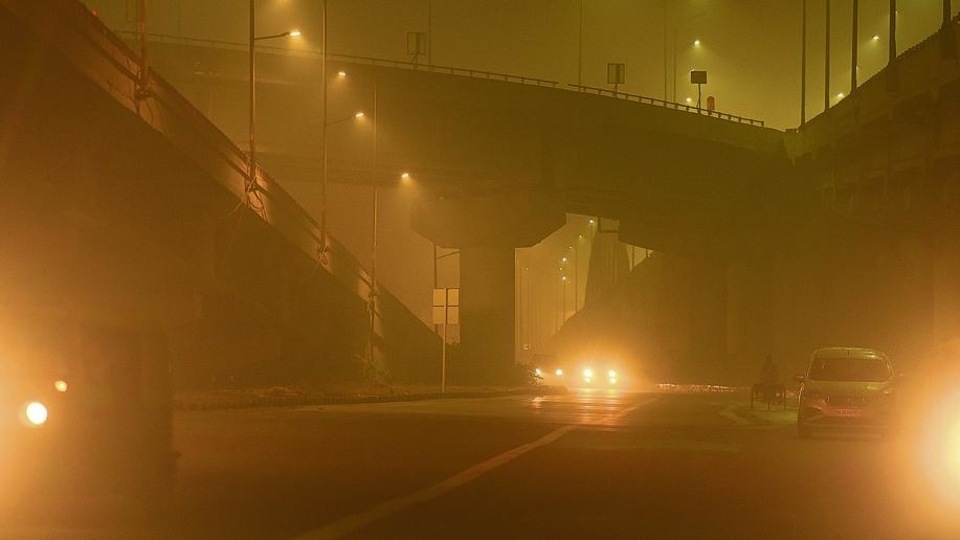
Pawan Gupta, senior scientist, earth sciences (USRA), National Aeronautics and Space Administration (NASA) Marshall Space Flight Centre, said that when seen from satellite images, Delhi currently looks to be engulfed in a “river of smoke”. “You can see the river of smoke over Delhi even in the afternoon hours, when winds tend to pick up and clear up the smoke,” said Gupta.
According to the data accessed by HT from the SUOMI VIIRS C2, FIRMS-NASA resource, there have been 70,655 fire events recorded this year, which has inched closer to the 73,788 recorded in 2020. Last year, however, the farm fires were spread more evenly through the month, possibly helping dispersion, in particularly so since conditions are windier in October.
The highest number of farm fires recorded in any year was in 2016, with 93,211 recorded events.
Union ministry of earth science’, System of Air Quality and Weather Forecasting and Research (SAFAR) said that on Friday, the share of farm fires in the amount of pollutants in Delhi’s air went up from 26% on Thursday to 35%. The analysis indicated that while the fire count will remain nearly the same, stubble smoke share in Delhi could reduce marginally in the next two days.
“Winds at transport level are likely to reduce from November 13 evening leading to less transport of pollutants from upwind region to Delhi,” Safar said.
Experts said late monsoon withdrawal and few intense post-monsoon spells in the month of October shortened the window for farmers in Punjab and Haryana to prepare their fields for the next crop season. They also said stubble burning is likely to continue till November-end and Delhi should brace for further deterioration of air quality.
“Delhi has been experiencing severe air quality levels since November 10, 9 pm. According to Delhi’s Early Warning System, calm winds in the evening and morning hours are responsible for trapping pollutants. While faster surface winds favour pollution dispersion, relatively calmer winds are extremely unfavourable for the dispersion of pollutants,” said Tanushree Ganguly, programme lead, Council on Energy, Environment and Water (CEEW).
“Besides, the last eight days have witnessed a spike in farm fires in nearby states with daily counts reporting in the range of 3000-6000 fires. Additional emission load from farm fires due to northwest winds are further amplifying pollution levels in Delhi. According to forecasts, air quality is likely to remain in very poor and severe conditions for the next two days on account of unfavourable meteorology,” she added.