E-Paper



Yamuna’s ammonia levels affect supply, despite improvement at WTPs
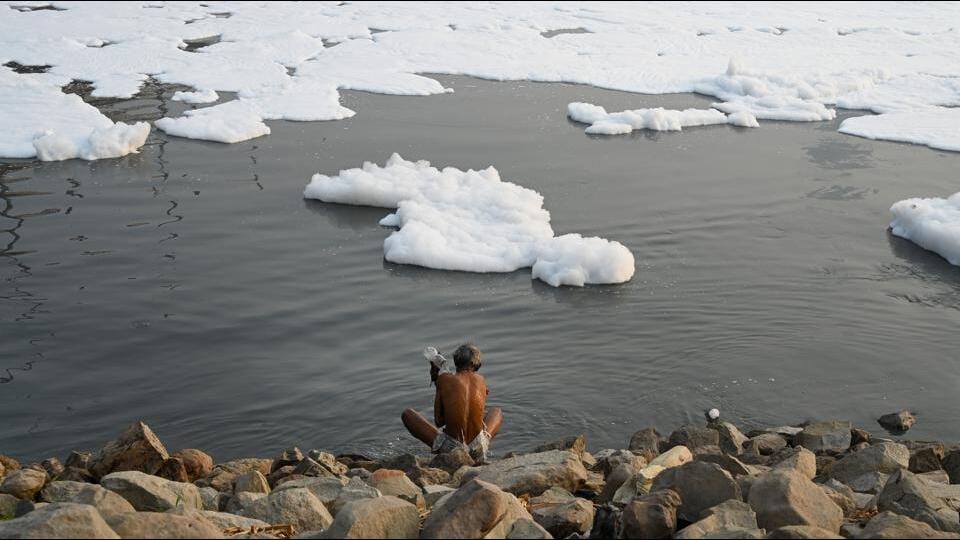
High ammonia levels in the Yamuna are indicative of high industrial load or sewage in its water, officials said

 Prefer HTon Google


The Delhi Jal Board (DJB) on Monday said that the ammonia levels in raw water being drawn from the Yamuna was recorded at 0.9-1 parts per million (ppm) — an improvement on the concentration of 1.5ppm the day before.
With this development, officials said, DJB’s water treatment plants (WTPs) are now operating at optimal capacity. However, the water utility cautioned that the supply of water will likely not stabilise till November 1, a day after the scheduled maintenance work at the Upper Ganga Canal is completed.
High ammonia levels in the Yamuna are indicative of high industrial load or sewage in its water.
DJB’s plants can treat up to 1ppm of ammonia in raw water through chlorine, but chlorination beyond this limit leads to the production of toxic chloramine compounds. Thus, whenever ammonia levels breach the 1ppm mark — as has been the case over the past few days — water production at the treatment plants is hit.
Also read | Delhi water crisis: AAP blames Haryana for ammonia contamination in Yamuna, BJP hits back
In addition, maintenance work at the Upper Ganga Canal — which supplies raw water to the Bhagirathi and Sonia Vihar WTPs — means that these two major plants have to rely on the Yamuna for their intake. But owing to the high ammonia levels in the Yamuna, the production at these two WTPs was down to 30% on Sunday.
“The plants are now operating at optimum capacity. There is still a pollutant load in the raw water, but we are trying to manage the situation,” said a DJB official, on condition of anonymity.
Also read | ‘Instead of making excuses…': Delhi LG's veiled jibe at AAP over Yamuna toxic froth
However, residents at tail-end areas such as Vasant Kunj and Anand Vihar complained that they still face shortages and contamination issues.
Rajesh Panwar, who heads the Vasant Kunj RWA Federation, said, “The pressure was very low, and local reservoirs could not fill properly. We also did not get sufficient tankers. This situation should not take place in the festival season.”
Raghav Rajput from Nirman Vihar said that earlier there was no water supply and now contaminated water was being received. “Our supply this evening was very smelly with contamination of sewage water,” he added.
In response to the complaints, DJB vice chairman and AAP legislator Vinay Mishra attributed the high ammonia levels in the Yamuna to industrial waste from Haryana.
Also read | Delhi BJP's Virendra Sachdeva takes dip in ‘polluted’ Yamuna, lands in hospital
“Each year, from October 12 to 31, the Upper Ganga Canal is closed for maintenance, forcing us to rely on Yamuna water for our treatment plants. However, high ammonia levels have affected our plants’ operations. After inspecting the Sonia Vihar WTP, I found ammonia levels at 0.9 ppm, which is dangerous. I have appealed to chief minister Atishi to request the Haryana government to immediately stop dumping industrial waste into the Yamuna to provide clean water to Delhi residents,” he said.
Mishra also accused the Bharatiya Janata Party (BJP) of “hampering” DJB’s operations over the past year, which he said has impacted water supply and sewer maintenance.
In response, BJP leader and Chandni Chowk MP Praveen Khandelwal accused the AAP of being “highly careless” regarding water supply.
“In the last two years, three DJB vice-chairpersons and two ministers in the water department have been replaced. Everyone engages in showcasing and making statements, but no effort is made towards improving or purifying water supply,” he said.