
 E-Paper



Committee to study gaps in Gurugram’s drainage, make recommendations in seven days
According to directions issued by the commissioner, the committee will study the topography of the city, collect rainfall data from hydrologists, and study the capacity of lateral stormwater drains to come up with remedial measures to solve the issue

 Prefer HTon Google


Gurugram administration has formed a committee to study gaps in the city’s drainage system and suggest remedial measures to stop recurring water logging issues within seven days. The committee was formed on Wednesday by Ramesh Chander Bidhan, commissioner, Gurugram division, in the wake of heavy water logging witnessed twice in the last two months after spells of heavy rain lashed the city.
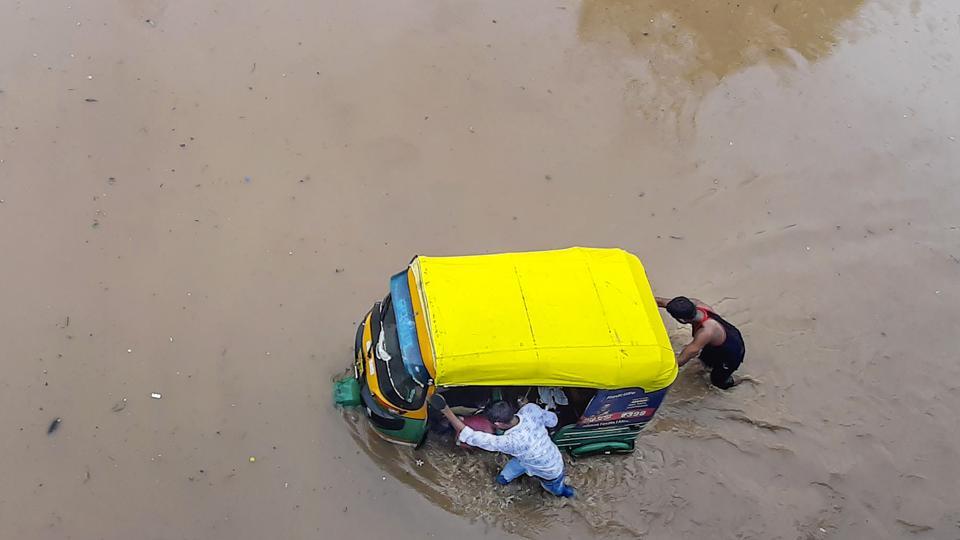
According to directions issued by the commissioner, the committee will study the topography of the city, collect rainfall data from hydrologists, and study the capacity of lateral stormwater drains to come up with remedial measures to solve the issue. Bidhan held a meeting with officials of the Gurugram Development Metropolitan Development Authority (GMDA), the Municipal Corporation of Gurugram (MCG), and the health, irrigation and public health departments regarding the issue.
Dr Shiv Singh Rawat, superintending engineer, Irrigation and Water Resources Department, Haryana, said that the primary mandate of the committee will be to conduct a detailed study of drainage in urban areas and check the topography and capacity of smaller lateral drains. Dr Rawat was among the officials who attended the meeting held by the commissioner. “The catchment areas of these drains will be studied along with bottlenecks and deficiencies to come up with appropriate solutions. “The estimate of maximum rainfall for different areas will be collected from the hydrology department, The committee will then check the capacity of drains based on those estimates. Other related issues will also be studied,” he said.
During the meeting, Bidhan asked officials to identify water logging-prone areas and design a comprehensive plan for managing stormwater during monsoons to prevent annual flooding. “The objective is to identify the shortcomings that led to water logging and remove these bottlenecks so that such situations are avoided in future. The design to resolve this issue must account for the maximum rainfall a particular area can receive,” he said in a statement issued by the district administration.
The city witnessed heavy water logging after it rained on September 25 and several roads inside colonies and sectors became difficult to negotiate. Water logging was also reported from major arterial roads and stretches of the national highway. Despite steps taken by various agencies, water logging after intense rain remains to be an unresolved issue.
According to suggestions put forward by Rawat at the meeting, large underground tanks to conserve rainwater should be constructed in common areas of condominiums and areas like Sector 29, the Tau Devi Lal Stadium in Sector 38 and similar government land. “This practice has been implemented by Israel to conserve rainwater very successfully,” he said.


