
 E-Paper



Covid-19 positivity rate in Gurugram at lowest this month since start of pandemic
The transmission of coronavirus infection continues to decline in the district, with the test positivity rate, the proportion of positives out of the sample tested, reaching its lowest since the outbreak of the pandemic last year. The positivity rate in June, so far, is at 0.7%, after cases peaked in April and May as the second wave hit Gurugram hard.


The transmission of coronavirus infection continues to decline in the district, with the test positivity rate, the proportion of positives out of the sample tested, reaching its lowest since the outbreak of the pandemic last year. The positivity rate in June, so far, is at 0.7%, after cases peaked in April and May as the second wave hit Gurugram hard.
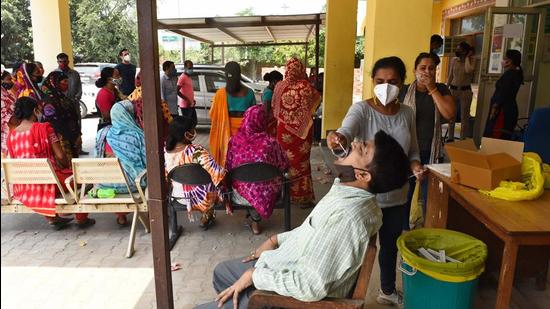
On Tuesday, 14 new infections were confirmed, while 27 recovered from the illness. Currently, 187 cases are active in the district.
Health officials attributed the decline in the cases to lockdown alone, but experts said that multiple factors could be behind the decline in cases. “The decline in cases started in the last week of May that led to a slight plunge in the positivity rate. From 21.2% in April, it declined to 19.17% in May and further to 0.7% in June. It was the impact of the lockdown, which continues to show its effect,” said Dr Jai Prakash, district surveillance officer for Covid-19.
On June 19, the district reported five new cases, the lowest number of cases in a day over the past year. Till Monday, 647 cases were confirmed in June, with 90,078 tests administered.
The case positivity rate peaked to 23.9% last June despite recording only 4,573 new cases as the number of tests done was comparatively lower, 19,072, than those done in subsequent months. The number of tests increased by almost four times in July 2020, with significant increase in subsequent months.
According to the health department data, in January, 1,416 cases were confirmed out of 80, 330 samples tested during the month. The positivity rate was 1.7%. In February, it declined to 1% as only 786 cases were confirmed from 78, 554 samples. The surge started in March with a sudden escalation in new cases. As many as 4,020 cases were confirmed from 114, 572 tests in March and the positivity rate increased to 3.5%.
The second Covid-19 wave reached its peak in April, with almost a 93% increase in the new cases. Over 59, 921 cases were reported, the highest case count in a month since the outbreak of the pandemic. Over 282,364 tests were administered for mass surveillance in large outbreak areas and the positivity rate reached 21.2%.
Across the state, Gurugram reported the maximum number of cases in a day, with the number peaking on April 29, with 5,042 new cases reported. The surge in Covid-19 cases continued in May with 57,012 new infections being confirmed from 297,299 tests.
“From 5,000 to only five cases in almost a month has been possible due to lockdown. The downfall is likely to continue but it is difficult to make a prediction. Going by the trend of the last two Covid-19 waves, it is likely that a third wave can strike after one-and-a-half to two months. But as vaccination has been ongoing and testing numbers are high, the upcoming trend in Covid-19 infection cannot be confirmed,” said Prakash.
Senior epidemiologist Dr Rajesh Kumar, the former head of community medicine department and school of public health, PGIMER-Chandigarh, said, “There are two factors for the ongoing decline. First, every epidemic has a cycle where cases begin to decline on their own. Second, when cases increase, there is a behavioural change in the people along with the restrictions imposed by the government. These two factors work in unison, therefore, it will be incorrect to say that only lockdown led to the sharp decline.”
Explaining that predictions for the next wave will depend upon the variations in the SARS-CoV-2 virus, Kumar, said, “Variants of the coronavirus will define the next wave as the virus has been mutating. It will be responsible for the further transmission of infection in the future, which cannot be predicted currently. It is crucial that people are vaccinated at the earliest to control the next surge.”
Stay updated with all the Breaking News and Latest News from Mumbai. Click here for comprehensive coverage of top Cities including Bengaluru, Delhi, Hyderabad, and more across India along with Stay informed on the latest happenings in World News.


