
 E-Paper



At 48.1°C, Gurugram records highest maximum temperature since Haryana was formed
However, there might be some relief from the blistering heat as light rainfall is expected on Monday and Tuesday in isolated areas of Punjab, Haryana, and the hilly areas

 Prefer HTon Google


Gurugram continued to reel under the extreme heat wave, recording a maximum temperature at 48.1 degrees Celsius (°C) on Sunday, said the India Meteorological Department (IMD).
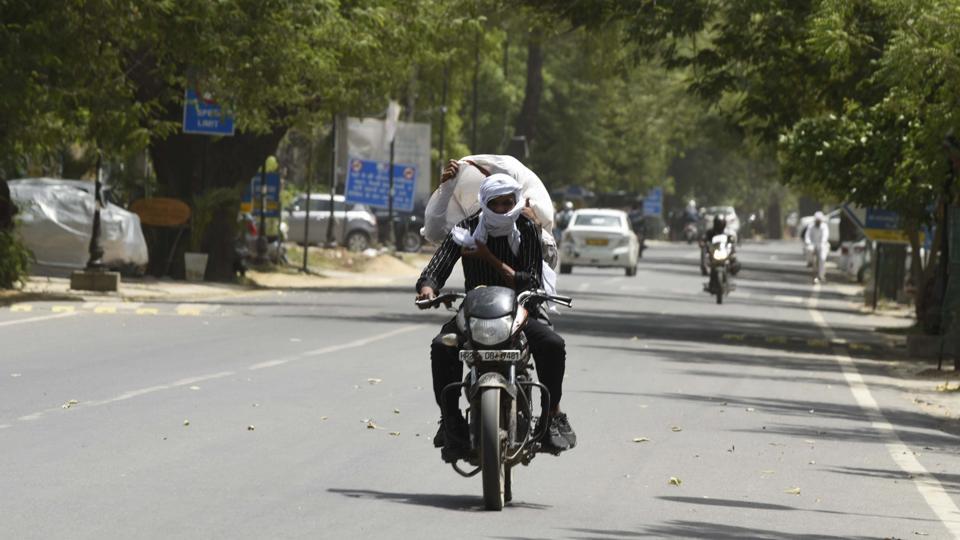
This was the highest recorded temperature since the state of Haryana was formed on November 1, 1966. The city registered a maximum temperature of 49°C on May 10, 1966, according to IMD Chandigarh.
A heatwave is declared when the maximum temperature is over 40°C and 4.5°C above normal. It becomes severe if the temperature is in excess of 6.5°C above normal.
However, there might be some relief from the blistering heat as light rainfall is expected on Monday and Tuesday in isolated areas of Punjab, Haryana, and the hilly areas. Thunderstorms, accompanied with lightning and 30-40 kilometre per hour (kmph) winds have been forecasted, according to the IMD.
According to IMD data, the maximum temperature on Sunday was nine degrees above normal, while the minimum temperature at 25.2°C, was two degrees above normal.
The city recorded a maximum temperature of 46.8°C on Sunday, and a minimum of 27.3°C.
Manmohan Singh, director of IMD Chandigarh, said that the maximum temperatures in Gurugram are likely to come down by two to four degrees in some places, but severe heat conditions will prevail past Wednesday.
“Very high temperatures are being recorded in south Haryana and south Punjab due to warm south westerly winds from Rajasthan. Highest maximum temperature was recorded in Gurugram on Sunday due to this reason, but temperatures will come down a few notches on Monday and Tuesday,” Singh said.
“Apart from climatic conditions, construction of buildings, roads and other infrastructure, along with a lack of trees also contributed to the extreme heat wave,” according to Singh.
City residents, meanwhile, affirmed that they have not witnessed such a harsh summer in decades.
JN Mangla, prominent industrialist, said that summers in Gurugram have always been hot, but the extreme heat witnessed in the last decade is unprecedented.
“We have shrouded the entire city in concrete — there is no greenery and tall buildings block air flow adding to the heat. The ponds and other water bodies exist only on paper, and this has created heat islands across the city,” Mangla said.
People don’t have access to shade and drinking water in many urban areas and there is no urgency to remedy the situation. We need to plant more trees, or the city will suffer more,” he added.


