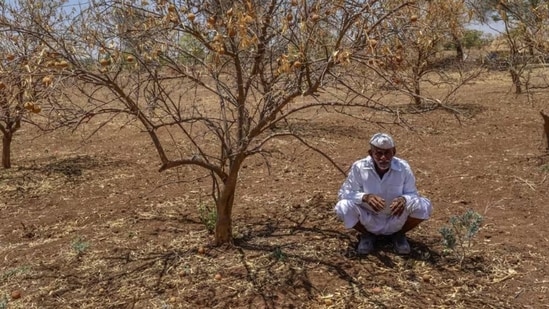
Northwest India, including Punjab and Haryana, has emerged as the country’s heat epicentre, recording the strongest rising trends in daytime heat, humid heat and heatwave severity, according to a 52-year study published in the peer-reviewed International Journal of Climatology.
The study, Evolution of Climate Extremes Over the Indian Subcontinent Using a Revised CEI, analysed weather observations from 1971 to 2022 and examined seven climate hazards. Conducted by scientists from the India Meteorological Department (IMD) and National Centre for Medium Range Weather Forecasting (NCMRWF), it lists Dr M Rajeevan, former secretary, Ministry of Earth Sciences, Government of India, among its co-authors.
Also Read I Joining hands for water security as warming rises
Heatwave severity rises sharply
The study found that northwest India, covering Punjab, Haryana, Rajasthan, Delhi and western Uttar Pradesh, logged the strongest trends in maximum-temperature extremes, humid heat and heatwave severity. “The northwest is the country’s heat epicentre. Daytime heat, humid heat and heatwave severity are all rising faster here than anywhere else in India, and states such as Punjab and Haryana sit squarely within that zone,” said Dr M Rajeevan.
The area experiencing extreme daytime heat also expanded, with 15% to 20% or more of northwest India affected in several years after 2000, compared with a much smaller area earlier. “Heatwave severity is climbing faster over the northwest than in any other region we studied. Intense irrigation across the plain can also sharpen heat stress in years when water is short,” said Thota Mohan, lead author and scientist at NCMRWF.
{{/usCountry}}The area experiencing extreme daytime heat also expanded, with 15% to 20% or more of northwest India affected in several years after 2000, compared with a much smaller area earlier. “Heatwave severity is climbing faster over the northwest than in any other region we studied. Intense irrigation across the plain can also sharpen heat stress in years when water is short,” said Thota Mohan, lead author and scientist at NCMRWF.
{{/usCountry}}The revised India Climate Extremes Index (IndCEI) combines seven indicators covering temperature, rainfall, drought and heat stress. Researchers called for stronger heat action across agriculture, water management, healthcare and infrastructure, along with finer-scale monitoring and operational use of the index. For Punjab and Haryana, the findings highlight heat-management challenges linked to agriculture, irrigation, expanding urban areas and exposure of outdoor workers and vulnerable populations.
Stay updated with all the Breaking News and Latest News from Mumbai. Click here for comprehensive coverage of top Cities including Bengaluru, Delhi, Hyderabad, and more across India along with Stay informed on the latest happenings in World News.
Stay updated with all the Breaking News and Latest News from Mumbai. Click here for comprehensive coverage of top Cities including Bengaluru, Delhi, Hyderabad, and more across India along with Stay informed on the latest happenings in World News.