
 E-Paper



Reporter’s Diary: The night cops kept Gurugram from breaking
From Golf Course Road to Sector 29, officers handled lost phones, dead networks, drunk crowds and stranded revellers to prevent tragedies.

 Prefer HTon Google


By 10pm on New Year’s Eve, it was clear that the night ahead would be brutal for the police as Gurugram spilt beyond celebration into disorder. Roads were gridlocked, pavements became extensions of clubs, and intoxicated crowds filled nearly every stretch, with people laughing too loudly, arguing incoherently, or insisting they were “absolutely fine”. They were not.
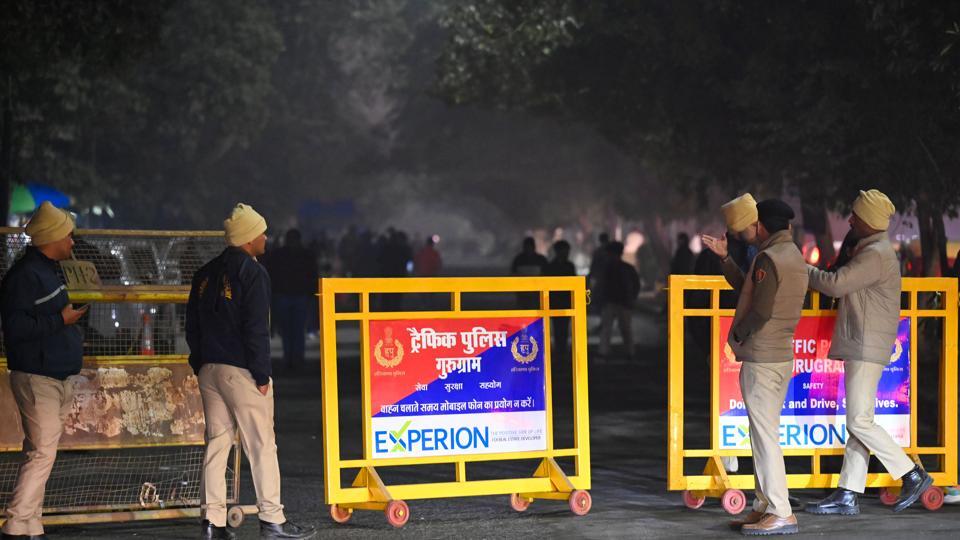
Moving through Golf Course Road, Sector 29, and later Old Delhi Road, the city felt fragile. Phones had died, cab apps collapsed under demand, and people lost friends, directions, and basic coordination. Celebration tipped into vulnerability, shrinking the margin for safety to almost nothing.
Amid this chaos, the police remained calm despite being outnumbered and overstretched. Managing the night was not about challans or enforcement, but crisis response. At one checkpoint, a constable quietly took the keys from a man who could barely stand. As the man protested and pleaded, the officer ignored the noise and began calling contacts from the man’s phone. Several calls went unanswered before someone finally picked up. The relief on the officer’s face came even before the caller’s.
Near Sector 29, confusion escalated into volatility. Groups turned on each other not out of aggression, but disorientation. People could not remember where they had parked or where they lived. A woman police officer stood at the centre of a semi-circle of intoxicated young adults, repeating the same sentence again and again until the shouting subsided and order returned. It took nearly half an hour to send that one group home safely.
As cab shortages worsened, mobile networks failed and batteries died, the police became infrastructure. Constables lent phone chargers, shared water bottles, and physically supported people to stop them from collapsing onto roads. In one instance, two officers escorted a young man on foot for nearly half a kilometre to a safer location where his family could reach him.
Calling families proved the hardest. Parents answered in panic. Friends promised to come and did not. Each delay left someone sitting on a cold pavement, disoriented and exposed. The police waited with them, sometimes for over an hour.
By 1.30 am, exhaustion was evident in drawn faces and hoarse voices, yet no one disengaged. The single priority remained ensuring everyone reached home alive. By around 2am, the streets had thinned, the music had faded, and the city had finally slowed.
While Gurugram will remember the parties and countdowns, its real New Year story unfolded quietly on the roads, carried by police personnel who stayed sober, steady, and present long after the celebrations ended.
Leena heads the Gurugram bureau, and has extensively covered civic issues, environment, crime, real estate and politics.


Stay updated with all the Breaking News and Latest News from Mumbai. Click here for comprehensive coverage of top Cities including Bengaluru, Delhi, Hyderabad, and more across India along with Stay informed on the latest happenings in World News.


