Air pollution in Lucknow on Diwali (November 4) were recorded much above the national average for several pollutants, according to a report by Lucknow-based Indian institute of Toxicology Research (IITR) and released on Sunday.
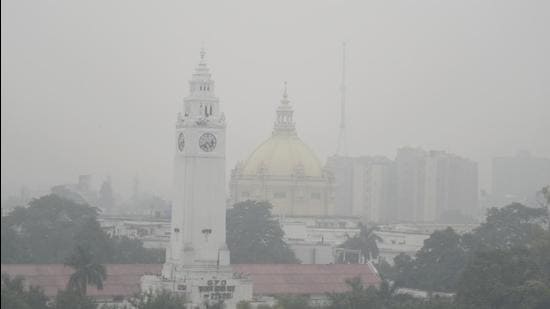
Gomti Nagar and Charbagh areas recorded the worst air pollution in Lucknow, while Charbagh and Chowk had the highest noise pollution, the IITR report showed.
The IITR report titled “Ambient Air Quality in Lucknow During Pre-Diwali, Diwali and Post Diwali Festival” took air quality data from nine locations of the city.
“The data revealed that both types of respirable particulate matters, PM10 and PM2.5 , monitored during pre-Diwali, Diwali and post-Diwali, were above the National Ambient Air Quality Standards of 60 and 100 µg/m3 for PM2.5 and PM10 respectively,” said SN Barik, the acting director of IITR.
Barik also said, “On Diwali night, the level of PM10 had suddenly increased from the average value of 266.5 (on November 2 night) to 882.9 µg/m3 by 193.7%. The highest value of 1084.2 was recorded on the Diwali night in Gomti Nagar. The average PM10 value remained high even during post-Diwali night on November 6 with an average value of 322.9 µg/m3.”
“(Similarly), on Diwali night, the level of (another pollutant) PM2.5 had suddenly increased from the average of 158.8 (on November 2 night) to 555.9 µg/m3 i.e. by 250.1 %. The maximum value on Diwali night was recorded at Charbagh at 833.3 µg/m3. Even the average value was high during post-Diwali night on November 6 at 215.8 .µg/m3,” he further said.
{{/usCountry}}“(Similarly), on Diwali night, the level of (another pollutant) PM2.5 had suddenly increased from the average of 158.8 (on November 2 night) to 555.9 µg/m3 i.e. by 250.1 %. The maximum value on Diwali night was recorded at Charbagh at 833.3 µg/m3. Even the average value was high during post-Diwali night on November 6 at 215.8 .µg/m3,” he further said.
{{/usCountry}}PM10 are particles with a diameter of 10 micrometers. They are also called fine particles.
Environmental experts say PM10 is also known as respirable particulate matter. Particulate matter is a complex mixture of soot, smoke, metals, nitrates, sulphates, dust water and rubber.
PM2. 5 refers to particles that have diameter less than 2.5 micrometres (more than 100 times thinner than a human hair) and remain suspended for longer. These particles are formed as a result of burning fuel and chemical reactions that take place in the atmosphere.
On Diwali night in Lucknow, the location-wise surge in PM10 concentration was: Aliganj (756.0 μg/m3, a surge of 176.7 %), Vikasnagar (880.8 μg/m3, spike of 281.9 %), Gomti Nagar (1084.2 μg/m3, surge of 327.7 %), Charbagh (1003.7 μg/m3, 251.9 %), Alambagh (915.3 μg/m3, 172.4 %), Aminabad (959.0 μg/m3, surge of 222.4 %), Amausi (730.5 μg/m3, spike of 217.5 %) when compared to the average on the pre-Diwali nights of November 2 and 3.
As for PM2.5 concentration, the location-wise surge on Diwali night was: Aliganj (540.0 μg/m3 i.e. surge of 389.8%), Vikasnagar (510.5 .μg/m3 i.e. increase by 281.8 %), Gomti Nagar (672.6 μg/m3 i.e. 246.7 %), Charbagh (833.3 μg/m3 i.e 381.7 %), Alambagh (290.3 μg/m3, 100.8 %), Aminabad (810.9 μg/m3, 325.8%) Amausi (205.8 μg/m3, 125.8 %).
NOISE LEVELS
The maximum noise level (98.4 dB) was recorded at Charbagh and the average maximum noise level of 89.4 dB was also at the same location.
The noise levels were also measured at nine locations between 7pm and midnight for 20 minutes at each location during the night period. Also, during the day time, noise levels are monitored at all the locations.
OTHER FINDINGS
The inhalable tiny fine particulate levels (PM10 and PM2.5) always exceeded respective National Ambient Air Quality Standards (NAAQS) of 100 µg/m3 for PM10 and 60 µg/m3 for PM2.5 at all the air monitoring locations, the IIT report said. The concentrations of SO2 (sulphur dioxide) and NO2 (nitrogen dioxide) were well below the prescribed NAAQS standard of 80 µg/m3 at all the locations. However, both pollutants showed higher spike with comparison to pre and post Diwali nights at all monitoring locations.
HEALTH EFFECTS
“The traditional firecrackers can cause severe effects to the health of people like heart diseases, respiratory or nervous system disorders. Chemicals/ metallic agents-based firecrackers are a composition of toxic hazards. The urban population breathe toxic emissions of firecrackers combustion and suffers from nasal irritation and throat congestion,” Barik said.
Noise and unwanted sound generated from bursting of firecrackers also creates impulsive noise and leads to non-recoverable hearing loss, the report added.