
 E-Paper



Before deleting any name, ECI will issue notice: UP CEO
After publication of draft roll, poll panel receives 62,896 Form 7 applications; DEOs and EROs instructed to scrutinise all applications before deleting names: Rinwa

 Prefer HTon Google


LUCKNOW In wake of opposition parties alleging mass deletions of voters through Form 7 under the ongoing claim and objection phase of the Special Intensive Revision (SIR) of electoral rolls, UP chief electoral officer, Navdeep Rinwa, on Tuesday reiterated that the Election Commission of India (ECI) had set rules for deletion of names from the electoral roll.
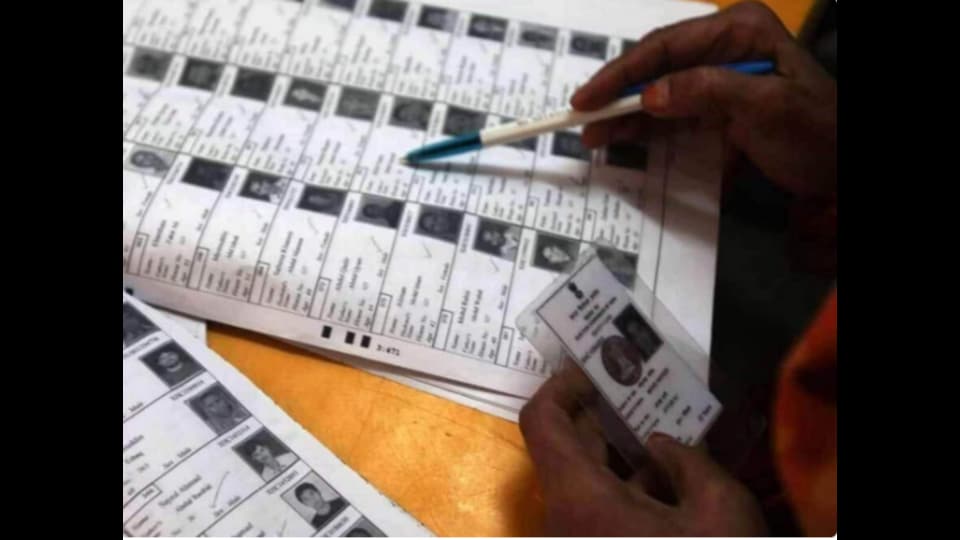
Before deleting the name of a voter, the ECI will issue a notice to the person whose Form 7 has been received for deletion of name as well as to the person who has submitted the form for the deletion of a voter’s name on the basis of death, under age, absence/permanent shifting, not being an Indian citizen, enrollment already on voter list at the same place or some other place. The decision to delete a name is taken after the 7 days’ notice period is over, he said.
The ECI made it clear that a notice is issued to the voter after application is received, and on the basis of substantial evidence, the electoral registration officer (ERO) deletes the name of a voter from the voter list.
District election officers and electoral registration officers (EROs) have been instructed to scrutinise all applications before deleting names. Whenever a Form 7 is received, they should verify that it was submitted by the person whose signature it bears. In cases of death of voters, where a death certificate has been submitted, the EROs can delete the name of the deceased voters directly, he added.
Form 7 is used when a person’s name is on the voter list, and someone objects to that name, stating that it should not be on the list. It is also used when someone has submitted Form 6 to add their name to the voter list, and another person objects to this addition, arguing that the new person’s name shouldn’t be added. In both these situations, Form 7 is submitted, said the CEO.
Only a person, whose name is already on the electoral roll of the same assembly constituency, has the right to submit Form 7. People filling out Form 7 must first write their name and then their voter ID card number. After that, they must write the name of the person against whom they are objecting and the reason for the objection, he added.
Before the publication of the draft electoral roll on January 6, the ECI had received 49,399 Form 7 applications for deletion of names from the voter list. After the publication of the draft roll, the poll panel received 62,896 such forms till Monday.
On the other hand, ECI received 16,18,574 Form 6 for inclusion of names of voters before the publication of draft electoral roll, whereas 29,89,300 such applications were received till Monday.
According to ECI rules, an applicant has to submit a declaration as well stating that the facts and particulars mentioned in the application are true. If any false statement is made in the declaration then it is a punishable offence under Section 31 of the Representation of People Act, 1950, with imprisonment with a term which may extend to one year or with fine or both.
ECI notices to 16.9 mn voters in UP so far
The Election Commission of India (ECI) has issued notices to 16.9 million voters in UP so far under the ongoing SIR process. While 7.9 million have been handed to the voters by booth level officers (BLOs), the ECI has completed hearings on 2.2 million notices.
UP chief electoral officer Navdeep Rinwa said notices are also being issued to 10.4 million voters due to non-mapping with the 2003 SIR. Such voters will be required to submit evidence proving their date of birth and/or place of birth as prescribed by the Election Commission of India during the hearing, he said.
In addition, notices are being issued to 22.2 million voters in whose forms logical discrepancies have been detected during the enumeration phase.
The voters, who have been issued notices due to non-mapping, have to submit documents prescribed by ECI.
Applicants born in India before July 1,1987, will have to submit one of the 13 prescribed documents required to provide proof of their date of birth/place of birth. Similarly, if an applicant was born in India between July 1,1987 and December2, 2004, one of the 13 prescribed documents must be provided to prove the date or place of birth, along with the proof of the father’s or mother’s date or place of birth.
If an applicant was born in India after December 2, 2004, one of the 13 prescribed documents must be provided to prove the date/place of birth, along with the proof of the date/place of birth of both the father and mother.


