
 E-Paper



Budget 2025-26 speech: Verse-wise UP fin min’s couplets makes even Oppn smile
Khanna began his budget speech by talking about the Mahakumbh-2025 and in a Sanskrit verse described its celestial and astrological auspicious combination.

 Prefer HTon Google


Uttar Pradesh finance minister Suresh Khanna on Thursday generously garnished his one-hour-twenty-minute speech with Sanskrit, Hindu, and Urdu verses.
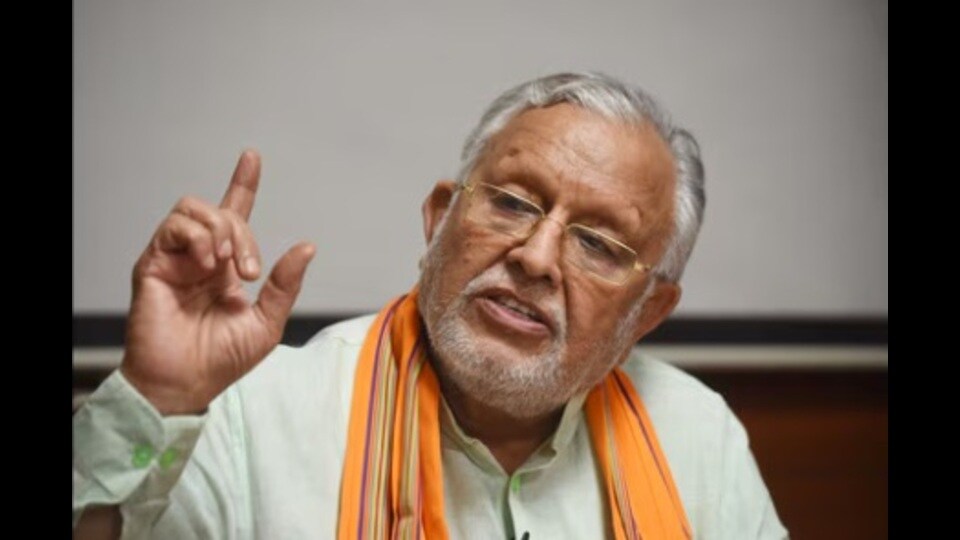
He defined Mahakumbh in a Sanskrit verse, UP Chief Minister Yogi Adityanath in three different Hindi-Urdu verses, and described the BJP government and took a dig at the Opposition in several Hindi and Urdu verses.
Before starting the budget speech, Khanna began talking about the chief minister Yogi Adityanath by saying: “This is the 9th budget of the Yogi government. The person who heads the government has no private agenda, no personal wish and I wish to recite a verse on his behalf”, and then recited: “Is dhara sey har andherey ko mita kar surya ka paryaya banna chahata hoon; Aur aadmi key shaurya key itihas ka main shreshtam adhyaya banna chahata hoon (I wish to become a synonym for the Sun by eradicating all the darkness of the earth, and desire to become the finest chapter of man’s glorious history).”
Khanna began his budget speech by talking about the Mahakumbh-2025 and in a Sanskrit verse described under what celestial and astrological auspicious combination it happens at the ‘King of Pilgrimages--Prayag’ and soon after when he shifted gear towards the governance and money management and business. Within it, he read a eulogy to the chief minister sitting by his side at the UP Assembly.
Khanna said: “The way Taponishth and Karmyogi, chief minister has worked for the development of the state, I would like to say...”
And then recited a famous verse from Bashir Badr’s poetry: “Jis din se chala hun, meri manzil par nazar hai; Aankhon ney kabhi meel ka patthar nahin dekha (The day I began my journey; I am focused only on the destination; I never looked at the milestones along the way)”.
Twenty minutes into the speech, when talking about the the law and order in the state since 2017 when the BJP government assumed power in the state, Khanna praised the BJP government and attacked the previous governments by saying: “Kashti challney walon ney, jab haar ke di patwaar humein; Lehar-lehar toofaan miley aur sang-sang majhdhaar humein; Phir bhi dikhlaya hai humney aur aagey bhi dikha dengey, In haalaton mein aata hai dariya karna paar humein (Those who handed over the oars to us after failing to steer the boat; we faced many storms and whirlpools; Yet we have showed and will show in the future too, that we know how to cross the river).”
Describing how the BJP government had transformed the infrastructure and industrial scene in the state, since it took over in 2017, Khanna said: “Log kehtey hain badalta hai zamaana aksar; Khaas woh hain jo zamaney ko badal detey hai (People say that the world changes often on its own; But special are those who change the world)”.
While winding up his speech’s component on aviation sector describing how before 2017 there were only four operational airports in the state against the present status of the state having 16 operational airports, Khanna again dedicated a verse which was specific to Yogi Adityanath and said: “Log yahan khwab dikhatey hain aksar; Har ek khwab ko sach kar diya hai Yogi ne (People often only make one dream; but Yogi has realised every single dream).”
While, most of Khanna’s verses drew loud applause and ticklish laughter from the BJP and allies; many opposition members too were seen smiling.
Suresh Khanna concluded the speech by reciting: “Tum sooch rahey ho bas, Baadal ki udaanon tak; Meri nigahein hain, sooraj ke thikaanon tak (While you are dreaming a flight only till the clouds; I am aiming for the Sun”.
And, when some members demanded an encore, Khanna recited the parting verse once more.


