
 E-Paper



Cadaveric transplantation needs to be promoted in U.P: Experts
Number of kidney transplants done in Uttar Pradesh can be doubled by making minor changes in the system


Number of kidney transplants done in Uttar Pradesh can be doubled by making minor changes in the system.
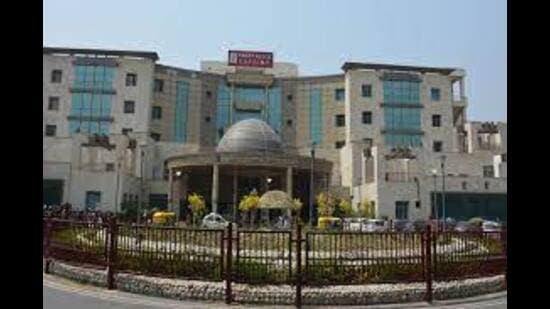
This was stated by professor MS Ansari of SGPGI’s Uro-surgery department and considered an expert in doing transplants.
“In India the lack of registration of patients with both chronic kidney diseases (CKD) and end stage renal diseases (ESRD), makes it difficult to give an accurate estimation of the number of individuals needing renal replacement therapy (RRT). Indian population-based studies have reported the crude and age-adjusted ESRD incidence rates at 151 and 232 per million population, respectively said professor MS Ansari.
He said, “Many states like Tamil Nadu, Maharashtra and Gujarat are doing exceedingly good in regard to organ donation program, unfortunately Uttar Pradesh, the largest state of India is behind them. The cadaveric transplantation needs to be promoted aggressively in Uttar Pradesh. We need to improve our conversion rate in ICUs and trauma units and acceptance of organ donation amongst these prospective patients’ families at the same time medical fraternity, public and government bodies need to work in tandem.”
In Tamil Nadu, local networks are being established by some non-governmental and non-profit motivated organizations. Among these, the Initiative for organ sharing group started by MOHAN (Multi Organ Harvesting Aid Network) Foundation in Tamil Nadu has shared 68 organs in the last 2 years between five hospitals. The foundation is also hoping to affiliate with other similar organization in other regions such as FORTE (Foundation for Organ Transplantation and Education) at Bangalore & ZTCC (Zonal Transplant Co-coordinating Committee) at Mumbai that have also similarly shared organs between different hospitals. In UP we can follow this concept, said professor Ansari.
“At last, the political corridors can also play a crucial role in creating a centralised networking of states’ all ICUs and trauma units under district level nodal centres that in turn to be governed by one state level nodal centre. The reporting of all critical cases, especially potential brain dead in both ICUs and trauma units, to nodal centres should be made mandatory. The state level nodal centre has to coordinate with states’ organ transplantation nodal centre like SGPGIMS,” he said.
Professor Narayan Prasad, head of department of Nephrology said, “SGPGI is doing a great job by doing more than 130 kidney transplants a year. But still this number can go up if more kidneys are available for transplant. For cadaver transplantation one needs to sensitise masses through various awareness programmes via different platforms such social, print and electronic media. Non-government organisations can also play a vital role to popularise it.
Organ donation by one gives new lease of life to two
Professor MS Ansari of SGPGI’s Uro-surgery department said, “Importance of cadaver transplantation could be gauged from the fact that recently a young man donated both his kidneys and liver to give new life to two more patients. The organ retrieval was done at KGMU. The liver and one kidney were transplanted to one patient who had both liver and kidney failure while another kidney was transplanted in a patient at SGPGIMS. Both the kidneys were transplanted by the teams of organ transplantation experts from SGPGIMS. One of the team worked at KGMU in collaboration with experts in liver transplantation from KGMU itself. Another team took the complex case at SGPGIMS itself. The surgical experts for kidney transplantation included, Prof Udai Pratap, Dr Sanjay Sureka and Dr Sanchit Rastogi. The team of nephrologists included Prof. Anupma Kaul and Dr Manas Behra.”


