
 E-Paper



‘Heavy’ dust pollution leaves Lucknow gasping, air quality close to ‘poor’ category
With an AQI of 206, Lalbagh experienced the worst air quality, followed by Talkatora (202), according to the UPPCB data.

 Prefer HTon Google


People in the state capital have been gasping for a breath of fresh air with the city’s air quality consistently being on the threshold of jumping to the ‘poor’ category for the past one week.
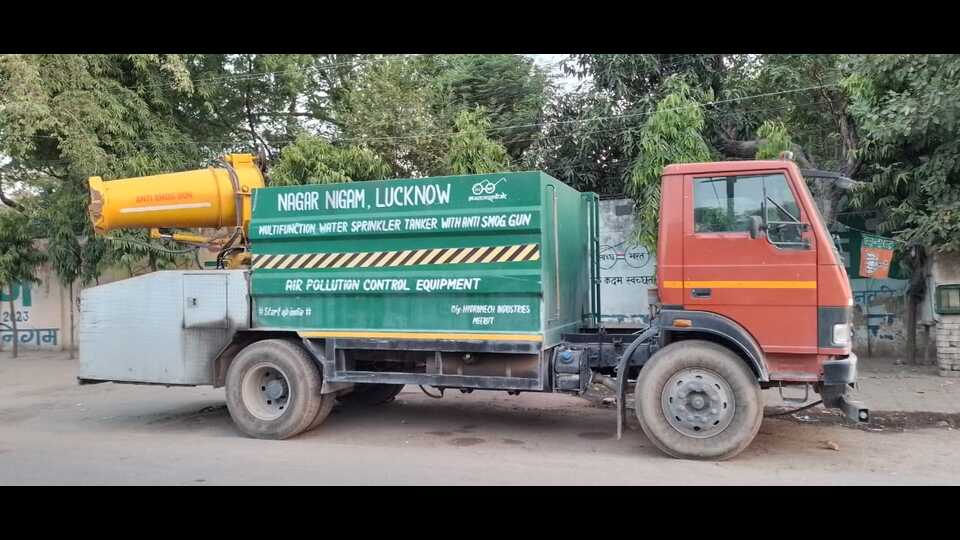
Uttar Pradesh Pollution Control Board (UPPCB) officials say the deterioration in the air quality can be majorly due to dust.
While the air quality index (AQI) recorded on Thursday at some of the UPPCB stations in the city was over 200, the daily bulletin released by the Central Pollution Control Board (CPCB) suggested the city’s overall AQI at 168 on the day. With an AQI of 206, Lalbagh experienced the worst air quality, followed by Talkatora (202), according to the UPPCB data.
The air quality in areas surrounding Gomti Nagar, Kendriya Vidyalaya and BR Ambedkar University too remained ‘poor to moderate’.
For the unversed, an AQI level of zero to 50 is considered ‘good’, 51 to 100 ‘satisfactory’, 101 to 200 ‘moderate’, 201 to 300 ‘poor’, 301 to 400 ‘very poor’ and 401 to 500 ‘severe’.
Similarly, the city’s AQI was recorded at 193 and 198 on Tuesday and Wednesday, the data suggested.
Who do corporators blame?
Elected representatives from the opposition parties in the city’s civic body said the Lucknow Municipal Corporation’s promise of working to reduce air pollution had remained only on paper.
Sayyed Yawar Hussain Reshu, a six-time corporator from the JC Bose ward, said the civic body had claimed of spending crores on anti-smog guns, sprinklers, mechanical sweeping machines and other equipment to battle pollution. However, they were not being used regularly and unchecked construction activities were making the city more polluted, he added. Which are standing idle despite city air getting polluted. “Also, many parts of the city have been left dug up due to the ongoing smart city works.”
Mamta Chaudhary, a senior corporator from the Congress, cited an IIT-Kanpur study that lists dust as the main reason for the poor air quality in Lucknow. “The corporation must chalk out a concrete plan to reduce dust. Only saying that their vehicles are operating is not enough. On the other note, I have never seen any of their vehicles spraying water to settle down dust.”
‘Pollution levels persistently high’
A Greenpeace India report, which analysed pollution data from September 2021 to September 2022, revealed that pollution levels in the city were dangerously and persistently higher than the ‘safe levels’ prescribed by the World Health Organization (WHO).
Lucknow was found to have an annual PM2.5 concentration of 79.24 μg/m3, which is 15.8 times higher than the safe levels (5 μg/m3) set by the WHO. This alarming level of PM2.5 concentration was recorded on 366 days, or 100% of all days on record. Similarly, the city’s annual PM10 concentration was found to be 140.9 μg/m3, which is 9.3 times higher than the safe levels (10 μg/m3); these alarming levels were recorded on 366 days or 100% of all days.
Meanwhile, municipal commissioner Inderjeet Singh said the equipment procured for dust control were being used as per their schedule. “Our anti-smog guns and water sprinklers are being operated as per the schedule. Moreover, they’ve been instrumental in curbing air pollution in the city. There are several reasons for more dust in the air that leads to poor quality of air. Construction is just one of them. LMC is trying to improve the quality of air with its resources,” he stated
LMC officials said they’ve identified 11 roads, nine major construction sites and three sewer-line construction areas that were emitting more dust than others.


