Symbolising a convergence of religious traditions, the annual urs (death anniversary) of Sufi saint Haji Waris Ali Shah’s father, Qurban Ali Shah, is observed every year on Karwa Chauth at Dewa Sharif in Barabanki district.
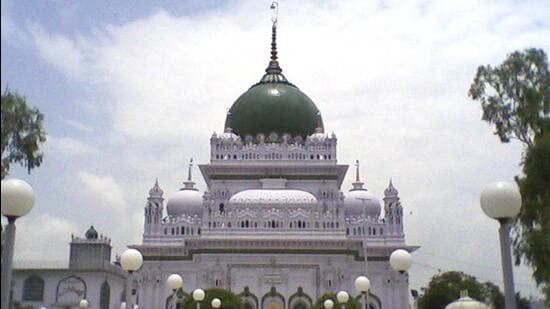
Unlike most urs ceremonies that follow the Islamic Hijri calendar, the urs at Dewa Sharif is observed according to the Hindu lunar calendar. The practice was initiated by Haji Waris Ali Shah more than a century ago.
“This is perhaps the only urs in the country that is held according to the Hindu calendar,” said Siddiq Warsi, former member of the Minorities Commission and resident of Dewa Sharif. “Every year, the urs of Qurban Ali Shah falls on Karwa Chauth, symbolising respect for the cultural practices of the land.”
Respect for women
The Dewa Mela, which coincides with the urs, was started by Haji Waris Ali Shah after his followers urged him to stay longer in Dewa. He agreed on the condition that a fair would be held in honour of his father and that it would take place during Karwa Chauth to honour the devotion of women.
To this day, the fair begins with the wife of the incumbent district magistrate formally inaugurating the mela, reflecting the continued recognition of women’s role in society and faith.
{{/usCountry}}To this day, the fair begins with the wife of the incumbent district magistrate formally inaugurating the mela, reflecting the continued recognition of women’s role in society and faith.
{{/usCountry}}Interfaith participation
Fuad Kidwai, joint secretary of Dewa Mela and Exhibition Committee, said, “The fair draws thousands of pilgrims from across the country, with a significant number of both Hindu and Muslim women participating in prayers. They adorn their hands with mehendi and wear glass bangles — shared cultural symbols across both communities — and offer prayers for the well-being of their husbands.”
“This place is a shining example of communal harmony,” said Sanjay Bali, a member of the Dewa Mela committee.
“Hindu families, including the Raja of Dariyabad’s family, have been associated with the organising committee for five generations.”
He added that all committee members are elected, not nominated, reflecting the inclusive nature of the event.
Unlike many religious spaces that restrict access for women, Dewa Sharif stands out for its egalitarian approach. Women freely queue up to offer chaddars at the mausoleums of Haji Waris Ali Shah and Qurban Ali Shah.
The fair has expanded significantly in recent years, with daily footfall during the urs reaching up to 15,000 visitors, nearly 10 times more than on an average day.
Syed Mohammad Wari, another resident of Dewa Sharif, said, “The Dewa Sharif Urs on Karwa Chauth blends devotion, culture, and shared humanity.”
“In Dewa, Karwa Chauth is not just a Hindu tradition,” said a local devotee. “It’s a day that belongs to everyone — a day of prayer, togetherness, and peace.”