
 E-Paper



Electric mobility: U.P. committed to achieving net zero carbon target, says chief secretary
Chief secretary Durga Shanker Mishra has said that the Uttar Pradesh government is committed to achieving the ‘net zero’ carbon target and promoting electric mobility across the state


Chief secretary Durga Shanker Mishra has said that the Uttar Pradesh government is committed to achieving the ‘net zero’ carbon target and promoting electric mobility across the state. He said the NITI Aayog and the Asian Development Bank (ADB) had chosen Lucknow as a pilot case for promoting electric vehicle mobility in the state.
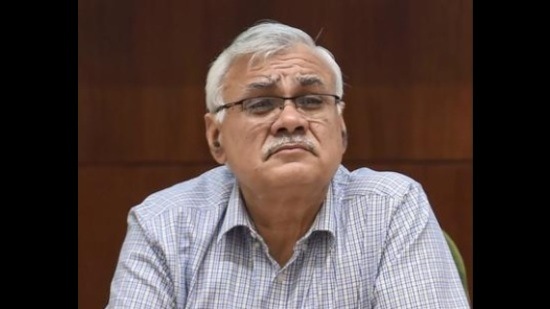
He was inaugurating a workshop on ‘Development of Comprehensive Electric Mobility Plan for Lucknow’, here. The workshop, attended by various stakeholders, was jointly organised by the state government, ADB and NITI Aayog in collaboration with Invest UP.
The aim of the workshop was to act as a platform for discussion, brainstorming and collecting feedback on development of a comprehensive e-mobility plan for Lucknow in order to make the state capital a Global EV lighthouse city.
The CS said that the way urbanisation was taking place and infrastructure was being created in the state, e-mobility based on zero emissions was a must for the future. He said vehicular pollution was the main reason for air pollution and the solution to the problem, he said, lay in the promotion of e-mobility.
The state government, he said, was also encouraging people to use public transport to cut on emissions.
Infrastructure and industrial development commissioner, Arvind Kumar, gave an overview of the initiatives of the state government to increase proliferation of e-mobility in the state. He said, “Uttar Pradesh has been a pioneer in launching a comprehensive Electric Vehicle Policy and now, when the state government is planning to upgrade the existing policy, this workshop will play a key role”.
Thereafter, Amit Kumar, partner, PricewaterhouseCoopers (PwC) provided insights on ADB – NITI Aayog workshop on development of comprehensive electric mobility plan for Lucknow. The presentation included an introduction to the state-specific EV awareness portal for Lucknow.
He said that the web portal would serve as a dedicated, one-stop destination for engaging end users as well as businesses to raise awareness, encourage the adoption and transition to EVs and enhance investments by manufacturers of EVs and its ancillary industry.
This was followed by a session on introduction and initiatives of Asian Development Bank by Takeo Konishi, country director, ADB India Resident Mission.
Advisor, infrastructure connectivity and electric mobility, NITI Aayog, Sudhendu Sinha, highlighted the initiatives taken by the government of India and NITI Aayog on electric mobility.
Chaitanya Kanuri from World Resources Institute (WRI) provided insights on planning for public charging infrastructure in Lucknow.
A session moderated by Amit Kumar, partner, PricewaterhouseCoopers (PwC) was held on priority EV segments for the state of Uttar Pradesh for electric mobility, international case studies on scaling EV ecosystems in cities, challenges in proliferation of EVs and its mitigation measures, and action plan and key focus areas for development of comprehensive electric mobility plan for Lucknow. The panelists included Pallav Bose from Lucknow City Transport Services Limited, Joseph Teja from NITI Aayog, Yash Pal Sacher from Ashok Leyland and PK Banerjee from SIAM.


