LUCKNOW An elevated corridor is the most effective long-term solution to the severe traffic congestion on the 9-km stretch from Polytechnic intersection to Kisan Path, recommends a survey by a private agency that has submitted its report to the Lucknow Development Authority (LDA).
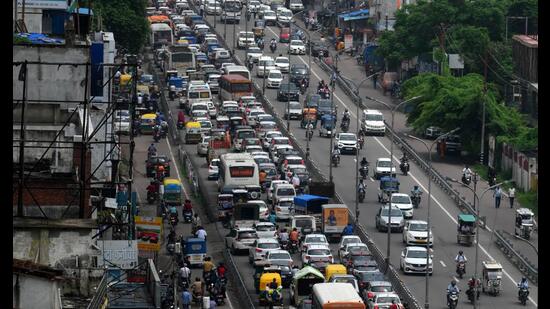
The report, accessed by Hindustan Times, mentions increasing traffic volume, particularly with the rising number of Ayodhya-bound tourists and underscores the need for urgent interventions, including road infrastructure improvements, traffic management strategies, and enforcement of regulations.
The survey began in November and took around a month to examine all the aspects, according to a report in HT on November 28.
The report also highlighted multiple factors contributing to persistent congestion, particularly during peak hours from 8 to10am and from 4 to 8pm. The major causes include scattered and unregulated traffic movement, aggressive driving, frequent red-light violations, and unauthorized U-turns. High volume of vehicles at key intersections worsen the situation, leading to long waiting time and increased accident risks. Additionally, commercial vehicles, including tempos from Barabanki, further disrupt traffic by using service lanes and crossings in an unauthorised way.
The report also mentions infrastructure deficiencies, absence of proper road markings, broken median dividers, potholes, and uneven surfaces as key problems. Critical intersections, such as those near BBD University, Mohan Apartment, and Tiwari Market, witness chaotic traffic due to crisscross movement caused by open median gaps.
{{/usCountry}}The report also mentions infrastructure deficiencies, absence of proper road markings, broken median dividers, potholes, and uneven surfaces as key problems. Critical intersections, such as those near BBD University, Mohan Apartment, and Tiwari Market, witness chaotic traffic due to crisscross movement caused by open median gaps.
{{/usCountry}}The lack of dedicated left-turn lanes and obstructions at key points, including the Polytechnic intersection and Shaheed Path, further contribute to delays. Bus stops are missing at important locations, forcing buses to halt in the middle of the road, disrupting traffic flow. Open drains and height differences between service roads and the main carriageway also create bottlenecks.
Parking mismanagement is another pressing issue. Auto-rickshaws and buses frequently stop at intersections due to the lack of designated pick-up and drop-off points. Unauthorised parking along the corridor and vehicles halting wherever convenient create additional obstructions. The underpass near Summit Building also poses a problem, as it serves two-way traffic despite being designed for single-direction movement. The report recommends an additional underpass and a separate U-turn lane at One Awadh Mall to ease congestion.
The survey outlines short-term, medium-term, and long-term solutions. Immediate measures include removing encroachments and parked vehicles from footpaths, enforcing penalties for traffic violations, reviving foot overbridges with proper access, and ensuring auto-rickshaws and buses do not stop within intersections. Other suggested interventions include restricting crisscross movements at the Polytechnic flyover, improving traffic signal functionality, and effectively implementing the Intelligent Traffic Management System (ITMS).
In the medium term, the report suggests improving intersection design, constructing pedestrian foot overbridges with simplified entry-exit points, and introducing dedicated lanes for traffic with grade separators at key intersections like Polytechnic intersection, Awadh, Chinhat, and BBD. Additionally, it recommends feeder bus services connecting Indira Nagar Metro to the Outer Ring Road with competitive fares, a magic box underpass at Matiyari intersection, and the closure of problematic median openings. The expansion of existing two-lane flyovers into three lanes in each direction is also proposed to accommodate rising traffic demand.
For a long-term solution, the report strongly advocates for an elevated corridor as the best way to manage the growing traffic burden. The proposed corridor would ensure smooth vehicular movement, reduce congestion, and provide a seamless connection to Ayodhya, which has seen an increase in tourist footfall. The LDA is expected to analyse the findings and strategize accordingly to implement effective traffic management solutions.
The LDA is likely to hold a meeting with Lucknow Metro Rail Corporation (LMRC) officials in the coming days to discuss the future plan of Metro expansion, confirmed an LDA official.
LDA secretary Vivek Srivastava said the department has received the private agency’s report but there might be some changes. He added that LDA will collaborate with the Lucknow Metro Rail Corporation (LMRC) to include additions as per the Metro’s future plans and expansions.