E-Paper



Halving line losses in four years may be a tough task for UPPCL
With poor collection efficiency and rampant power theft, the UPPCL’s technical and commercial losses in the state only rise further when it increases power supply to consumers, often neutralizing the gains (to a large extent) it makes by making efforts to contain the losses.

 Prefer HTon Google


Lucknow: Claims notwithstanding, it may be a tall order for the loss-ridden UP Power Corporation Ltd (UPPCL) to cut the mounting distribution losses (a euphemism for power theft) to half in next four years, even as the Centre has recently approved funds of more than ₹16,000 crore for the purpose, said people aware of the issue.
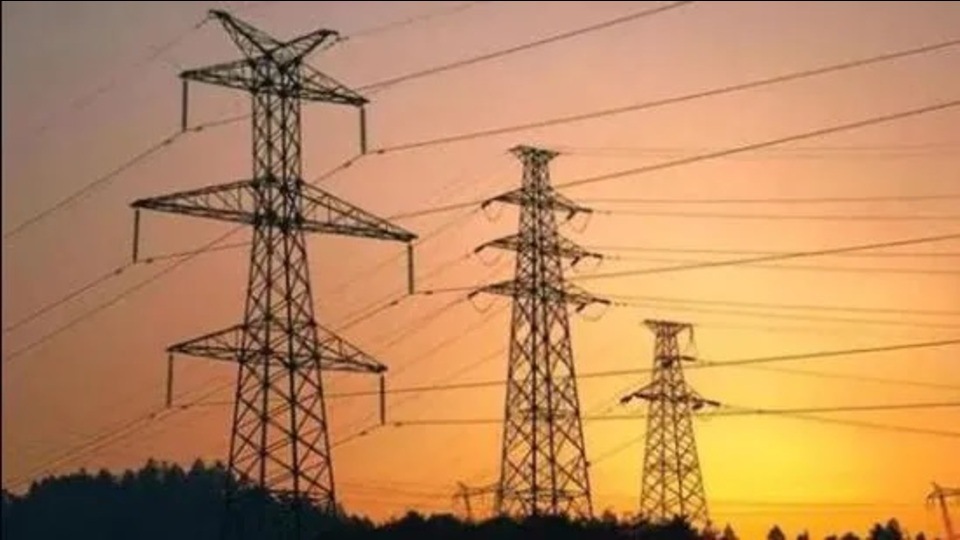
With poor collection efficiency and rampant power theft, the UPPCL’s technical and commercial losses in the state only rise further when it increases power supply to consumers, often neutralizing the gains (to a large extent) it makes by making efforts to contain the losses.
The UPPCL, in December 2021, forwarded a proposal to the Centre, seeking a financial assistance to the tune of around ₹50,000 crore under the Revamped Distribution Sector Scheme (RDSS)-a reforms-based and results-linked scheme.
The scheme aims to reduce the aggregate technical and commercial losses (AT&C) to pan-India levels of 12-15% and average cost of supply and average revenue realization (ACS-ARR) gap to zero by 2024-25 to enable discoms to improve quality, reliability and affordability of power supply to consumers through financially sustainable and operationally efficient distribution system.
“The UPPCL sought a financial assistance of ₹18,885 crore for installation of meters on unmetered premises of consumers, as well as in distribution of transformers, ₹18,916 crore for modernization and augmentation and ₹16,485 crore for reducing losses,” an official said. “Last month the centre approved the funds sought for loss reduction while rest of the proposal may also get the nod soon,” he added.
Though the UPPCL claims to have already started the work on reducing losses to 20.19% by 2023-24 and 16.38% by 2024-25, achieving the target is said to be a hard nut to crack, going by the prevailing high losses and the UPPCL’s track record in dealing with the same.
As per a presentation recently made to the chief minister, the UPPCL’s average current AT&C losses are as high as more than 29% which it has to bring down to around 16% as committed to the centre, failing which the grants will convert into loan in the proportion to which the targets are not met.
“The UPPCL’s predicament is that its losses go up when it tries to increase supply hours for consumers because of rampant theft and poor bill collection, especially in rural areas where only around 30% consumers turn up for bill payment. This means the more the power supply, the higher the losses,” another official pointed out.
The same presentation showed the losses to be the highest in the Agra discom at 38.24%, followed by 32.32% in the Varanasi discom and 31.76% in the Lucknow discom. The losses in the Meerut discom and the Kesco were relatively lower at 19.52% and 15.94%, respectively. “The losses are too high to be halved in four years unless offensive is launched against power thieves and cost of each unit sold to consumers is recovered,” he said.
The presentation showed the UPPCL’s average collection efficiency to be poor at only 88.14% which it has planned to improve to 96.25% by the targeted year 2024-25. The collection efficiency, the official pointed out, might also not improve till, among other things, the UPPCL ensured timely delivery of correct bills to all the consumers—something that chief minister Yogi Adityanath recently emphasized upon in a meeting last week.