Leopard population in the Dudhwa Tiger Reserve (DTR) has grown by 198.91% since 2022, a fresh report stated. In the Dudhwa buffer zone, which also houses several human habitats, the wild cat population grew by 142.86%.
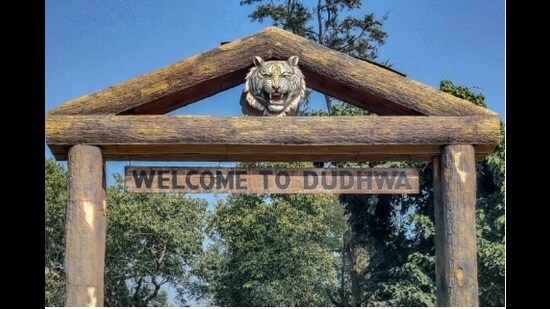
While their growing numbers showed that the conservation efforts of the forest authorities and the rich biodiversity of Dudhwa are bearing fruit, it has compelled forest authorities in the buffer to swing into action and find ways to reduce the human-wildlife conflict.
The triennial survey report of 2025 about the estimated numbers of wild animals in the DTR, which includes Dudhwa National Park (DNP), Katarniaghat Wildlife Sanctuary (KWS) and the buffer zone, states that all wildlife species of carnivores, herbivores, aquatic animals, ungulates etc registered a healthy growth in their population in comparison to the triennial survey of 2022.
The number of swamp deer or barasingha, for which the national park was brought into existence in 1977, rose to 6,137 from 3,691 in 2022, registering a growth of 66.27%. Similarly, the number of spotted deer or chital rose to 22,408 from 36,636 (63.5%), kankar (barking deer) from 1,284 to 2,560 (99.38%) and padha from 3,169 to 5,351 (68.85%) in the DTR.
However, the most remarkable growth rate was seen among leopards, whose number in Dudhwa National Park (DNP) grew to 93 in 2025 from 34 in 2022 (173.53%), in the Katarniaghat sanctuary to 131 from 37 in 2022 (254.05%) and in the buffer zone to 51 from 21 in 2022 (142.86%).
{{/usCountry}}However, the most remarkable growth rate was seen among leopards, whose number in Dudhwa National Park (DNP) grew to 93 in 2025 from 34 in 2022 (173.53%), in the Katarniaghat sanctuary to 131 from 37 in 2022 (254.05%) and in the buffer zone to 51 from 21 in 2022 (142.86%).
{{/usCountry}}Altogether, the leopard population stood at 276 from 92 in 2022 in the DTR.
As the buffer zone area is interspersed with agricultural fields and human habitations, the growing leopard population in the area becomes a sensitive matter, triggering fears of human-wild animal conflict.
Saureesh Sahai, the deputy field director of the Dudhwa buffer zone, lauded the conservation efforts but also acknowledged the risks involved with more leopards in the area.
Sahai said right from infrastructure improvement to public awareness campaigns, all efforts were being made to keep the human-animal conflicts to a minimum.
Sahai said several measures were already in place. He stated that the chain-link fencing in a length of 5.44 km in Jungle Matera area, which is close to Katarniaghat, had already been sanctioned. The fence will keep leopards from entering human habitations from the reserved forest area.
Sahai added on his request, a permanent veterinary doctor had been deployed in the buffer zone to attend to any emergency. Earlier, it took time to requisition an expert from Dudhwa.
Sahai said the government had also equipped the buffer zone with thermal drones, micro drones and 100 camera traps which provided vital help to monitor and keep watch on the leopard movements in the affected areas.
Sahai stated 46 ‘bagh mitras’ had been recruited and trained to generate awareness among the masses. He added that these bagh mitras visited five villages regularly and apprised the locals about the measurements and precautions in case of wild animal conflict situations.
About the staff strength on the ground, Sahai said the government had conducted a mass recruitment drive, owing to which it had improved significantly.