The main political parties in Uttar Pradesh are yet to release their manifestos for the seven-phase state assembly elections that will begin on February 10.
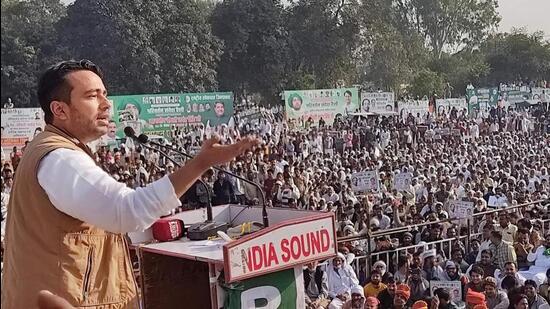
However, the parties have already organised hundreds of public rallies and meetings to woo voters before they begin the digital campaign due to the Election Commission having banned physical rallies in view of Covid-19.
The Rashtrya Lok Dal (RLD), a minor player in the state’s politics, is the only party to have come out with a manifesto apart from the Congress that has brought a manifesto only for women so far.
In a democracy, political parties are supposed to fight elections rallying behind their manifesto, laying down policy priorities and positions to help voters make their informed choices before they go to cast their vote.
The two major parties, the Bharatiya Janata Party (BJP) and the Samajwadi Party (SP), are still working on their manifestos while the Bahujan Samajwadi Party (BSP), the third most important player, has publicly announced that it does not believe in manifestos.
SP spokesman Rajendra Chaudhary said the party is preparing its manifesto and would publish the same very soon.
“Otherwise also, our leader Akhilesh Yadav is already telling people about the plans the party will execute after coming to power,” he said.
{{/usCountry}}“Otherwise also, our leader Akhilesh Yadav is already telling people about the plans the party will execute after coming to power,” he said.
{{/usCountry}}The BJP has a different argument for the delay in bringing out its manifesto or “Lok Sankalp Patra”.
“Our seven-member committee set up for the purpose is working hard on the manifesto,” senior BJP leader Vijay Bahadur Pathak said.
The party, according to him, put up drop boxes at 30,000 places across the state to get public feedback on what they wanted in the manifesto.
“We will finalise our manifesto on the basis of public feedback even if it may take some more time,” Pathak added.
Political observers say that electoral manifesto is an important document or a vision statement not only for the people to make choices, but also for academicians and journalists to make analysis and keep political parties reminding of promises they made to voters.
“Publishing a manifesto in any election in a democratic country is a time-honoured activity that political parties are expected to undertake,” said Shashi Kant Pandey, professor and head of the department of political science, Babasaheb Bhimrao Ambedkar University.
“It is unfortunate that most political parties show a casual approach to manifesto and do not bring out the same well in time,” he added.
The electoral manifestos, he further pointed out, had of late, lost much of their relevance too because of political parties often making unrealistic promises to people despite knowing that they have little chance to come to power or will not be able to keep those promises even if they form the government at all.
The positive side of this, however, he added was that it helped change the political discourse in the larger public interest.
“For example, every political party in UP started focusing on issues related to women after Congress leader Priynka Gandhi made a number of promises, some of them unrealistic too, to woo women,” he said.
“But in any case, political parties must bring out manifestos much well in advance and not sit over the same till the polling begins,” he suggested