
 E-Paper



Modi govt implemented management principles in governance: Piyush Goyal
He said whenever faced with any problem Modi government did detailed ‘root cause’ analysis of the problem came up with robust sustainable solutions.


Union minister Piyush Goyal on Sunday said that the Narendra Modi government is a classic example of use of good management principles in governance.
He said whenever faced with any problem Modi government did detailed ‘root cause’ analysis of the problem came up with robust sustainable solutions.
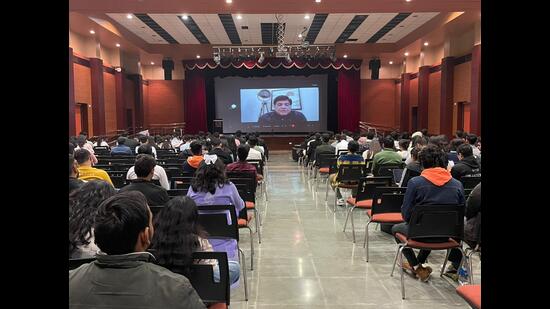
While virtually addressing a ‘Flagship Leader Interactive Session ICONS’ at IIM Lucknow’s Manfest-Varchasva 2024, Goyal said that Modi government used managerial skills of partnering with all the stakeholders.
He said prime Minister Narendra Modi has prepared a roadmap (blueprint) how to take India forward. “But Modi alone didn’t prepare it alone. He took ideas and feedback from 15 lakh people to make a roadmap for future of India,” Goyal said.
“Partnership of all the stakeholders is another example of decisive leadership that is keen to listen to what people say. Outcome oriented action defines our government. Outlay of money is not important but it’s the outcome that holds the key,” he said.
Goyal said that the rule of the law is the key. “There is transparency and sincerity in every action that we take. We priortise as we understand that everything will not happen overnight. Swachta (cleanliness) was one of the priorities of the government. Time bound execution is another focused area to define performance. Innovative financing models are being used to fund big development and welfare expenditure,” he said.
“Deep technology is in focus than ever before as it plays an important role. We indigenously developed 5G that was unimaginable before. Accountability and monitoring of all our programmes are there as people are held accountable,” he said.
Expressing his views on India’s current landscape and prospects, he emphasised the significance of Amrit Kaal for India’s development. He also highlighted the principles guiding the Modi government and stressed the importance of leadership qualities, citizen commitment and innovative ideas in shaping the nation’s trajectory.
He underscored the pivotal role of institutions like IIMs in nurturing future leaders and fostering collaboration between academia and governance for sustainable growth and global impact.
“India has now come out from a period of economy paralysis to redefining the economy,” he said and highlighted that country was well on track to be the third largest economy.
“PM Modi took India beyond the land of scandals to make it world’s fifth largest economy. All this has been possible due to Modi’s visionary leadership and power of the youth of this country,” he said.
“UP has converted its large population to its advantage, built modern infrastructure, new highways and has now become a tourism destination,” he said.
He said law and order in UP is among the best in the country and industry and investment is headed to UP. “Quality of life is improving along with ease of life,” he said.
Goyal paid tribute to BJP ideologue Pt Deen Dayal Upadhyay and said that he was one of the first to talk about inclusive development.
10 managerial skills of Modi govt
1. For every problem Modi government did detailed root cause analysis and came up with robust sustainable solutions.
2. It partnered with all its stake holders and engaged them
3. Decisive leadership that is keen to listen to the people
4. Outcome oriented action defines government.
5. Rule of the law is the key.
6. Transparency
7. Time bound execution
8. Innovative financing models are being used to fund large amount of development and welfare expenditure.
9. Technology focus
10. Accountability and monitoring of all programmes


