
 E-Paper



‘National dental panel is the need of the hour’
With an increase in awareness as well as a lifestyle where there is more and more social exposure, people in general are aware of the power of a healthy and better smile which can be achieved only by having good oral health: Dr Kohli


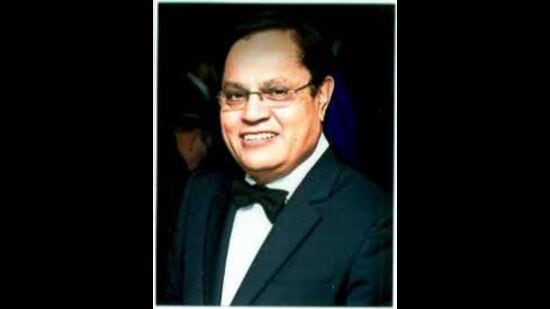
Padmabhushan Brig. Dr Anil Kohli, former president of Dental Council of India, the apex body for dentistry in the country, feels it’s time to bring in a National Dental Commission like the National Medical Commission (NMC) replaced the Medical Commission of India (MCI). Dr Kohli who will be conferred DSc (honoris causa) at the 18th Convocation of the King George’s Medical University, attended a function at the dental wing of KGMU, organised by Dean KGMU Prof AP Tikku. An alumnus of KGMU, Dr Kohli interacted on different issues related to dentistry and its future. Edited excerpts:
Q1—How do you see the future of dentistry in India?
A—It’s time the Indian government brings in the National Dental Bill. To meet the challenges, we need change. Skill labs, upgradation of syllabus and need-based education and upgradation of equipment is the need of the hour. A National Dental Commission is the need of the hour like the National Medical Commission (NMC). India is a young nation having a median age of around 28 years and almost 34% of its population is under 20 years of age. As a nation, it is also in its nascent stage in becoming a superpower globally. With an increase in awareness as well as a lifestyle where there is more and more social exposure, people in general are aware of the power of a healthy and better smile which can be achieved only by having good oral health. Taking all this in consideration, I personally believe the future of dentistry is promising and bright.
Q—What are the possible areas of improvement in dentistry in India?
A-- Though we have come a long way since 1960, the dentist to population ratio has markedly decreased from 1:301,000 to the current 1:5015. There is still a need to ensure consistent presence of dental manpower all over the country. The biggest challenge in India is the huge population of around 1 billion which are all potential dental consumers. Majority of Indians reside in rural areas where the availability and affordability of dental treatment is still a major challenge.
Q-- Is the status and focus of research in dentistry at its best or needs improvement?
A-- Dental research is of paramount importance in order to improve mankind’s ability to preserve and conserve a healthy lifestyle. A lot of research using this extensive database is needed to upgrade the availability of qualitative dental care to the people. A lot of research can be done in the role of stem cells in preventing and treating oral diseases, the use of artificial intelligence in accurate diagnosis, predicting prognosis to delivery of dental treatment, role of probiotics in preventing oral diseases and Anticarries Vaccination. A collaborative effort at the grassroot level among various institutes and independent bodies needs to be carried out for qualitative research.
Q-- Does India need more dental colleges?
A-- Rather than focusing on the number of dental colleges, what is more important is to focus on the quality of dental education in India. Constant upgrade of any education system related to the ever-evolving techniques, methodology and equipment is needed for a nation to sustain and improve its growth related to the healthcare sector. There is a challenge of regional inequality. The need to expand in remote areas should be focused upon.
Q-- Should dentists be trained to prescribe general medicine via a bridge course or dentists need to focus on dental patients only.
A-- Regarding this, I would like to say that to solve a problem in the short run we will be creating a much bigger and difficult problem in the long run. The bridge course may help achieve the WHO target of one doctor for 1,000 people in the near future, but will it not solve the problem of the rural shortage of medical and dental health professionals eventually is what we must look into. Instead of the bridge course, what the government should be focusing on is first effectively using the existing healthcare manpower resources, expanding the current education sector primarily in the rural region.


