The National Green Tribunal (NGT) has taken serious note of the discharge of sewage directly into rivers across the state and sought an explanation from the state government for non-compliance with Supreme Court’s directives in this regard.
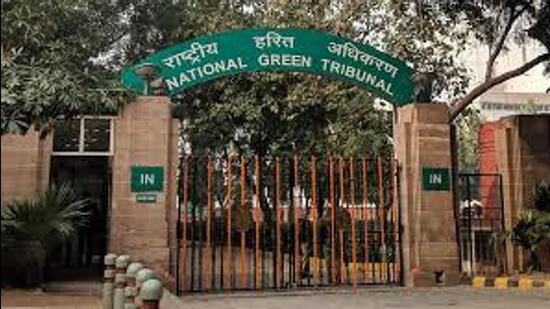
The principal bench of the NGT, New Delhi, comprising chairperson Justice Prakash Shrivastava and expert member A. Senthil Vel, on December 23, 2025, expressed serious concern over the issue.
The National Green Tribunal took cognizance of the matter during a hearing of a case relating to compliance with environmental norms, including sewage and waste management.
The tribunal noted that despite the Supreme Court’s February 22, 2017 order, which fixed a three-year timeline (expiring in February 2020), for setting up and operationalizing STPs (sewage treatment plants), CETPs (common effluent treatment plants) and ETPs (effluent treatment plants), non-compliance continues even after more than five years of expiry of the deadline.
KEY FINDINGS OF THE NATIONAL GREEN TRIBUNAL
Out of the 3396 drains identified across the state in 2025, only 478 drains are fully tapped, and 22 partially tapped, while 2896 drains remain untapped.
The NGT observed that 1385 drains are directly discharging untreated sewage waste into rivers in 2025, an increase from 1230 drains in 2017.
{{/usCountry}}The NGT observed that 1385 drains are directly discharging untreated sewage waste into rivers in 2025, an increase from 1230 drains in 2017.
{{/usCountry}}Though 155 STPs with a total capacity of 4705.1 mld (million litres a day) have been established, the actual utilised capacity is only 3746.87 mld, observed the NGT.
Not a single drain has been tapped in Ghazipur, Ballia, Azamgarh and Mau districts, reflecting complete non-compliance with Supreme Court directives, the NGT said.
The tribunal also observed that untapped drains not reaching rivers are discharging untreated sewage into open land and other water bodies, aggravating pollution of soil and groundwater.
The Tribunal reiterated that storm water drains (primary, secondary and tertiary) cannot be used for sewage discharge or permanently diverted to STPs, in light of earlier NGT judgments.
The NGT has appointed advocates Katyayni and Vikrant Badesra as Amicus Curiae to assist the tribunal in the case.
The NGT listed the case for the next hearing on March 12.
STATE SEEKS EXTENSION OF DEADLINE
Representing the state government before the NGT, the counsel sought extension of the deadline till December 31, 2028 for completing operationalisation of all STPs, CETPs and ETPs. But the Tribunal did not grant any extension at this stage.
The NGT directed the secretary, Environment, Forest and Climate Change, UP government, to remain virtually present at the next hearing and allowed four weeks’ time to file a supplementary affidavit.
The NGT has also sought clarification from the state government for delay in compliance with the Supreme Court order and the status of setting up STPs in forest areas and floodplain zones, the impact of population growth on sewage generation and treatment capacity.