
 E-Paper



Sangh-BJP huddle in Lucknow: After Yogi, Dy CMs meet Bhagwat
Back-to-back meetings during RSS chief’s stay seen as strategic calibration before 2027 Uttar Pradesh assembly polls

 Prefer HTon Google


In a politically significant development, Rashtriya Swayamsevak Sangh (RSS) Sarsanghchalak (chief) Mohan Bhagwat held separate meetings with Uttar Pradesh deputy chief ministers Keshav Prasad Maurya and Brajesh Pathak before the conclusion of his Lucknow visit on Thursday morning.
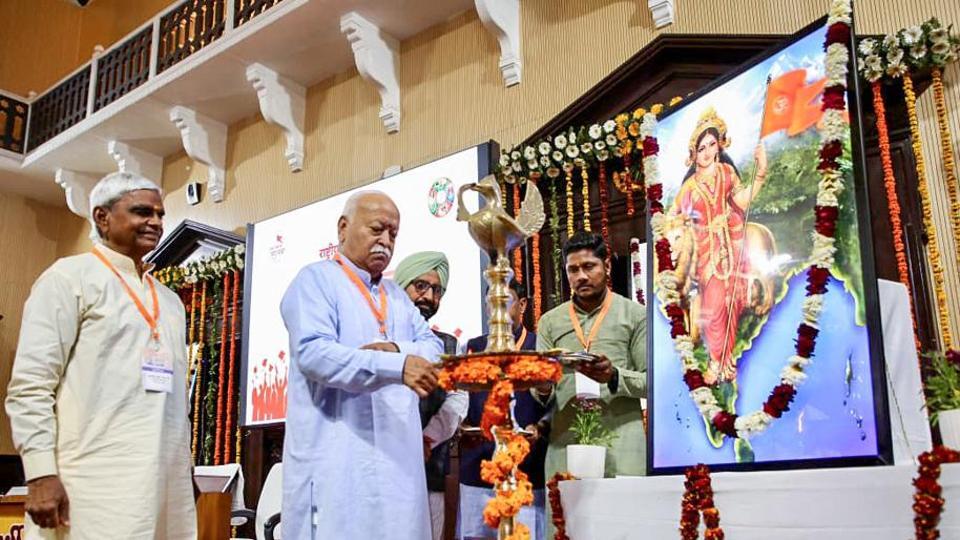
Earlier, chief minister Yogi Adityanath met Bhagwat on Wednesday evening.
The engagements with the state’s three top BJP leaders triggered intense political interest, with observers linking the consultations to early strategic preparations for the 2027 Uttar Pradesh assembly elections. Both deputy chief ministers called on the RSS chief separately.
The chief minister’s meeting with Bhagwat lasted around 40 minutes at the Sangh’s Saraswati Kunj office in Nirala Nagar on Wednesday. The optics of all three senior leaders meeting Bhagwat within a short span are being viewed as an exercise in consolidating synergy between governance and cadre-based mobilisation.
According to people aware of the matter, discussions centered on the state’s political direction, strengthening coordination between the government and the organisation, and ensuring effective outreach of welfare schemes at the grassroots level. Sources indicated that apart from electoral preparedness, deliberations included feedback on the implementation of development schemes, investment proposals, and the prevailing law-and-order situation in the state.
The issue of action against illegal Rohingya settlers in the state also reportedly figured in the discussions.
Government sources suggested that the RSS leadership appreciated the administration’s firm posture on internal security and law enforcement, describing it as necessary in the broader context of social stability.
Discussions are also understood to have covered industrial expansion models, including special investment regions, planning frameworks, and strategies to position Uttar Pradesh as a preferred investment destination. There was emphasis on amplifying awareness of development initiatives through structured organisational outreach.
Bhagwat’s visit to Lucknow followed engagements in Gorakhpur, and he is scheduled to travel to other regions, including Mathura and western Uttar Pradesh. During interactions with RSS functionaries, he stressed cadre activation, grassroots engagement, and household-level communication about policies and ideological outreach.
Political analysts note that the RSS has historically played a decisive role in booth-level consolidation and cadre mobilisation for the BJP in Uttar Pradesh. The coordinated meetings with the chief minister and both his deputies are interpreted as an early-stage calibration exercise ahead of the next electoral cycle.
Earlier on Wednesday, Bhagwat addressed a gathering at the Indira Gandhi Pratishthan in Lucknow and emphasised social harmony. He asserted that practices such as untouchability have no place in modern society and that caste hierarchies have become irrelevant. He advocated balanced modernisation rooted in cultural values and cautioned against blind imitation of Western models.


