
 E-Paper



Kisan Pathshalas in villages of U.P.’s Prayagraj from June
In these programmes, farmers will be advised on using best farming techniques suiting the region, the weather and the quality of soil among other aspects


As part of its promise to increase farmers’ income and introduce them to new technologies, the state government is going to organise Kisan Pathshalas in all the revenue villages of Prayagraj’s 1425 gram panchayats.
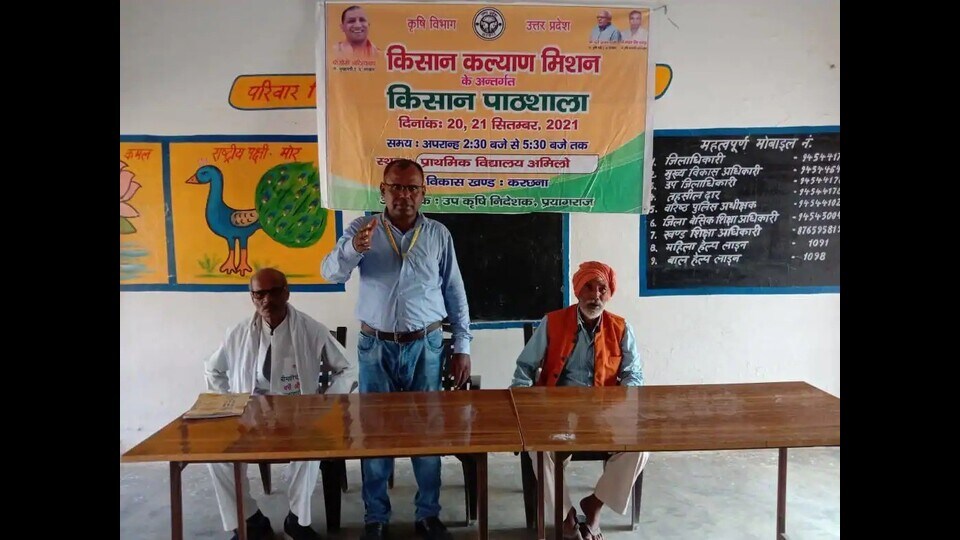
These Kisan Pathshalas will be organised from June onwards under the aegis of the state agriculture department. They will also advise farmers on best farming techniques suiting the region, the weather and the quality of soil among other aspects, said a senior district agriculture department official.
Confirming the development, Prayagraj district agriculture officer Subhash Maurya said these Kisan Pathshalas could not be organised during the past two years owing to the Covid pandemic outbreak. “But now the government has given orders to re-start them and for which all the preparations have now been done,” he added.
According to deputy director, agriculture, Prayagraj, Vinod Kumar, in these Kisan Pathshalas that would be held for two days every month, information about departmental schemes will also be made available to the farmers.
Experts from agriculture development centre, agriculture, animal husbandry and other departments connected with the field of agriculture will be present in these sessions, he added.
Kisan Pathshalas are an extension programme that the U.P. government initiated in 2017 with a view to encouraging the use of modern farming techniques to make farming more profitable, sustainable and resilient.
Unlike traditional extension services, this initiative strives to integrate various facets of agricultural knowledge into a packaged format and delivers it through village-level trainings across all districts in the state. Printed materials—booklets, pamphlets—with such information are also distributed among participants.
The key objective is to impart agricultural knowledge and techniques to farmers, which, in turn, can enhance agricultural production, improve soil health and promote integrated and diversified farming systems, officials shared.
The training usually comprises a two-to-three-hour session in the evening for a module in the primary school building of a village. Farmers receive technical and vocational training on topics such as improved varieties, crop and soil management practices, input use and marketing.
Farmers also are provided with information on the various government schemes available for the benefit of farmers, and how they could avail of these benefits.


