E-Paper



Uttar Pradesh’s 15K Eng-medium govt primary schools to learn lessons from Andhra Pradesh
All 44,512 government primary and upper primary schools in Andhra Pradesh had been turned into English medium schools about three years ago.

 Prefer HTon Google


Now around 15,000 English-medium government-run primary and upper primary schools spread across 75 districts of Uttar Pradesh would learn lessons on better functioning from Andhra Pradesh.
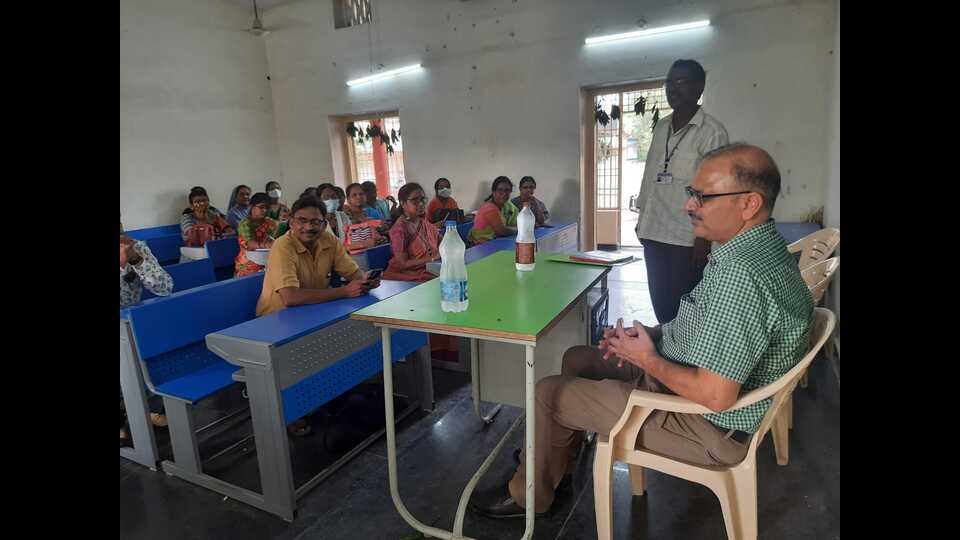
On the instructions of the director general of school education in Uttar Pradesh, Vijay Kiran Anand, a two-member team of Prayagraj-based English Language Teaching Institute (ELTI), UP, has completed a tour of two districts of AP—NTR and Krishna— to study the schools and teachers’ training scenario in Andhra Pradesh. The team will now suggest possible effective interventions for UP schools, informed state education department officials.
All 44,512 government primary and upper primary schools in Andhra Pradesh had been turned into English medium schools about three years ago, they added.
The two-member team comprising the principal of ELTI Skand Shukla and lecturer Kuldeep Pandey visited over half-a-dozen schools situated in the rural areas of Vijaywada in NTR district and Krishna district besides a Kasturba Gandhi Balika Vidyalaya and the state council of educational research and training (SCERT) of Andhra Pradesh in the first week of August 2022.
“Some of the interesting features of AP schools were that they have bilingual books— in Telugu and English. Most schools are structured as classes 1-5 and classes 6-10 whereas we have schools structured as classes 1-5 and classes 6-8 at the primary and upper primary levels respectively. There is also a formative assessment of children every two months and summative assessment once every six months,” informed the principal of ELTI Skand Shukla.
He said that in AP, the teacher’s strength in every school is determined every year and is based on the number of students.
“The teachers are selected subject-wise in schools having classes 6-10. The transfers and postings are completely online with no manual intervention. Smart TV and interactive panels are proposed to be given in all classes 1-5 schools. The teachers there are trained in both cascade and online modes,” he shared.
In AP, an initiative ‘Nadu-Nedu’ is being carried out. Nadu-Nedu is to strengthen the infrastructure and transform the existing infrastructure of the schools in the mission mode in a phased manner over a period of three years, starting from 2019-20. Under the ‘Nadu-Nedu’ programme, nine infrastructure components have been taken up including toilets with running water, drinking water supply, major and minor repairs besides electrification with fans and tube lights, furniture for students and staff, green chalkboards, painting of school buildings, English labs and construction of walls of school compounds.
The project covers all 44,512 AP schools, including residential schools and those run by different departments including school education, panchayat raj, municipal administration, social welfare, BC welfare, tribal welfare, minority welfare, juvenile welfare and fisheries department.
“During the visit, we had interactions with teachers of these schools, officials of the education department and SCERT officials. Now a report on possible interventions is being prepared and would be submitted to the DG (school education) for possible implementation of some initiatives in primary and upper primary schools of Uttar Pradesh,” Skand Shukla explained.