
 E-Paper



Yogi pledges to make UP India’s first ‘zero poverty’ state
The state government unveiled a comprehensive road map for its ‘zero poverty’ campaign and will operate in mission mode to uplift the identified poorest families from each gram panchayat in the state, aiming to integrate them into the mainstream within a year

 Prefer HTon Google


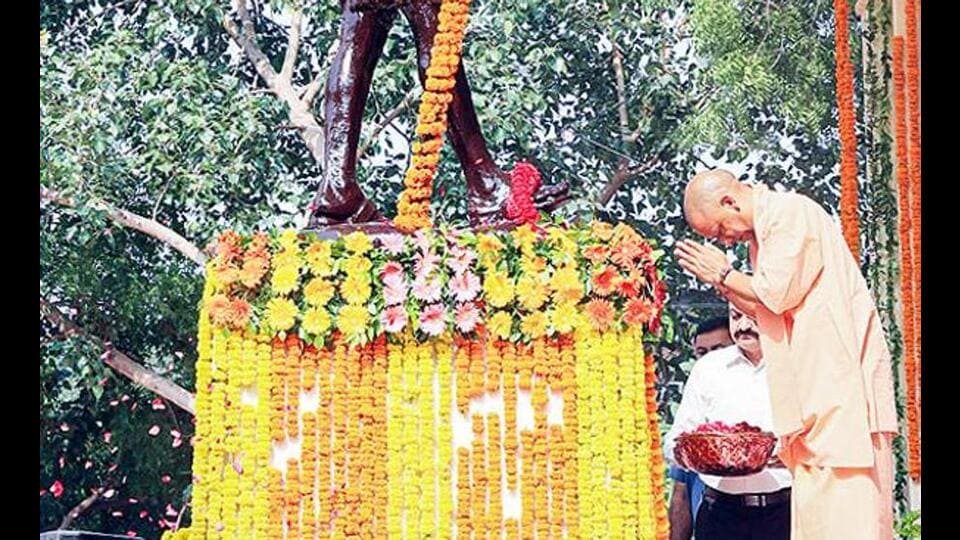
LUCKNOW Chief minister Yogi Adityanath on Wednesday pledged to transform Uttar Pradesh into India’s first ‘zero poverty state’ and lift the state’s poorest families above the poverty line in a year. This ambitious goal was officially announced on the birth anniversary of Mahatma Gandhi, the Father of the Nation, marking the launch of the country’s most significant poverty alleviation programme, the state government said in a statement.
The state government unveiled a comprehensive road map for its ‘zero poverty’ campaign and will operate in mission mode to uplift the identified poorest families from each gram panchayat in the state, aiming to integrate them into the mainstream within a year.
These families will benefit from various government schemes, including the Pradhan Mantri Awas Yojana and the Mukhyamantri Awas Yojana.
“Identified impoverished families will receive essential support, including food, clothing, quality education, healthcare, housing facilities and a stable source of income. Chief secretary Manoj Kumar Singh has provided a detailed action plan to all district magistrates regarding this initiative. UP is the first state in the country to implement such a program,” read the statement.
Identification of impoverished families will be conducted at three levels. Information will be gathered about the poorest 10-25 families in each gram panchayat. A three-tier, hybrid method will be employed for the selection of these families, ensuring a completely transparent process. Employees, officers, and officials of gram panchayats involved in each stage of selection will be held accountable.
At the first level, the poorest families will be identified using the mop-up mobile app, based on four key criteria. First, families that are homeless or live in kuccha houses, second, landless families reliant solely on agriculture for their livelihoods, third, families dependent on daily wages or agricultural labour, facing uncertain and irregular incomes and fourth, families lacking financial resources, constantly struggling with food and clothing shortages.
At the second level, a village-level committee will be established in each gram panchayat, comprising five members: Gram pradhan, former gram pradhan, headmaster of the local school, and head of the two oldest self-help groups.
At the third level, following the identification by the cadre and the recommendations of the village-level committee, families will receive an automated vulnerability rating through a digital system.
Records for all identified families will undergo scrutiny by the Performance Support Unit, established at the chief secretary’s level, which will conduct on-site investigations of any suspicious records. If any discrepancies are found, the expert team will recommend appropriate actions against the responsible cadre and the village-level committee.
In the education sector, assistance will include school admissions, uniforms, textbooks, and other essential resources. Families will also have access to medical facilities, including benefits from the Ayushman Bharat Insurance Scheme and other medical and health department initiatives.


