MUMBAI: A staggering 8% to 12% of Maharashtra voters are expected to be struck off the electoral rolls after the Election Commission of India (EC) begins its Special Intensive Revision (SIR) from June 30. EC officials said this could amount to about 10 million names from the state’s 98.86 million registered voters.
Metropolitan regions such as Mumbai Suburban, Thane, and Navi Mumbai are expected to witness the highest deletions due to large-scale migration and a floating population. Mumbai currently has 10.4 million registered voters, while Pune has 9.14 million and Thane has 7.5 million voters.
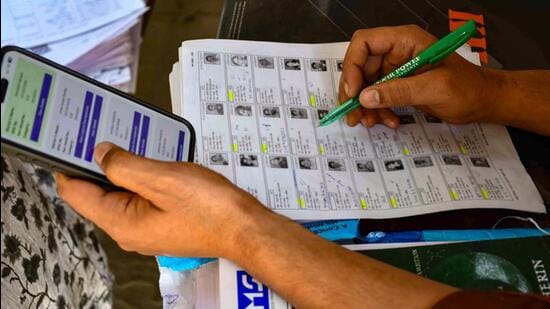
Before the SIR exercise, a pre-SIR process is being undertaken by the office of the Chief Electoral Officer, representing the EC. The process involves mapping existing voters with those listed in the electoral rolls in 2002, the last time that such an intensive revision was conducted. According to officials, around 70% of the current voters have been mapped.
Major urban centres such as Mumbai, Mumbai Suburban, Thane, Pune and Navi Mumbai are lagging behind in the mapping exercise, with Mumbai Suburban recording only 47% mapping and Mumbai city 55%. Officials attributed this difficulty in mapping to large-scale migration and shifting of voters within Mumbai and the Mumbai Metropolitan Region. Similar migration trends have also been observed in Pune, Nagpur and Nashik.
The poll body expects the low mapping percentage in urban regions to result in large-scale deletion of voters.
{{/usCountry}}The poll body expects the low mapping percentage in urban regions to result in large-scale deletion of voters.
{{/usCountry}}“It could be anywhere between 8% and 12% of the state’s 98,859,784 voters,” said a Mantralaya official. “This means around nine million to 10 million names could be deleted. Duplicate registrations are high because of urbanisation, redevelopment of buildings and migration. In regions such as Konkan and western Maharashtra, there is a tradition of registering as voters both at the native place and at the place of work, leading to duplicate registrations. This could result in substantial deletions.”
The official said that duplicate registrations had surfaced during the municipal corporation elections as well.
“The number of duplicate voters in Mumbai was estimated at around 11%, and that was only within city limits. It could increase once state-wide mapping is completed,” the official said.
Officials also pointed to the presence of deceased voters on electoral rolls. “Relatives often do not come forward to remove the names of those who have passed away,” said another official.
“Also, in the absence of the annual Special Summary Revision (SSR) last year—because poll officials were busy with the local body polls—the deletion of shifted and deceased voters was not carried out, resulting in inflated electoral rolls.”
According to officials, the conventional estimate that around 70% of the population is adults also indicates discrepancies in the electoral rolls.
“If 70% of the population is adult, the number of registered voters should not exceed 91 million, against the projected state population of 129 million. This clearly indicates that the rolls need serious cleansing,” the official added.
The EC also expects a large-scale addition of first-time voters during the SIR exercise. Officials said that, in the absence of an SSR last year, enrolment of new voters did not proceed as expected. The SIR is likely to bring many left-out eligible voters into the electoral rolls.
Amin Patel, Congress MLA from Mumbadevi, who has been vocal on the issue, said,
“The deletion is expected to be high because of intra-city and inter-city migration over a long period. However, voters should be vigilant and ensure that deletions are carried out properly by approaching the election authorities when required. Since SIR is a time-bound process, voters living in slums and chawls are especially vulnerable and should remain alert.”
Stay updated with all the Breaking News and Latest News from Mumbai. Click here for comprehensive coverage of top Cities including Bengaluru, Delhi, Hyderabad, and more across India along with Stay informed on the latest happenings in World News.
Stay updated with all the Breaking News and Latest News from Mumbai. Click here for comprehensive coverage of top Cities including Bengaluru, Delhi, Hyderabad, and more across India along with Stay informed on the latest happenings in World News.