MUMBAI: For six days from July 4 to July 9, torrential rains disrupted the lives of the residents of Vasai, Nalasopara and Virar. Roads, shops and buildings were all flooded by several feet of water, and as evening fell, pitch-darkness enveloped the streets, the electricity department having stopped the power supply as a precautionary measure.
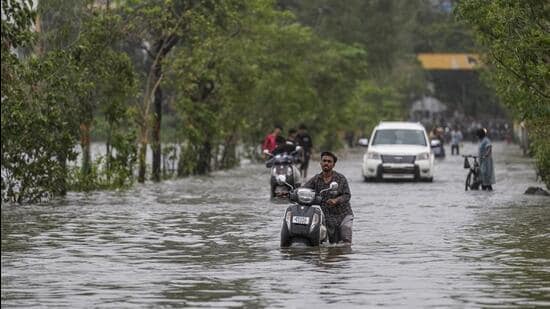
The flood-like situation—reminiscent of the 2018 floods in the region—was brought about by the negligence of the Vasai-Virar City Municipal Corporation (VVCMC), which failed to take steps for monsoon preparedness despite being reminded time and again by experts and local residents.
According to BJP corporator Manoj Patil, after the 2018 floods, the municipal corporation had conducted a study on the city’s flood situation with assistance from institutions like NEERI (National Environmental Engineering Research Institute) and IIT. However, there is no evidence that it ever carried out the work recommended in the two institutions’ reports.
When contacted, VVCMC officials said that carrying out the necessary works required a minimum of ₹300 crore. “We have submitted a proposal for ₹117.19 crore to the government which is under process,” said an official.
The root cause of the floods lies in the extensive construction that has taken place in the green belt of Virar West. Trees and mangrove forests have been massacred, water bodies and old wells filled up, and CRZ (Coastal Regulation Zones) regulations thrown to the winds. The large-scale reclamation has resulted in the blockage of many natural drainage paths that once allowed rainwater to flow into the sea.
{{/usCountry}}The root cause of the floods lies in the extensive construction that has taken place in the green belt of Virar West. Trees and mangrove forests have been massacred, water bodies and old wells filled up, and CRZ (Coastal Regulation Zones) regulations thrown to the winds. The large-scale reclamation has resulted in the blockage of many natural drainage paths that once allowed rainwater to flow into the sea.
{{/usCountry}}Sameer Vartak, former chairman of the Congress’ State Environment Cell, said that the four NEERI-IIT reports had recommended the construction of eight to 10 culverts and three holding ponds to strengthen the drainage network, but not a single point in the reports had been implemented for over seven years.
Vartak, Patil and other experts alleged that this was done deliberately to protect the unauthorised construction and builders. “Vasai-Virar used to be an ecological buffer zone for Mumbai,” said Vartak. “This was where the excess flood waters would very quickly flow out to the sea. Today, it has become a perennial flood basin. Over the years, all the natural ways through which water from the mountains and forest area travelled to the sea have been encroached upon or blocked by the builders. If VVCMC opens these natural waterways, the foundation of the illegal buildings will become weak and they will fall like a pack of cards.”
Residents alleged that throughout the six days of rain, local leaders, corporators from all political parties and municipal employees sat and twiddled their thumbs, putting the blame for the flooding on Nature’s wrath. “When the corporator and MLA should have made arrangements to drain the water, they were getting reels made in the rain,” said Sushant Pawar, a social worker from Nalasopara. Indeed, on Thursday, guardian minister Ganesh Naik and MLAs Rajan Naik and Sneha Dubey defended the VVCMC, saying that floods were a “natural disaster” although Naik changed his stand in the same discussion and blamed VVCMC for them.
“For the past 15 years, water-holding ponds belonging to tribals in the Vasai-Virar region, mostly in Vasai West and on the Nalasopara West-Virar West link road near MHADA were bought by builders and covered up,” said Vartak. “After VVCMC acquired the land in 2015 to construct holding ponds, the builders earned TDR worth crores of rupees. But the civic body has not constructed even one water-holding pond to date. When questioned, its officials claimed that tenders had been floated but they could not find anyone to reconstruct the ponds. Instead, rampant construction has been going on.”
VVCMC officials, on their part, refused to even discuss the issue with the press or the opposition. Amid the civic body’s silence, Naik, on Thursday, assured citizens during an inspection tour with top officials and citizens that a comprehensive action plan would be prepared within the next 15 to 20 days, utilising satellite imagery to prevent such disasters in the future, with priority given to developing retention ponds and internal drainage systems.
Naik agreed with the experts that large-scale filling of land and water bodies had occurred in many parts of the city for illegal constructions. While claiming that attempts to remove the latter could trigger a volatile, war-like situation, he clarified that the government was fully prepared to tackle the environmental issues and find a permanent solution to the flooding. “Retention ponds for water storage will be developed on 300 to 400 acres of the 1,000-acre Gogte Salt Land,” he said.
The minister has issued instructions to the concerned departments to urgently develop underground drainage systems in areas of the city that lack them. Directives have been issued to the municipal commissioner to immediately investigate contractors if they failed to carry out drain-cleaning work properly.
Stay updated with all the Breaking News and Latest News from Mumbai. Click here for comprehensive coverage of top Cities including Bengaluru, Delhi, Hyderabad, and more across India along with Stay informed on the latest happenings in World News.
Stay updated with all the Breaking News and Latest News from Mumbai. Click here for comprehensive coverage of top Cities including Bengaluru, Delhi, Hyderabad, and more across India along with Stay informed on the latest happenings in World News.