Beyond established two factors contributing to Mumbai’s air pollution - vehicular emissions and construction dust – the Brihanmumbai Municipal Corporation (BMC) has identified sodium chloride particles originating from seawater as significant contributors to the city’s deteriorating air quality, saying they react with pollutants released by vehicles and industries to produce atmospheric haze.
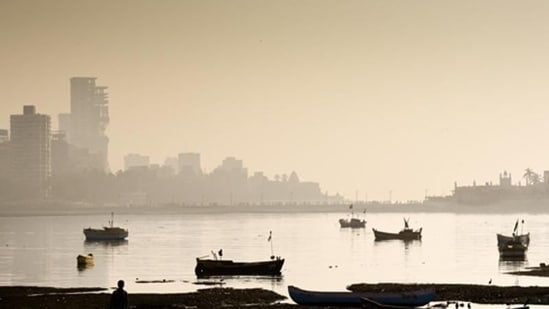
Mumbai recorded an AQI of 102 on Thursday, placing it in the unhealthy category. The city has experienced unhealthy air quality on 10 days so far this month. Of the 22 active monitoring stations, 10 reported unhealthy air quality on Thursday.
Addressing a press conference on Thursday, additional municipal commissioner Avinash Dhakane, who oversees the civic body’s environment and climate change department, said a source identification study conducted by the Maharashtra Pollution Control Board (MPCB) had identified sodium chloride (NaCl) -- the salt compound present in seawater -- as one of the major pollutants. However, he clarified that particulate matter continues to be the primary concern, with PM2.5 and PM10, largely associated with vehicular emissions and construction dust, contributing 18% each to Mumbai’s air pollution.
Also Read | GMLR project puts 1,524 trees on chopping block, activists warn of irreversible consequences
{{/usCountry}}Also Read | GMLR project puts 1,524 trees on chopping block, activists warn of irreversible consequences
{{/usCountry}}An analysis of AQI data from the past two years by Hindustan Times indicates a seasonal deterioration in air quality, with Mumbai largely recording satisfactory air quality through much of the year before slipping into the moderate category between November and February. The civic administration also acknowledged the seasonal challenge, with pollution levels expected to require closer monitoring during the winter months.
However, despite the current deterioration in air quality, the civic administration pointed to an improvement in the number of good and satisfactory air-quality days (see box), while data on the Union environment ministry’s PRANA portal shows that the city’s PM10 concentration declined by approximately 48% between 2017-18 and 2025-26.
To tackle road dust, the BMC has procured dust-suction machines, and plans to wash the roads using non-potable water, given the low dam reserves owing to weak monsoons. Of the 26 dust-suction machines required, three are expected to arrive within a week, Dhakane said.
The administration is also targeting emissions from bakeries, which account for approximately 3.5% of Mumbai’s PM emissions. Of the city’s 593 bakeries, 209 are already using cleaner fuels, while another 175 have converted to cleaner fuels. Sixty-nine are undergoing conversion, 87 remain non-compliant and eight have shut down. The BMC has made the use of green fuel mandatory for new bakery licences and permissions.
Separately, the civic body is in the process of installing air pollution control devices (APCDs) at 10 crematoria. Civic officials said the administration was also exploring the possibility of transitioning all crematoria to electric ones.
AI to flag construction-site sensor failures
BMC is planning to deploy artificial intelligence (AI) to analyse data from air-quality sensors installed at construction sites and identify suspicious interruptions in monitoring.
So far, 3,166 construction sites have installed sensor-based air-quality monitors connected to the civic body’s central dashboard. Additional municipal commissioner Avinash Dhakane said officials found instances of sensors remaining switched off or non-functional for several days, forcing them to conduct physical inspections.
The proposed AI system will analyse recurring shutdown patterns, frequency of interruptions and the last recorded readings to identify sites where data may be deliberately manipulated.
The BMC has also deployed 76 ward-level mitigation squads, each required to conduct at least two surprise inspections of construction sites every day. Violations can attract show-cause notices, stop-work orders and sealing.
Stay updated with all the Breaking News and Latest News from Mumbai. Click here for comprehensive coverage of top Cities including Bengaluru, Delhi, Hyderabad, and more across India along with Stay informed on the latest happenings in World News.
Stay updated with all the Breaking News and Latest News from Mumbai. Click here for comprehensive coverage of top Cities including Bengaluru, Delhi, Hyderabad, and more across India along with Stay informed on the latest happenings in World News.