Over a year ago, on August 12, 2025, when the Enforcement Directorate’s (ED) Mumbai unit carried out searches as part of a money-laundering probe against Parimatch and its associated entities, the exercise indicated the scale of the pan-India investigation against the Cyprus-headquartered online betting platform accused of operating illegally in the country.
The ED’s teams fanned out to 17 locations across seven states and Union Territories (UT)—Maharashtra (Mumbai), Delhi, Rajasthan (Jaipur), Gujarat (Surat), Uttar Pradesh (Kanpur and Noida), Tamil Nadu (Madurai) and Telangana (Hyderabad)—and froze funds worth ₹110 crore lying in various bank accounts. These bank accounts, known as mule accounts, were used to receive and transfer money on behalf of the platform while concealing its involvement, according to the agency.
ED freezes assets worth ₹150 crore in Parimatch investigation
On September 2 this year, the ED conducted its latest round of searches related to the case, across five states and a UT, during which funds worth ₹37 crore lying in similar mule accounts were frozen. In total, the ED has so far frozen or seized assets worth approximately ₹150 crore in connection with the case.
{{/usCountry}}On September 2 this year, the ED conducted its latest round of searches related to the case, across five states and a UT, during which funds worth ₹37 crore lying in similar mule accounts were frozen. In total, the ED has so far frozen or seized assets worth approximately ₹150 crore in connection with the case.
{{/usCountry}}According to the agency, Parimatch generated around ₹3,000 crore from Indian users in 2023-2024 alone and siphoned it out of the country. The extent of the total proceeds of crime is still being estimated, officials said.
Parimatch allegedly used a multi-layered financial network to layer, disguise and transfer proceeds generated through illegal online betting operations in India.
“The investigation conducted so far has revealed that Parimatch and its associates adopted a complex network of mule accounts, payment intermediaries and financial inclusion channels for collection, layering and transfer of user funds,” said an official aware of the developments.
The platform, owned by a Ukrainian national, allegedly lured Indian users with the promises of high returns before defrauding them. To attract customers, Parimatch invested heavily in marketing, including sponsoring sports tournaments in India and partnering with celebrities, officials said. Indian-registered entities linked to the platform were also allegedly used for surrogate advertising, funded through foreign remittances.
Multi-layered laundering operation
The ED’s probe, based on a case registered by the cyber police in Mumbai, has uncovered a multi-layered laundering operation.
According to officials, the betting proceeds were initially routed through a network of around 500 countrywide mule bank accounts, including accounts onboarded as merchant accounts and thereafter layered through legitimate financial and commercial channels. The mule accounts were often opened in the names of e-commerce and payment service firms, officials said.
“Such accounts were used for the collection of user deposits and routing payouts under the guise of vendor payments, business transactions and payment gateway services,” an official said.
Cash withdrawals and hawala channels allegedly moved funds overseas
In southern India, deposits collected from users were transferred to bank accounts and withdrawn in cash at locations in Tamil Nadu. The money was then handed to hawala operators, who used it to fund virtual wallets linked to a UK-based company. These funds were subsequently converted into USDT, a cryptocurrency pegged to the US dollar, through accounts operated by Parimatch agents.
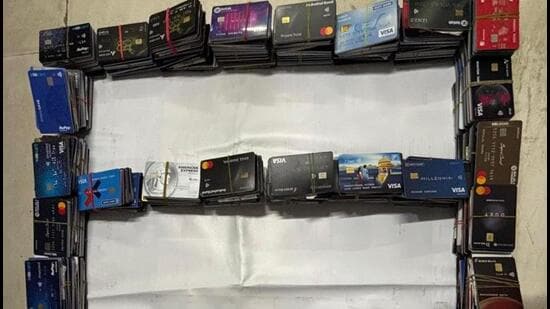
In western India, the platform allegedly used RBI-approved domestic money transfer agents to collect deposits and move funds through credit card transactions. During searches in August 2025, ED officials seized more than 1,200 credit cards from a single location, suspected to have been used in the operation.
Payment companies
Investigators have also flagged the involvement of payment companies whose applications for payment aggregator licences were rejected by the RBI. These companies allegedly provided backend services to Parimatch under the guise of Technology Service Providers (TSPs), offering Application Programming Interface (API) access to integrate mule accounts into the platform. The funds were then “masked” as e-commerce refunds, vendor payments and other routine expenses to obscure their origin and movement, officials said.
In certain instances, user withdrawals were allegedly processed without any direct outward payment from accounts controlled by the platform. Instead, deposits made by other users were routed directly to the withdrawing user’s bank account or UPI ID in multiple tranches, thereby concealing the actual money trail and avoiding a direct payment linkage, officials said.
The investigation has further revealed the alleged misuse of Banking Correspondent (BC) networks, mobile money transfer agents, Grahak Seva Kendras, Cash Management Services (CMS), local kirana stores and retail outlets for processing payouts and movement of funds linked to the platform.
The money was first transferred to such retailers, who then passed it on to the BC, which in turn recharged the retailers’ wallets. Once the wallets were loaded, the retailers used them to make payouts to Parimatch users, thereby concealing the actual source and trail of funds, officials said. A BC works as a bank’s local agent.
Also read: ₹7 lakh to cyber fraudsters">Panchkula: ITBP sub-inspector loses ₹7 lakh to cyber fraudsters
CMS agents allegedly diverted cash through hawala and crypto channels
Certain agents allegedly diverted cash received through CMS channels and offset it against RTGS transfers sourced from deposits made by Parimatch users, thereby disguising the true origin and trail of funds, officials said. Such cash funds were subsequently allegedly transferred outside India through hawala channels. The cash was thereafter allegedly converted into USDT via hawala or crypto operators and transferred to crypto wallets controlled by the offshore Parimatch network.
Funds were also allegedly routed through payment intermediaries into the bank accounts of certain Indian tour-and-travel operators without a corresponding provision of services, said ED officials. These were used to settle amounts purportedly payable to travel operators by their overseas clients, while corresponding amounts were collected from such clients in cash, allegedly by Parimatch handlers outside India. Transactions of at least ₹200 crore were allegedly routed through two such tour-and-travel operators.
A parallel mechanism involving sham Overseas Direct Investments (ODI) transactions and bogus imports of services was also identified, through which betting proceeds worth ₹500 crore were layered and remitted abroad. The remittances were allegedly supported by sham valuation reports for ODI and fictitious documentation despite the underlying transactions lacking genuine commercial substance.
“The investigation has uncovered a complex network of mule and merchant accounts, CMS and DMT agents, tour and travel operators, domestic entities, offshore investment structures, hawala operators and crypto channels, utilised to layer, disguise and transfer proceeds generated through the illegal online betting operations,” the ED official said.
Despite several attempts, Parimatch could not be reached for comment.
Stay updated with all the Breaking News and Latest News from Mumbai. Click here for comprehensive coverage of top Cities including Bengaluru, Delhi, Hyderabad, and more across India along with Stay informed on the latest happenings in World News.
Stay updated with all the Breaking News and Latest News from Mumbai. Click here for comprehensive coverage of top Cities including Bengaluru, Delhi, Hyderabad, and more across India along with Stay informed on the latest happenings in World News.