MUMBAI: One of the oldest slums in Mumbai, Ramabai Ambedkar Nagar, spread over 75 acres which was created in the early 1960s, will be redeveloped by the Mumbai Metropolitan Region Development Authority (MMRDA) into a shiny new residential-cum-commercial zone.
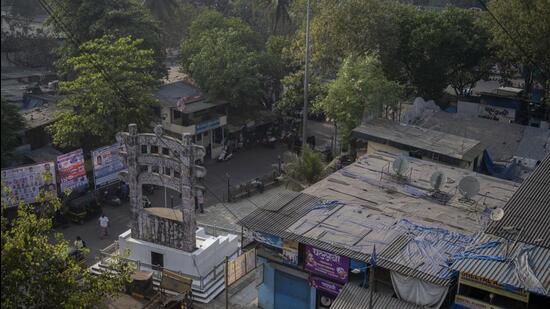
The plan was discussed at the body’s meeting with chief minister Eknath Shinde, who is also the chairperson of MMRDA, on December 12 in Nagpur. It will now be tabled at the state cabinet for its approval. The plan to redevelop the slum was last discussed over a decade ago.
Currently there are around 16,500 slum dwellers at Ramabai Ambedkar Nagar. Necessary procedure will be followed to identify the project affected people (PAPs) out of these slum dwellers before rehabilitating them.
Sources said MMRDA will develop the land jointly with the Slum Rehabilitation Authority (SRA), who will identify the PAPs and rehabilitate them in the newly constructed towers. They will also be offered monetary compensation. The SRA will assess the slum dwellers residing here or working out of these spaces, to derive the probable compensation per slum.
The land will be acquired free of cost, after which tenders for its sale or lease will be floated.
{{/usCountry}}The land will be acquired free of cost, after which tenders for its sale or lease will be floated.
{{/usCountry}}“We are jointly carrying out the redevelopment project with SRA. We will be working as the project implementation agency here,” confirmed Dr Sanjay Mukherjee, metropolitan commissioner, MMRDA.
SRA chief Satish Lokhande confirmed the move. “This is a joint venture project with MMRDA and the plan is at an early stage. Improving road connectivity between the freeway and EEH is the priority. SRA’s survey across Mumbai is on and as part of it, Ramabai will also be covered,” said Lokhande.
The redevelopment will enable MMRDA to generate an estimated ₹4000 crore or more, given the cost of land. The full value can only be ascertained, said officials, once the land is available and tenders are floated.
The authorities expect revenue of ₹1073 crore from the sale of residential units, while commercial hubs will fetch higher revenue.
MMRDA is looking at connecting the Eastern Freeway and Eastern Express Highway (EEH) that will pass through the area, to make this a lucrative commercial enterprise. The present plan comes at a time when the body is facing a severe funds crunch and looking at avenues to generate revenue. “We have not sold a single land space since 2007. There is a need to create more sources of revenue. If this becomes successful then we can take up other slum pockets in Mumbai and MMR to develop,” said an official.
The deal is also significant because MMRDA is involved in several big-ticket infrastructure projects such as the metro and MTHL. Sources said MMRDA will incur a cumulative cost of nearly ₹75,000 crore on the 10 metro rail projects, barring the Metro Line III (Colaba-Bandra-Seepz) and Metro Line I (Versova-Andheri-Ghatkopar).
History of Ramabai Ambedkar Nagar
Ramabai Ambedkar Nagar is a sizeable pocket of Dalit residents in Ghatkopar, dating back to the 1960s. “It was established in 1964, after a Dalit colony in Sion Koliwada was demolished, pushing the displaced to live in a swampy area in Chembur. A political alliance was then forged between the ruling Congress party and Dadasaheb Gaikwad, founder member of Republican Party of India. Gaikwad told the government to move the families into chawls in a composite space that came to be called Ramabai Ambedkar Nagar. It kept expanding as Dalit families grew. Today the area houses a population of over a lakh,” said journalist-activist Jayawant Hire, also a local resident.
Hire, who came to live in Ramabai in 1981, remembers the space as a creek which eventually joined the Thane creek with boats travelling back and forth. “This creek was reclaimed as the population grew,” he said.
In its contemporary history, Ramabai Ambedkar Nagar drew the spotlight on itself in 1997 when the statue of Dr Babasaheb Ambedkar was desecrated, which led to angry protests by the residents who blocked the EEH. The State Reserve Police Force platoon, headed by sub inspector Manohar Kadam, was pressed into service to quell the protest. The platoon fired 50 rounds, leaving 10 dead and 12 injured. The firing caused angry response by the people who demolished a police chowky, triggering a lathicharge.
The controversial firing incident was probed by Gundewar Commission – it observed there was no evidence to support Kadam’s claim that the platoon was compelled to act as the mob was threatening to become violent and indulge in arson. In 2001, a criminal offence was registered against Kadam, and in May 2009, he was convicted on charges of culpable homicide not amounting to murder and sentenced to life.
Stay updated with all the Breaking News and Latest News from Mumbai. Click here for comprehensive coverage of top Cities including Bengaluru, Delhi, Hyderabad, and more across India along with Stay informed on the latest happenings in World News.
Stay updated with all the Breaking News and Latest News from Mumbai. Click here for comprehensive coverage of top Cities including Bengaluru, Delhi, Hyderabad, and more across India along with Stay informed on the latest happenings in World News.