
 E-Paper



Proposed golf course project near Navi Mumbai airport scrapped
The proposed golf course had been at the centre of a legal battle waged by Navi Mumbai residents Sunil and Shruti Agarwal

 Prefer HTon Google


Mumbai: A controversial project by state-controlled City and Industrial Development Corporation (CIDCO) and private developer Mistry Constructions to build a 34-hectare golf course over the TS Chanakya and the NRI wetland complex in Navi Mumbai has been scrapped to prevent the threat of “bird hit calamities” and related accidents at the upcoming Navi Mumbai International Airport (NMIA), which is being developed by the Adani Group (of which Mistry Constructions is a subsidiary).
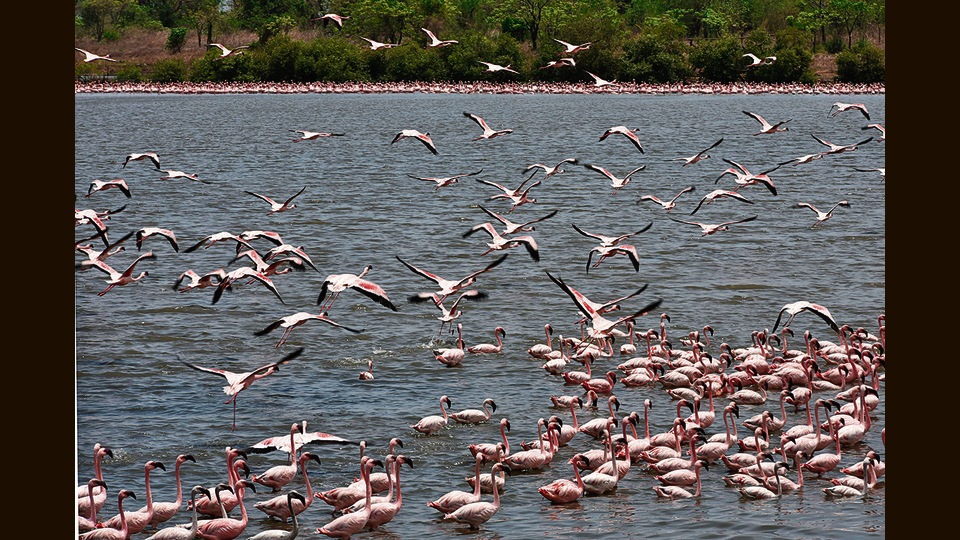
The two wetlands are known for attracting thousands of flamingoes during winters when the birds leave their feeding grounds in Thane Creek during the high tide and come to Navi Mumbai to roost.
This important ecological function of the wetlands has been pointed out by several environmentalists, the state forest department (which intends to declare the water bodies as conservation reserves) and the Bombay Natural History Society (BNHS), which conducted the biodiversity assessment for the NMIA project at CIDCO’s behest.
The proposed golf course had been at the centre of a legal battle waged by Navi Mumbai residents Sunil and Shruti Agarwal, challenging CIDCO’s October 2016 notification converting the land use of the site from ‘no development zone’ to ‘regional park zone’, paving the way for construction of the golf course.
Based on their petition, the Bombay high court in November 2018 quashed this notification, following which CIDCO and Mistry Constructions filed a special leave petition in the Supreme Court challenging the Bombay HC’s order.
However, a copy of the NMIA environment impact assessment (EIA) report -- submitted to the union environment ministry in September 2021, and accessed by Hindustan Times this week -- mentions that the golf course project is no longer being pursued. The EIA report identifies the TS Chanakya and NRI wetlands as “large-sized roosting sites” for birds, in addition to a third roosting site at Panje in Uran.
“Our overall approach is to conserve the 3 existing roosting sites – this has resulted in the cancellation of several prestigious projects like the golf course on wetland area to the north-west,” states the Adani Group’s EIA report.
“BNHS strictly suggests that proponents should protect and conserve the following biologically important wetlands, including NRI (Non-Residential Indian) complex, Delhi Public School (DPS), Training Ship Chanakya (TSC), Panje, NSPS (Nava Sheva Police Station) and Jasai where large aggregations of birds are observed,” the EIA report also states.
NRI, TSC and DPS are very close to the airport site (about 6 km aerial distance towards the north-west) and though migratory and resident birds inhabit these sites throughout the year, the largest number of individuals are seen in December and January. The maximum number of birds observed in a single day during the EIA monitoring period (from December 2019 to February 2020) across these six wetlands numbered 10,861.
“Looking at this large numbers of birds and their local movement, NMIA authority is advised that they should be cautious during high tide from December to February month to avoid bird hit calamities,” the EIA report cautions while emphasizing that “maintaining the current state of this landscape especially wetlands and Protected Areas is essential for the air safety of upcoming Navi Mumbai International Airport (NMIA). Any changes in the current state of these areas will result in more erratic movement of the birds in the landscape between feeding and roosting sites, which may jeopardise the air safety of NMIA.”
Despite attempts, Hindustan Times was unable to contact SB Kulkarni, project authority at Mistry Constructions.
Kailash Shinde, joint managing director, CIDCO, did not respond to requests for comment.
However, an official with CIDCO’s environment office seeking anonymity said, “There is a very real threat of large birds, especially flamingos, colliding with planes during winter months once the new airport starts, which is why the decision was taken to scrap the golf course.”
The official did not, however, respond to queries about whether CIDCO will hand over the land to the forest department for declaration as a conservation reserve under the Wildlife Act.
Rahul Khot, assistant director, (Natural History Collection Department) at BNHS, who is overseeing two monitoring projects to gauge the impact of the NMIA and the Mumbai Trans Harbour Link on flamingos and other avian species, said, “The decision to scrap the golf course is a positive one. Authorities must now look at long term protections for these wetlands, without which flamingoes and other migratory birds have an uncertain future. If the wetlands are built over and roosting grounds are lost, the birds will simply stay airborne during high tides and this is a threat to flights.”


