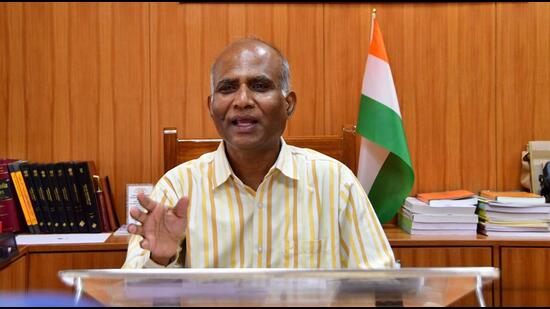
MUMBAI: Voters are confused and apprehensive regarding the ongoing Special Intensive Revision (SIR) of the electoral rolls, with preliminary estimates suggesting that over 20% of names could be deleted. In an interview with Hindustan Times, Maharashtra’s chief electoral officer S Chockalingam addressed these concerns. Excerpts from the interview:
Q. Why is the enumeration in the Mumbai Metropolitan Region (MMR) and other cities less than the state average?
Ans: This is common across the country, as inter-city and inter-state migration is significantly higher in metros. A large floating population makes it difficult for Booth Level Officers (BLOs) to locate electors at their registered addresses. Additionally, many people work all day, and BLOs can meet them only on weekends. These factors have led to lower enumeration levels in metropolitan areas. While 23 districts have achieved over 90% enumeration, in major cities this continues to remain below 80%.
Q. Will this delay the completion of the SIR? Will you need another extension?
Ans: We are on track and expect the enumeration process to be completed by August 17. However, if there are specific circumstances in particular locations that warrant additional time, a limited extension can be considered.
Q. People, especially minority communities, are panicking about deletion of votes from the electoral roll.
{{/usCountry}}Q. People, especially minority communities, are panicking about deletion of votes from the electoral roll.
{{/usCountry}}Ans: Let me clarify that the entire exercise is guided by one principle: no eligible citizen should be left out and no ineligible person should be included. Going by the Constitution and the Representation of the People Act, we need to verify whether a voter continues to reside at the registered address and whether they are Indian citizens aged 18 years and above. SIR is undertaken to verify this.
Q. There is a lot of confusion about documents and the process to be followed.
Ans: There is no need to submit documents if the voter’s details have been successfully mapped in the 2002 SIR records. Further, if there are anomalies in mapping, necessary documentation to clarify the anomalies need to be given. Around 80% of voters have already been mapped. The remaining electors will need to submit documents to establish their eligibility and nationality. To make the process easier, we are also accepting other documents.
Q. What about categories such as transgenders, commercial sex workers, nomadic tribes, or footpath dwellers who may not possess these documents?
Ans: The rules contain special provisions for vulnerable and marginalised categories such as these. We began enrolling transgender persons in the electoral rolls only ten years ago, and many of them may not have been part of the 2002 SIR records. Therefore, special procedures exist for these categories, and BLOs ensure that their enumeration is carried out appropriately.
Q. People also believe that if their name is excluded now, it will not get added later.
Ans: Additions to the electoral roll are a continuous process. Even after the draft electoral roll is published, any eligible person whose name is missing can apply for inclusion by submitting the required documents. Those who could not provide the necessary documents during the current exercise can also reapply once they acquire these. Since there is no immediate election in the state, voters need not panic—there will be sufficient opportunity for correction.
Q. There are estimates that at least 20% of voters’ names may be deleted from the draft SIR electoral rolls.
Ans: SIR is specifically intended to remove Absent, Shifted, Dead, and Duplicate (ASDD) entries. Unlike the Special Summary Revision, which primarily verifies whether there have been changes in an elector’s details, SIR requires the elector’s signature on the enumeration form, making it a more rigorous verification exercise.
At this stage, it is not possible to estimate how many names will be removed from the draft rolls. The extent of deletions is likely to vary between rural and urban areas. Since migration is significantly higher in MMR, the number of ASDD entries—and consequently deletions—is expected to be higher here.
Stay updated with all the Breaking News and Latest News from Mumbai. Click here for comprehensive coverage of top Cities including Bengaluru, Delhi, Hyderabad, and more across India along with Stay informed on the latest happenings in World News.
Stay updated with all the Breaking News and Latest News from Mumbai. Click here for comprehensive coverage of top Cities including Bengaluru, Delhi, Hyderabad, and more across India along with Stay informed on the latest happenings in World News.