Mumbai: The Maharashtra government has constituted a seven-member committee under retired Supreme Court judge Ranjana Desai to prepare a draft legislation for implementing a Uniform Civil Code (UCC) – a common set of laws governing personal matters such as marriage, divorce, inheritance and succession across communities.
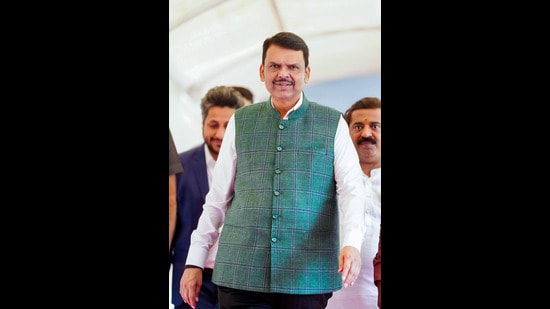
The seven-member panel has been asked to submit its report within six months, chief minister Devendra Fadnavis said while announcing the decision in the legislative assembly on Thursday. “Based on its recommendations, we plan to introduce a UCC bill during the winter session of the state legislature,” he said.
Retired justice Desai, the head of the seven-member committee, was earlier chairperson of the Delimitation Commission. She served in the role from March 2020 till May 2022, when the commission submitted its final report for Jammu and Kashmir, paving the way for assembly polls on the basis of revised constituencies. She currently serves as the chairperson of the Press Council of India (PCI), and the Eighth Central Pay Commission.
With Fadnavis’ announcement, Maharashtra has become the seventh, and largest, Bharatiya Janata Party (BJP)-ruled state to initiate the process of implementing a UCC. The panel tasked with preparing the draft UCC bill includes retired Bombay High Court judges RC Chavan and SG Mehare, former chief secretary DK Jain, former advocate general Birendra Saraf, constitutional expert and Padma Shri awardee Ramesh Patange and educationist Dr Suvarna Rawal.
Fadnavis said the committee would examine the legal, administrative and social dimensions of implementing a UCC in Maharashtra before submitting its recommendations to the government.
{{/usCountry}}Fadnavis said the committee would examine the legal, administrative and social dimensions of implementing a UCC in Maharashtra before submitting its recommendations to the government.
{{/usCountry}}Rollout of a UCC across the country is among the core ideological commitments of the BJP which are yet unfulfilled. The party has already fulfilled two other major promises since coming to power at the Centre in 2014 – construction of a Ram Temple in Ayodhya and abrogation of Article 370, which ended Jammu and Kashmir’s special constitutional status.
Article 44 of the Constitution, one of the directive principles of state policy which is non-binding, urges the state to endeavour to secure a Uniform Civil Code for citizens. But personal matters such as marriage, divorce, inheritance and adoption continued to be governed by religion-specific personal laws since Independence, till Uttarakhand became the first state to enact a UCC in February 2024, followed by Gujarat, Assam, Madhya Pradesh, and Rajasthan. Earlier this month, West Bengal became the sixth BJP-ruled state to launch the UCC process in the past two years.
In all these states, tribal communities have been kept outside the purview of the proposed common framework governing personal laws.
The opposition in Maharashtra said by announcing the start of the UCC process, the government was trying to divert attention from the havoc caused by the monsoon, including disruption of traffic on the much-touted Mumbai-Pune Connecting Link, and the controversy regarding theft of donations received by the Ram Temple in Ayodhya.
“The chief minister is clearly looking for a distraction after the disaster we have seen with the Missing Link project, the corruption allegations and his brazen arrogance. They also want to distract people from the Ram Temple loot,” said Shiv Sena (UBT) leader Aaditya Thackeray.
Referring to the proposed UCC, Thackeray said the government should first ensure ‘uniformity’ in the allocation of development funds to opposition legislators, and in the functioning of central investigative agencies with respect to leaders from the ruling parties.
“Let the government first table the proposal. We will study it and then take a considered position,” he said.
Hafiz Iqbal Chunawala, a member of the All India Muslim Personal Law Board (AIMPLB), said the committee should include representatives from all communities.
“We want a member from the Muslim community to be included on the committee so that our voice is also heard,” Chunawala said. He alleged that excluding community representatives was unjust and accused the government of seeking to impose the UCC on communities that are governed by their own personal laws.
“We oppose the Uniform Civil Code and will pursue all legal remedies and rights available under the Constitution,” Chunawala said.
Stay updated with all the Breaking News and Latest News from Mumbai. Click here for comprehensive coverage of top Cities including Bengaluru, Delhi, Hyderabad, and more across India along with Stay informed on the latest happenings in World News.
Stay updated with all the Breaking News and Latest News from Mumbai. Click here for comprehensive coverage of top Cities including Bengaluru, Delhi, Hyderabad, and more across India along with Stay informed on the latest happenings in World News.