The Maharashtra government on Thursday partially lifted a four-year plastic ban, permitting use, storage, sale, distribution, and transportation of all single-use disposable items such as spoons, straws, plates, cups, glasses, forks, and containers made up of compostable material.
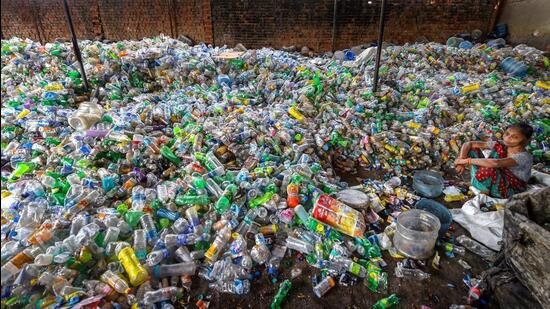
A notification issued by the environment and climate change department (ECCD) has also allowed use of non-woven polypropylene bags, not less than 60 grams per square metre (GSM), and plastic packaging material with thickness below 50 microns.
The order came into immediate effect.
HT on Wednesday reported that the state government had taken such a decision in an empowered committee meeting headed by chief minister Eknath Shinde and deputy chief minister Devendra Fadnavis.
However, the manufacturers or sellers of single-use items made up of compostable material shall have to obtain a certificate from the Central Institute of Plastic Engineering and Technology and the Central Pollution Control Board, the notification issued by Sanjay Sandanshiv, under-secretary, ECCD, said.
“It means the manufacturers will have to obtain the approval in advance and items will have the imprint of the certification from the authorities concerned,” a senior ECCD official said.
Till now, the plastic ban in the state was not applicable to compostable plastic bags that are being used for plant nurseries, horticulture, agriculture, and handling of solid waste.
{{/usCountry}}Till now, the plastic ban in the state was not applicable to compostable plastic bags that are being used for plant nurseries, horticulture, agriculture, and handling of solid waste.
{{/usCountry}}“The plastic packaging material shall be more than 50 microns in thickness - in case the thickness of plastic sheets impairs the functionality of the product, the packaging material may be less than 50 microns,” the notification said.
The environment department has claimed that the changes are being made to bring the state’s policy in consonance with the one adopted by the Central government last year. However, officials said they are under pressure from the industries.
“There were complaints from the industries in export business that the ban had affected their productivity and thus the decision was taken,” an official said, pointing to the permission to use plastic of less than 50 microns.
The state had in March 2018 announced a ban on use, storage, sale, distribution, and transportation of all kinds of plastic bags irrespective of their thickness (with and without handle); non-woven polypropylene bags; one-time disposable items made up of plastic and thermocol such as plates, cups, spoons, glasses, bowls, straws and forks; disposable plastic containers being used at hotels and restaurants; plastic sheets below 50 microns to wrap or store products; plastic pouches to store liquid and plastic being used for packaging food items and foodgrains; plastic and thermocol items used for decoration purpose; and plastic bottles having a holding capacity of less than 0.5 litres.
The objective behind the move was to curb pollution as plastic waste and micro plastic cause danger to marine and freshwater biodiversity, thus hampering the ecosystem.
Compostable plastic means plastic that undergoes degradation by biological processes during composting to yield carbon dioxide, water, inorganic compounds, and biomass at a rate consistent with other known compostable materials. It excludes environmental petroleum-based plastic that does not leave visible, distinguishable or toxic residue, and which shall conform to the Indian Standard: IS 17088:2008 titled as specifications for compostable plastics, as amended from time to time, the notification added.
Stay updated with all the Breaking News and Latest News from Mumbai. Click here for comprehensive coverage of top Cities including Bengaluru, Delhi, Hyderabad, and more across India along with Stay informed on the latest happenings in World News.
Stay updated with all the Breaking News and Latest News from Mumbai. Click here for comprehensive coverage of top Cities including Bengaluru, Delhi, Hyderabad, and more across India along with Stay informed on the latest happenings in World News.