
 E-Paper



Who and what is Maharashtra reading?
From the Konkan coast to the mill lanes of Girgaon, Marathi writers are quarrelling with the pristine village of the bygone era. Here are five novelists and two public voices worth knowing


MUMBAI: On November 1, a Marathi publication asked more than 80 people a simple question: Which Marathi books stayed with you this year? Novelists and poets answered. So did playwrights, publishers, painters, two retired judges, two hospital superintendents and several senior police officers.
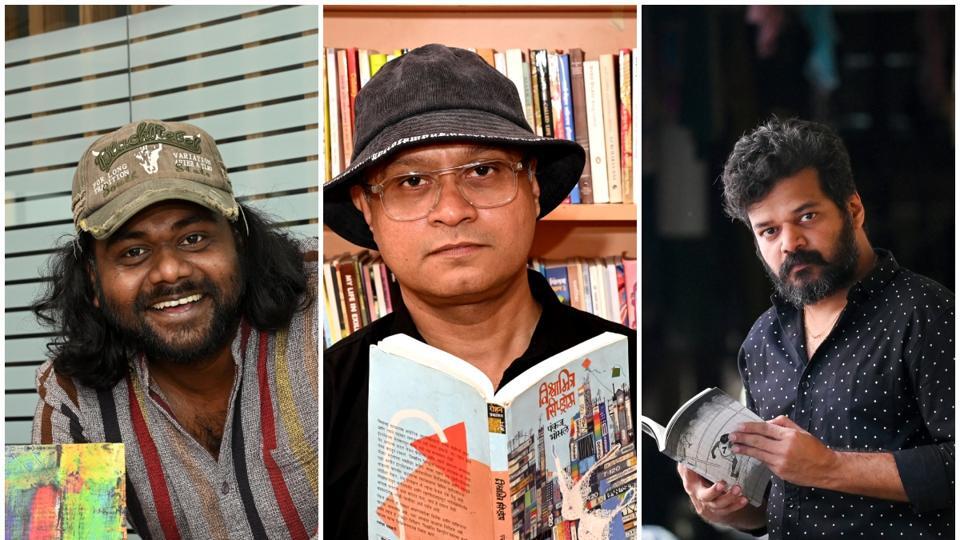
Two books led the count: Akshay Daya Mohite’s novel ‘Billabong’, and Pankaj Bhosale’s ‘Bukhundadki’. While ‘Billabong’ is not a comfortable read, ‘Bukhundadki’ is a pleasure of a different kind. Both deserve a far wider audience.
Some context. Marathi has about 90 million speakers, yet its modernists are barely translated. To an English reader, it can seem like a closed room. Its fiction also carries an old weakness: a soft spot for the pretty village. The canal. The ripening crop. The girl with an earthen pot at the well.
The writers here have shunned that template. They come from the drought belt of Marathwada, the Konkan coast, the chawls of central Mumbai and the suburbs along the railway line. They argue with their elders, and with each other. It is one of the liveliest arguments in Indian letters.
Akshay Daya Mohite: The half-city novel
The terrain in ‘Billabong’ is the ardhanagari, the half-urban belt where so many young Maharashtrians now live. Not the village. Not quite the city. Mohite writes about the Bahujan and elite worlds that collide there, and the young people who move between them. The novel walks through drugs and petty crime, and asks how a young man in a corporate job sees the people who live next door.
The language is its calling card. The critic Randhir Shinde calls it the speech of the young: harsh, violent, profane, free and fearless. He hears an echo of BS Mardhekar’s anxious modernist poems, and finds the novel stretching questions that SV Ketkar raised about urban life a century ago. Academic and author Nitin Rindhe goes further. Marathi fiction, he says, has rarely shown the social layer this book depicts, and he expects ‘Billabong’ to stir things up.
At the launch, recently, the poet Neerja placed the book in the line of Namdeo Dhasal, the Dalit Panther poet who turned Mumbai’s margins into epic. The critic Mukund Kule said it carries forward the language of Bhau Padhye and breaks the conventions of Marathi prose. Reading it, he said, is like watching an edgy web series. It proves the new generation has the dhamak, the nerve, to write as Padhye did.
That comparison matters. Padhye walked Mumbai’s back lanes with a flâneur’s irony and was underrated for decades. When a debut novelist is named his heir, the baton has passed to a new set of readers.
Pankaj Bhosale: The archivist of the footpath
‘Bukhundadki’ grew out of a 2019 Kusumagraj Pratishthan fellowship to study Marathi mystery fiction. Bhosale went hunting for old books across Maharashtra. He worked the footpaths of Fort and Flora Fountain, Pune’s Appa Balwant Chowk, and the raddi shops of Nashik and Kolhapur.
Bhosale discovered a world of words. Critics and universities dismissed detective fiction as low-brow, so nobody preserved it. Baburao Arnalkar wrote more than a thousand mysteries. Gurunath Naik and magazines such as ‘Rahasyaranjan’ kept vast numbers reading. Their early editions now survive in scrap shops and private hoards.
Yet many readers began with these thrillers and moved on to sterner stuff. The pulp built the market the canon lives on. The book does not stop at pulp. It moves between DB Mokashi, GA Kulkarni, Bhau Padhye and Chandrakant Khot. Critics have praised its archival digging and its refusal to rank the literary above the popular. Bhosale tells the story of a cover, a print run, a forgotten author’s life. Never as a footnote.
Author and artist Ganesh Vispute says, “In addition to ‘Bukhundadki’, there are Bhosale’s short stories which depict the changes in the metropolis of the nineties. These changes are at all levels, from technology, Bollywood music, the Internet revolution, and the rise of porn films, to the relationships of young people.” Like Mohite, suburban Mumbai is the karmabhoomi of his literature.
Pravin Bandekar: The novelist who shatters the mirror
Pravin Bandekar began as a poet. Verse, he decided, could not convey what he saw in his native Konkan. Neo-liberal economics was dismantling a rural world, and a bigoted religious right was gaining clout. The Jnanpith laureate Bhalchandra Nemade read his diary-like prose and told him to recast it as fiction.
Bandekar went further and broke the rules of the novel. His first, ‘Chaalegat’ (2009), is about a poet trying to write a novel. He wrote half a dozen drafts, approximately 300 pages, and discarded them as too conventional.
The form came to him at a Dashavatar show, the Konkan’s folk theatre. The actor playing the demon Shankhasur kept stepping out of his role. He paused his lament to accept a cash tip, chatted about his own life, then slipped back into the curse.
Bandekar’s narrator moves the same way: confession, direct address, reportage. His curse is the Konkan of the 1990s. Land grabbed for the Konkan Railway. Fishermen ruined by mechanised trawlers. A region that once elected the socialist Madhu Dandavate slid into a politics where, as Bandekar puts it, no election (be it parliamentary or a zilla parishad poll), seemed complete without a murder.
‘Ujavya Sondechya Bahulya’ (2017), roughly ‘Puppets of the Right-Trunked One’, traces the alliance of politics and religion along the Goa–Sindhudurg coast. It shows how militant outfits recruit young Bahujan men. Bandekar’s own students began wearing symbolic scarves and handing out sectarian pamphlets. They followed gurus “as if in a trance.”
One seed was a boyhood friend, Parsha, a gifted performer of women’s roles in Dashavatar. Self-appointed guardians of the faith hounded him. He fled to Mumbai and, in despair, took his own life.
The rationalist Govind Pansare urged Bandekar to write the book. Within months, Pansare was murdered. Later, Bandekar’s name surfaced on a list of targets, and he has lived under police protection since. Two publishers turned the manuscript down. It went on to win the Sahitya Akademi Award.
‘Indian Animal Farm’ begins where Orwell ends. The animals welcome a regime that promised acche din, and things only get worse. Bandekar reaches for satire because directness is unsafe. Read together, the three books are a political history of the Konkan.
Aasaram Lomte: The witness from Parbhani
Where Bandekar fractures form, Aasaram Lomte bears witness. He is a journalist in Parbhani -- one of Maharashtra’s poorest districts -- and his fiction grows out of his reporting. Like Bandekar, he has won the Sahitya Akademi Award.
His roots are his mother’s. She could not read. He worked beside her in the fields during school holidays. “Our blood has turned to water,” she told him, “but do not end up in this cattle-shed of the fields.”
Meanwhile, the books he read called the countryside lovely and free. Lomte’s quarrel with that pastoral is ideological. In Anand Yadav’s celebrated novel ‘Gotavala’, the farmhand Narba lives like a beast of burden until a tractor uproots him. The novel mourns a lost idyll. Narba never had one, Lomte points out. The “green culture” belonged to the writer, not to the peasant who slaves on the field.
He has published three story collections: ‘Idapida Talo’ (2006), ‘Aalok’ (2016) and ‘Walsara’ (2023). He rejected the Sunday-supplement story, with its fixed word count and tidy ending, and turned instead to the night-time storytelling of folklore and nomads.
In Lomte’s ‘Ojha’, a city professor gets a phone call: his farmer brother has swallowed insecticide. No flourishes. Just the cadence of speech, and a statistic turned back into a person. ‘Dankh’ (The Sting), one critic says, stings the reader’s skin for a week.
The title story of ‘Walsara’ is about a father and son in the same rainless June. The father, a farmer visiting the son’s city home, frets because the sowing is late. The son runs a sand-mining racket. He hopes the rain holds off another ten days, so he can dig out more sand. “Our bread doesn’t depend on it,” he tells his father. The whole collapse of a value system fits inside one family.
‘Tasnas’ (2020) is set inside a farmers’ movement. Narayan Dhule sells his goats to buy a scrap of land. In a quarrel over it, his eyes are gouged out. An activist asks what the movement cannot answer. You fight for the price of grain. What is the price of a life crushed at village level?
Lomte’s method is unsentimental. When a thorn breaks off in your foot, he says, nobody strokes it with a peacock feather. They brand it with hot wax. “The writer must have a heart, and also the ruthless skepticism to turn water into ice.”
As a reporter, he met a woman from drought-hit Jintur. She had been lured away to harvest onions, then told to cut sugarcane instead. She walked home for 14 days. Why not borrow a hundred rupees to travel in an ST bus? “We’re not in the habit of begging, my dear brother.” That dignity, intact and unrewarded, is his subject.
Chairing a literature panel recently, he said, “The Samruddhi and Shaktipeeth expressways cost crores and run straight through villages that still have malnutrition, poverty and the hardest lives for rural women. Do these roads really lead to samruddhi, prosperity?” The writer’s question today, he said, is simple: who are the beneficiaries of the village’s ruin, and who are its casualties?
He also recalled Bhaskar Chandanshiv, the great chronicler of Marathwada, who saw the 1972 drought as a boy. The black soil was supposed to feed anyone who toiled on it. Chandanshiv watched people die of hunger instead, and said it changed how he saw life itself. After that, he left the “green culture” behind and began to confront living as it is. Lomte is his heir.
Avinash Usha Vasant: Reclaiming Girgaon’s voice
Avinash Usha Vasant’s second novel, ‘Thasan’, opens with a question: who truly owns Mumbai? Centered on Girgaon, the city’s historic mill district, the book confronts the 21st-century “isms” like developmentalism, consumerism, and individualism which have hypnotised the metropolis. Following his acclaimed debut ‘Pateli’, Avinash turns his lens on a ‘hood in constant flux. Fittingly, the book cover was launched with a rock song at a performance of Todi Mill Fantasy, rather than a conventional literary gathering, underscoring its spirit of tashan.
Where earlier chroniclers like Annabhau Sathe, Narayan Surve, Namdeo Dhasal, and Jayant Pawar wrote of labour, rage, and mill closures, Avinash carves a unique 21st century voice. While doffing his hat to this literary tradition, he refuses to frame Girgaon merely as a chronicle of misery or reduce it to a cinematic spectacle of underworld crime. Instead, ‘Thasan’ is rooted in assertion politics and the restoration of working-class dignity.
The title derives from street lingo popularised by Kader Khan’s dialogues for the movies, and uttered with street-smart swag. The novel is set between 1998 and 2003, during the malevolent mutation of Mumbai when the mills had stopped but the towers had not yet risen. It follows two chawl boys, Hava and Chemlya and explores multi-directional rivalries: between boys in the lanes, chawl girls fighting for public space, and an entire community resisting the glass towers encroaching on mill land.
Crucially, ‘Thasan’ foregrounds the collective history of labour and the role of women. While men worked the looms, the mool stree (original woman) running the khanaval (boarding house) fed migrant workers and made the neighbourhood habitable. From securing the country’s weekly Sunday holiday to driving the Samyukta Maharashtra movement, Girgaon’s working class built the city’s cultural foundation. Yet, after 2001 development rule changes shrank public housing allocations, 600 acres of mill land were captured by finance capital, replacing vibrant shejar bhaav (neighbourliness) with vertical chawls.
Discussed (and formally launched) in Pune on November 14, ‘Thasan’ serves as a counter-archive against the erasure of memory. These days, Pune is aspiring to be a smart city, undergoing its own wave of demolition and decimation of ancient wadas and cultural memories. Avinash’s weapon to counter this assault is language. He deploys Girgaon Marathi, a polyphonic khichdi of words from Sindhudurg, Khandesh, Deccan, Telangana and Gujarat in ‘Thasan’. In doing so, he helps us make sense of our daily lives; and more importantly, articulate our collective cry and demands.
Two voices beyond the novel
Nikhilesh Chitre: Against the dictatorship of realism
Nikhilesh Chitre studied zoology, then became a freelance writer and translator. He has translated Rainer Maria Rilke’s selected letters into Marathi. His story collection ‘Goggle Lavlela Ghoda’ (The horse in goggles) is a gem. His short film ‘Pathar’, from a Satish Tambe story, is on YouTube.
His 2018 book ‘Aadvatechi Pustake’ (Books off the beaten track), from Lokvangmay Griha, began as a magazine column. It introduces Marathi readers to lesser-known foreign writers, many from outside English. His method is simple. One book names another writer. He tracks that writer down. Then the next.
His diagnosis is sharp. Since the 1960s, he argues, social realism has ruled Marathi fiction like a literary dictatorship: write what you lived and how you suffered, or you are not a real writer. He has no quarrel with realism, only with its monopoly. By his estimate, barely 10% of Marathi writers even try to go beyond it.
He traces the narrowing to colonial-era novels that copied Dickens and Thackeray, while tales of the fantastic were dismissed as mere entertainment. Yet Indian storytelling was never only realist. ‘Lilacharitra,’ the Jain Prakrit tales, the epics and the ‘Kathasaritsagara’ built layered, playful narratives. Chitre finds that spirit alive today in East European, Japanese, Iranian and Korean fiction. His challenge to Marathi is to rediscover its own.
Ganesh Vispute shares his inputs about Nikhilesh Chitre. “His ‘Goggle Lavalela Ghoda’ takes the reader to a parallel universe with a different cosmological reflection and makes you dizzy.” Vispute adds, “Chitre’s ‘Adwatechi Pustake’ is a book about important (and relatively unknown) books and writers in world literature.” Both books have been well-received by book lovers.
Sameena Dalwai: The sum total of many parts
Sameena Dalwai works in two languages and several professions: lawyer, academic, newspaper columnist. Her family is Maharashtra’s reform movement in miniature. Her uncle Hamid Dalwai founded the Muslim Satyashodhak Mandal; her grandmother was Nalini Pandit, one of the legendary political scientists of Maharashtra. (A disclosure: Sameena and I co-edited ‘Babri Masjid, 25 Years On…’ with Irfan Engineer).
Her doctoral monograph, ‘Bans and Bar Girls: Performing Caste in Mumbai’s Dance Bars,’ asked a simple question about the 2005 dance-bar ban. If drink, song and dance were each legal, why ban them together? Her answer ran through caste, gender and how women’s labour is valued.
Her Marathi essays, ‘Bhatak Bhavani’, are about identity: woman, feminist, Muslim, Indian. The book refuses halves. She is not half Hindu and half Muslim, she says. She is a whole Hindu, a whole Muslim, a whole socialist, a whole woman, a whole feminist, a whole lawyer. When she teaches feminism, she starts with Jyotiba Phule, not Mary Wollstonecraft.
Her English memoir ‘Love Jihad’ takes on the “love jihad” panic. Its argument: the national conversation makes Hindu women and Muslim men hyper-visible, and makes caste invisible. Caste is the elephant in the room. She quotes her grandmother’s warning: as religious consumerism grows, common sense shrinks.
A counter-archive
What binds these authors? A refusal to be nostalgic about 20th-century Maharashtra. None treats rural or working-class life as a wound to be dressed with literary ointment.
They share something else: a fear of forgetting. Tukaram’s poems, the legend goes, were drowned in the Indrayani river. Avinash likes to recall that. For the Bahujan writer, he says, documentation is a political act.
Look at what each one saves. Bhosale saves pulp from the raddi shop. Lomte saves a person from a statistic. Bandekar records a coast’s slide into bigotry. Avinash records Girgaon before the towers erase it. Mohite records the half-city as it is now. Chitre recovers forms Marathi forgot. Dalwai recovers a feminism that began with Savitribai Phule.
Jyotiba Phule said: don’t argue with theology, open a school. Avinash says: don’t argue with the towers, publish a novel.
Almost none of this work exists in English. But ninety million people are having one of India’s most riveting literary arguments, and the rest of the country cannot hear it. Readers, publishers and translators: here are seven places to start, and a dozen more after that.
Ramu Ramanathan is a Mumbai-based playwright, poet and journalist
Stay updated with all the Breaking News and Latest News from Mumbai. Click here for comprehensive coverage of top Cities including Bengaluru, Delhi, Hyderabad, and more across India along with Stay informed on the latest happenings in World News.


