Medical experts have taken exception to the mushrooming ‘trauma centres’ across cities, saying: “Every board that reads ‘trauma treatment available 24 by 7’ isn’t worth taking a serious patient there.”
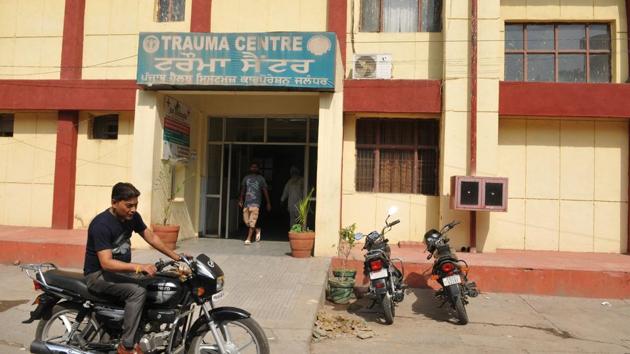
“Such baseless boards should be pulled down and all such ‘trauma centres’ should be ranked to stop the cheating with patients,” they said at the 9th national conference of Indian Society of Trauma and Acute Care (ISTAC) here on Thursday.
“By merely writing on the wall does not mean a hospital can treat trauma patients. It’s high time hospitals should be rated by health authorities and the rating should be clearly mentioned,” said Prof Samir Misra, senior faculty, trauma surgery, at KGMU and convenor of the three-day ISTAC while addressing media persons on Thursday, the second day of the conference.
He said there are four levels of trauma centres where level-I is the one where all super-specialty facilities are available 24 by 7 and teaching and training also goes on. The level II lacks teaching and training and level III does not run 24 by 7. The level IV trauma centre has training staff to stabalise patient with primary care and refer them to an upper level trauma centre, he said.
“Writing levels will clearly help the common man understand the level of services but if someone is simply writing trauma centre, it is unethical,” said Prof Misra.
{{/usCountry}}“Writing levels will clearly help the common man understand the level of services but if someone is simply writing trauma centre, it is unethical,” said Prof Misra.
{{/usCountry}}At present trauma centres do not write their levels but it is time the health department acts and makes this possible, said Prof Sandip Tiwari, HoD, trauma surgery, at KGMU.
“In fact, hospitals should have such a network that in case a patient is referred to one hospital, it should get the information even before the patient reaches there,” said Prof Vinod Jain, founder president of the UP chapter of ISTAC. He delivered a lecture on Hospital Networking In Trauma Protocol.
Prof Jain said four things can really improve trauma care. “First is to identify hospitals giving trauma care in a region and designating their level. Second: Developing communication between ambulance and hospitals through wireless systems. Third: Proper documentation and universal reference form and fourth: referring patient after direct communication with the receiving hospital,” he said.
“When a patient is in need of trauma care every passing minute raises life threat, hence if the patient reaches the trauma centre with the kind of facilities required, life becomes easier. A mismatch does the opposite,” said Prof Misra.