
 E-Paper



To reduce air pollution, Ghaziabad to implement Grap measures from today
UPPCB officials said that the decision was taken in a video conference meeting held by the Commission for Air Quality Management in the National Capital Region and Adjoining Areas on October 12

 Prefer HTon Google


Starting Friday, the Uttar Pradesh Pollution Control Board (UPPCB) will implement Graded Response Action Plan (Grap) measures listed for areas with ‘very poor’ air quality in Ghaziabad, even though most of the district is reporting ‘poor’ air for now.
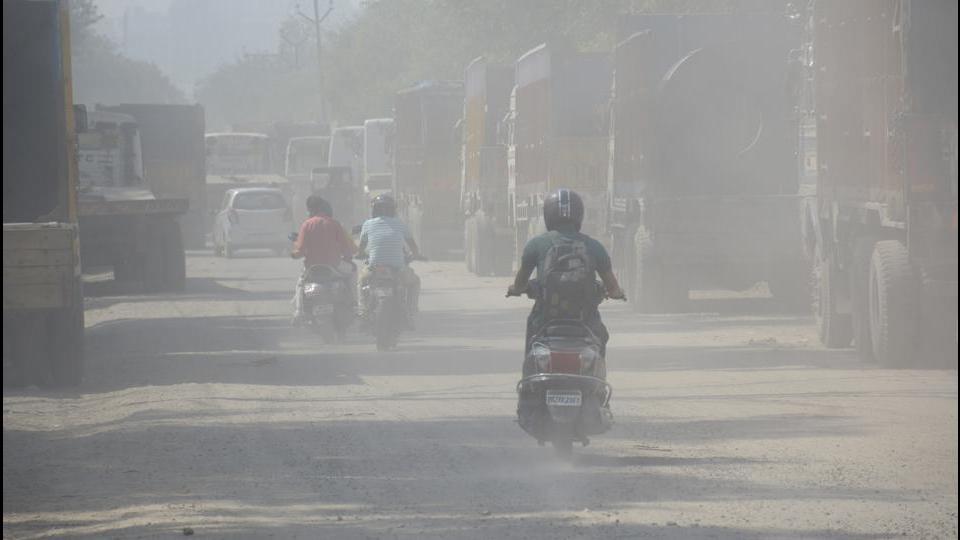
An air quality index (AQI) reading between 0 and 50 is considered good, between 51 and 100 is considered satisfactory, between 101 and 200 is considered moderate, between 201 and 300 is considered poor, between 301 and 400 is considered very poor, and above 400 is considered severe. On Thursday, Ghaziabad recorded an AQI reading of 22--in the ‘poor’ category.
UPPCB officials said that the decision was taken in a video conference meeting held by the Commission for Air Quality Management in the National Capital Region and Adjoining Areas on October 12, adding that the implementation of Grap in the district will include different measures, except for the ban on diesel generator (DG) sets. They added that as part of Grap measures, the Ghaziabad municipal corporation chalked out a comprehensive plan for mechanised road sweeping and water sprinkling, which will be implemented at all the major roads in the city every day.
The road stretch network identified for the two activities measures about 526km.
“We will also implement other Grap measures listed under the ‘very poor’ air quality category, except for the ban on diesel generator sets. We have also asked development agencies such as the Ghaziabad Development Authority (GDA) and UP Awas Vikas to ensure projects in their jurisdiction comply with construction site norms,” said Utsav Sharma, regional officer of UPPCB.
In 2016, the Supreme Court-appointed Environment Pollution (Prevention and Control) Authority had conducted meetings with state government representatives and experts, and come up with a plan, Grap, that listed different measures to be taken when air quality deteriorated.
Officials said that they initially will focus on dust reduction and prevention of garbage and crop residue burning incidents.
“We asked UP Awas Vikas to specifically check vacant plots where unauthorised occupants often burn garbage. We also asked GDA and the corporation to ensure proper lifting of garbage else we will not hesitate to impose penalties. Both UP Awas Vikas and GDA will conduct fortnightly inspections at construction sites and upload their data on the dust control audit portal,” Sharma added.
Officials of the corporation confirmed they will start with intensive road sweeping and dust control measures.
“The entire plan has been chalked out and we will be working in close coordination with the UPPCB to ensure that air pollution remains low this winter season. The responsibilities given to us as part of the ‘winter action plan’ will also be taken up throughout the season,” said MS Tanwar, municipal commissioner.
According to official statistics of the pollution board, Ghaziabad in 2019-20 recorded an annual average PM10 concentration level of 218 micrograms per cubic metre (mpcm), which reduced by 14.5% to 186mpcm in 2020-21.
Likewise, the officials said that Ghaziabad recorded an annual average PM2.5 concentration level of 53.04mpcm from April 2021 to September 2021, and an average of 64.20mpcm during the same period in 2020.
The standard limit for PM10 and PM2.5 is 100mpcm and 60mpcm, respectively. They are considered the main pollutants in the region.


