
 E-Paper



Another complaint filed amid Dharmasthala probe
Indravati, a resident of Nelyadi, appeared before the SIT on Monday, claiming her sister was abducted, sexually assaulted, and murdered. She said Padmalatha, daughter of the late Devananda, was a II PUC student at SDM College, Ujire, when she went missing on December 22, 1986

 Prefer HTon Google


Bengaluru: Thirty-eight years after the death of a pre-university student in Dharmasthala, her sister has asked the special investigation team (SIT) to reopen the case and exhume the remains to aid a fresh investigation.
Indravati, a resident of Nelyadi, appeared before the SIT on Monday, claiming her sister was abducted, sexually assaulted, and murdered. She said Padmalatha, daughter of the late Devananda, was a II PUC student at SDM College, Ujire, when she went missing on December 22, 1986.
“Thirty-eight years ago, my sister Padmalatha, who was studying in the second PUC at SDM College. She went to college on December 22, 1986 at Ujire, returned to Dharmasthala and went missing in the evening. Her decomposed body was found on the side of a stream on February 17, 1987,” her petition states.
She recalled that her father, a CPI(M) leader, led several protests seeking justice, prompting the government to hand the matter to the Corps of Detectives (COD). The case was discussed in the legislative assembly, and then Home Minister Rachaiah visited their home, assuring action. The probe was later closed as “undetected.”
Calling it a likely case of organised crime, Indravati said the family chose burial over cremation to preserve the possibility of future forensic testing. She has now asked the SIT to exhume the remains and expressed readiness to testify if the case is reopened.
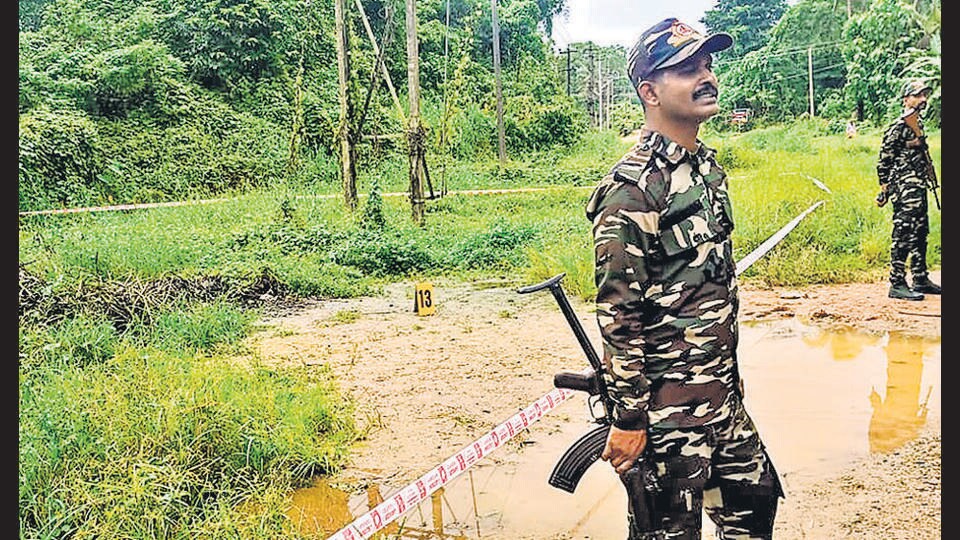
Meanwhile, the SIT, currently investigating the Dharmasthala mass burial case, is also preparing to deploy Ground Penetrating Radar (GPR) at site number 13, one of several locations marked by a complainant. Officials said the technology arrived in Belthangady on Monday and will be used on Tuesday to check for possible human remains without immediate digging.
“This is a non-invasive method that can give us a clearer idea of what lies underground before we begin digging. Spot 13 has posed challenges because of its location near a dam, multiple power lines, and the main road. The GPR will help us decide if exhumation here is even possible,” an officer who did not want to be named explained.
Investigators have dug at 15 marked spots so far, recovering human remains only at spot 6. At another location near spot 11 — now reclassified as spot 14 — a skull and bones were found on the surface.
The Dharmasthala mass burial case stems from serious allegations made by a former sanitation worker, who claimed he was ordered to bury multiple bodies near the river between 1995 and 2014, including those of women and girls who he believed had been sexually abused. He has guided officials from multiple government departments to specific locations, offering detailed descriptions of each site.
A complaint was lodged on July 3 and an FIR was registered a day later.


