PRAYAGRAJ: Success never gets served on a platter; it’s earned through relentless perseverance, sleepless nights, and the courage to rise every time failure strikes. Scaling the PCS 2024 was no different.
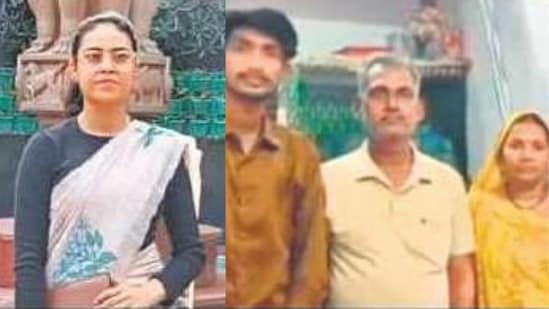
The achievers, who today stand as inspirations for lakhs of aspirants, share the mantra which tided them over every obstacle: trust in yourself, stay consistent, and never give up.
No story reflects this truth more beautifully than that of Delhi’s Neha Panchal, the PCS 2024 topper. Nearly 10 years after marriage, with the responsibilities of an eight-year-old child and a household on her shoulders, Neha took out eight disciplined hours of study every day. Her journey was far from easy—but her resolve was stronger than any challenge. With quiet determination, she proved that persistence is an aspirant’s greatest strength.
Other rank-holders also echoed the same sentiment.
Third-rank holder Abhay Pratap Singh and fourth-rank holder Anamika Mishra said that the spirit of never giving up is what ultimately clears the path to success while seventh-rank holder Pooja Tiwari urged aspirants to keep striving despite difficulties and to shut the door on negativity.
Meanwhile eighth-rank achiever Anurag Pandey advises students to avoid getting lost in the maze of coaching centres and endless study material. Instead, he says, trust your preparation—and trust yourself.
{{/usCountry}}Meanwhile eighth-rank achiever Anurag Pandey advises students to avoid getting lost in the maze of coaching centres and endless study material. Instead, he says, trust your preparation—and trust yourself.
{{/usCountry}}The PCS 2024 results also delivered an extraordinary message: dreams from smaller districts can shine the brightest. Barring topper Neha Panchal, eight of the top nine achievers come from small towns. These include Rae Bareli’s Ananya Trivedi (Rank 2), Bijnor’s Abhay Pratap Singh (Rank 3), Ayodhya’s Anamika Mishra (Rank 4), Hardoi’s Deepti Verma (Rank 6), Ambedkarnagar’s Pooja Tiwari (Rank 7), Azamgarh’s Anurag Pandey (Rank 8), Fatehpur’s Shubham Singh (Rank 9), and Ayush Pandey from Amethi (Rank 10)—all proving that determination, not geography, defines success.
The wave of achievement also extended to rural areas. A small tea stall in Sirathu, Kaushambi woke up to celebrations after Sunil Maurya, son of tea vendor Nanka Maurya, cracked UPSC with an impressive Rank 82. Sunil, the eldest of three siblings, studied at SAV Intermediate College before moving to Prayagraj for higher education.
Another inspiring story was from Pratapgarh. Amit Singh, son of bus conductor Vinay Singh, secured Rank 152 and became assistant commissioner of commercial tax. Despite financial struggles and the loss of his mother, Amit’s resolve never wavered. After completing his B Sc in Prayagraj, he dedicated himself to PCS preparation while his father, juggling long hours on a Prayagraj–Madhya Pradesh route bus, ensured no need of his son went unmet. When the results arrived, joy flooded their humble home, and Vinay Singh’s eyes filled with proud tears.