
 E-Paper



Bihar panchayat polls: Trend reverses,women emerge as ‘better half’ after 50% quota
In the first phase, 15,328 candidates filed their nomination for different panchayat posts, of which 9,093 were women, which comes to 52.79%. For the second phase, 76,279 candidates filed their nominations, including 40,168 women, ie. 52.65%.

 Prefer HTon Google


PATNA
A former commissioner with Chief Vigilance Commission is set to contest the panchayat election in Bihar from Raj Singhwahini panchayat in Sonbarsa block of Sitamarhi district, which was represented for the last five years by his wife, who now wants to move on to state-level politics, breaking the stereotype that men use women as proxy in grassroots politics, in which Bihar was the first state to provide 50% reservation to women in 2006.
Arun Kumar’s wife Ritu Jaiswal, as mukhiya of Raj Singhwahini panchayat, has been a recipient of the “Champions of Change” award from vice-president M Venkaiah Naidu and the Deen Dayal Upadhyay Panchayat Sashaktikaran Puraskar (DDUPSP), 2019, by union minister of panchayati raj Narendra Singh Tomar for her work.
Ritu had contested the last Assembly election on RJD ticket and narrowly lost.
This may be an isolated case, but it also underlines the changing trend. Despite reservation, Ritu had won from a general seat and contested against male counterparts. The statistics this year also indicate that more women are interested in jumping into the election fray than the 50% quota.
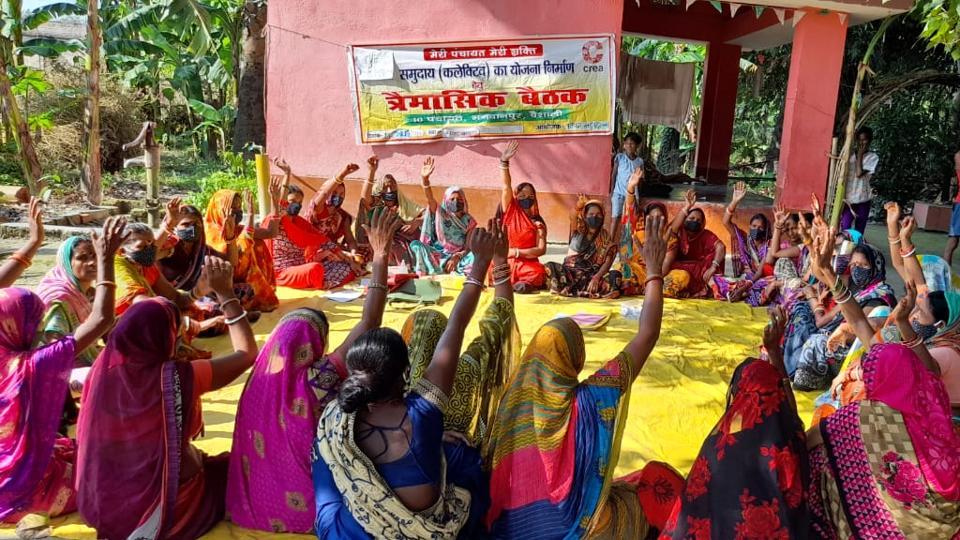
Woman candidates have outnumbered men in the forthcoming panchayat elections by a good margin in the first two phases and the trend is likely to continue, considering the growing awareness among women in the rural areas, which was reflected during the last panchayat elections as well as Assembly and Lok Sabha voting patterns.
In the first phase, 15,328 candidates filed their nomination for different panchayat posts, of which 9,093 were women, which comes to 52.79%.
For the second phase, 76,279 candidates filed their nominations, including 40,168 women, ie. 52.65%.
Bihar had 71,046 women out of 1,36,573 panchayati representatives after the 2016 panchayat polls. This comes to 52.025% representation of women.
“It shows gender imbalance in Bihar’s rural governance is gone, gender stereotypes are breaking and it would gradually end apprehensions about women being projected as proxies for their husbands. Women enjoying empowerment has started making a difference, as it will gradually help change the male-dominated climate not only in grassroots politics, but also in improving their much-needed participation in workforce. Chief minister Nitish Kumar has been assiduously working on this from day one and now women are in every field,” said Bihar’s information and public relations minister Sanjay Kumar Jha.
Female literacy in Bihar went up from a mere 37% in 2005-06 to 60% in 2015-16, though still the lowest in the country, and is expected to go further up in the new Census, as girls have been outnumbering boys at the secondary level also. As per the National Statistical Organisation report released in 2020, the female literacy rate in rural Bihar stood at 58.7% while it was 75.9% in urban areas.
Despite constituting less than 9% of the total number of candidates in the fray, women showed far greater enthusiasm than their male counterparts in voting in Bihar during the Lok Sabha elections. In the moderate overall voter turnout of 57.46% in the state, women’s share was close to 60%, even though Bihar has an adverse sex ratio.
In the 2020 assembly elections also, women outnumbered men in voting. While the voting percentage for women was almost 60%, it was just 54.6% for men.
“The reservation to women at the panchayat level has certainly contributed to their empowerment, as their voting behaviour has changed since 2006. Women have outnumbered men in voting consistently since 2010. It has strengthened the democratic process through gender participation and equality and now their participation in grassroots politics will created upward pressure and make more room for them with or without reservation,” said former DM Diwakar, former director of AN Sinha Institute of Social Studies.
“Such is the level of enthusiasm that many women have resigned from the posts in the self help groups (SHG), formed by JEEVIKA, the Rural Livelihood Project of the rural development department. They want to fight Panchayat elections and so they resigned from the JEEVIKA group before filing nominations,” Nagendra Kumar, a social activist from Nalanda, said.
Akhtari, another social activist who has been working among rural women for year, said awareness about the constitutional rights of women and of the power system has grown among women in rural areas. “I feel more enthusiasm among rural women for the Panchayat elections this time in comparison to the previous elections after the reservation of 50% seats for women in Panchayats by Nitish Kumar government in 2006. In the first post reservation Panchayat elections in 2011, not many rural women were aware about the reservations they were given while in the second Panchayat elections in 2016, women were not so confident of being candidates for Mukhiya or ward members,” she said.
But the saddest part is that participation of women from the Muslim community in the entire exercise seems to be quite low, she says.
Headline: Women in panchayats
Intro: Bihar reserved 50% of panchayat posts for women in 2006, but results have been visible since last panchayat polls five years ago
2016 rural bodies’ polls
1,36,573: Total number of panchayati representatives
71,046: Number of women representatives
Representation : 52.025%
2021 polls
1st phase nominations
15,328: Total number of candidates
9,093: Women candidates
Share: 52.79%.
2nd phase
76,279: Total number of candidates
40,168: Women candidates
Share: 52.65%


