Chhattisgarh chief minister Bhupesh Baghel on Friday inaugurated a millet processing unit in Maoist-hit Kanker district, which is said to be one of the biggest such facilities in the country.
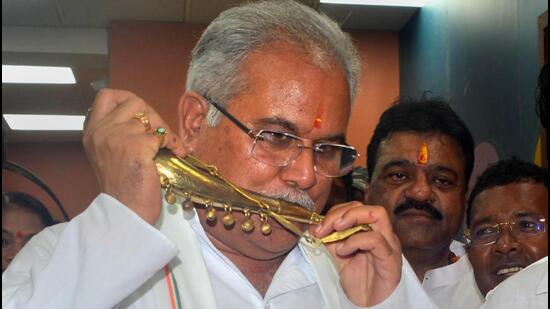
The unit with a capacity of processing 10-12 thousand tonnes raw material annually has been set up by the Ayurveda Private Limited under the state’s millet mission in Nathia Nawagaon village under Charam development block, officials claimed.
Thousands of farmers particularly from Bastar region will be benefitted with the facility which will deal in production of dalia, suji, flour vermicelli, pasta, soup mixture, biscuit, cookies and laddoo after processing of Kodo, Kutki and Ragi millets.
Millets are cultivated in lands with low fertility, mountainous terrain, tribal and even rain-fed areas in states such as Andhra Pradesh, Gujarat, Haryana, Madhya Pradesh, Maharashtra, Karnataka, Uttar Pradesh, Tamil Nadu and Telangana, apart from Chhattisgarh. It is a kharif crop and is sown in July.
According to the Indian Council of Agricultural Research, millets are drought-tolerant and resistant to climate change. They are suitable for small growers as their cultivation requires lesser water than that of rice and wheat.
{{/usCountry}}According to the Indian Council of Agricultural Research, millets are drought-tolerant and resistant to climate change. They are suitable for small growers as their cultivation requires lesser water than that of rice and wheat.
{{/usCountry}}Baghel also inaugurated a tamarind processing plant in Dhuragaon of Lohandiguda development in Bastar district.
Officials said that the plant has the capacity to manufacture 10 metric tonnes of tamarind pulp, five metric tonnes of tamarind chapati and three metric tonnes of tamarind seed powder per day.
“Spread over an area of two acres, the plant is well-equipped with all the necessary machinery and modern facilities. The plant also has a food laboratory. The plant is fully automatic with a manual mode operation option as well for power backup and to ensure uninterrupted manufacturing,” said an official.
Meanwhile, during the Bastar visit, the chief minister was also present in a programme in which the Bastar district administration signed a memorandum of understanding (MoU) with BSNL to provide free internet facility through Wi-Fi in 108 villages of the Maoist-hit district.
The MoU was signed between Bastar collector Chandan Kumar and general manager BSNL Bastar, Sharadchandra Tiwari as a part of the district administration’s ‘ Bastar Connect’ programme under which 73 villages of Bastar development block and 35 villages of Tokapal development block have been identified for providing free internet service, said a press note issued by government.
For the service, the BSNL will set up equipment and will also look after its maintenance. The free WiFi facility will be available in haat-bazar, panchayat building and public places in the villages, the official added.