
 E-Paper



Chhattisgarh journalist murder: 3 arrested; mastermind contractor still at large
Police teams are raiding various spots across the country to nab Suresh Chandrakar, a local road contractor who is suspected to be the mastermind behind the journalist’s killing

 Prefer HTon Google


The Chhattisgarh police on Saturday arrested three accused in connection with the murder of 28-year-old journalist Mukesh Chandrakar in Bijapur district on January 1.
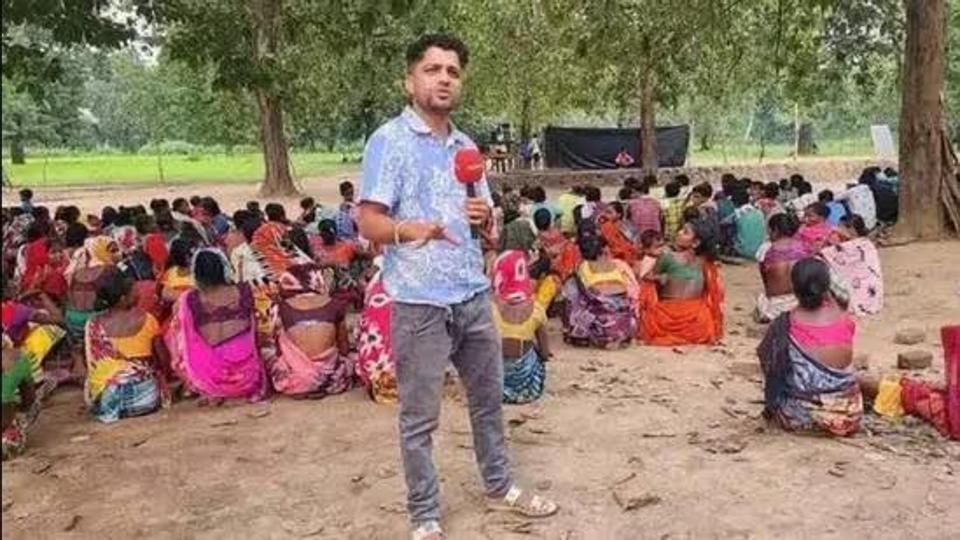
Ritesh Chandrakar, one of the suspects, was apprehended at Raipur Airport, while the other suspects, supervisor Mahendra Ramteke and Dinesh Chandrakar, were arrested in Bijapur, said inspector general of police, Bastar region, Sunderaj P.
However, Suresh Chandrakar, a local road contractor who is suspected to be the mastermind behind the killing, is still at large and teams are raiding various spots across the country to nab him. Meanwhile, an illegally constructed construction yard of Suresh was demolished on Saturday.
The IG said that details regarding all assets and bank accounts of contractor Suresh Chandrakar and other accused are being reviewed by the police and district administration.
Police have also formed a Special Investigation Team (SIT) under additional superintendent of police, Bijapur, for further investigation in the case.
Mukesh, a television journalist who had reported from the Bastar region for NDTV, also founded a YouTube channel, Bastar Junction. He went missing on January 1 shortly after receiving a call from a local contractor’s cousin.A person aware of the matter said Mukesh had told a journalist in Raipur about the phone call and that the contractor’s brother wanted to meet him.
Police said that a missing person’s case was registered with the Kotwali Police Station, Bijapur, after journalist Mukesh Chandrakar’s elder brother Yukesh Chandrakar, also a journalist, lodged a complaint around 7.30pm on January 2 that his brother had been missing since 8.30pm the previous night.
The IG said that during the investigation, relatives and media colleagues of Mukesh were questioned about his disappearance, and the mobile tower locations of suspected individuals were retrieved.
Based on the deceased’s last known location, all rooms at the premises of contractor Suresh Chandrakar in Chattan Para were inspected on the night of January 2 but nothing was found.
“On January 3, 2025, all possible efforts were made to locate Mr. Mukesh Chandrakar. Suspecting foul play, the newly floored septic tank in the badminton court area at Suresh Chandrakar’s premises was inspected. Senior officials were informed, and around 2.30pm, in the presence of the tehsildar and FSL (forensic science laboratory) team, the new flooring was broken with the help of a JCB machine and upon opening the septic tank lid, a male body was found,” said the IG.
The deceased had injuries on the head, back, stomach, and chest caused by a hard and blunt object.
“Interrogation revealed that the deceased Mukesh Chandrakar and Ritesh Chandrakar were known to each other and had frequently interacted over family and social matters. On the night of January 1, at around 8pm, a heated discussion occurred between them regarding Mukesh allegedly hindering the work of Ritesh’s brother contractor Suresh Chandrakar. Subsequently, Ritesh, along with supervisor Mahendra Ramteke, attacked Mukesh with an iron rod, causing his death on the spot. The body was then disposed of in the septic tank,” the IG said.
The IG further said that a chargesheet will be filed in court soon based on scientific and technical evidence collected by the SIT.
Meanwhile, Chhattisgarh deputy chief minister Vijay Sharma on Saturday said, “The main accused in the case, Suresh Chandrakar, is a Congress leader and office bearer of the party in the district. He is absconding and four teams have been constituted to trace him.”
On the other hand, Sushil Anand Shukla, president of the Chhattisgarh Congress’ communication department, condemned the journalist’s murder and alleged that that the main accused, Suresh Chandrakar, has ties with the Bharatiya Janata Party (BJP). He said that Suresh had recently joined the BJP, and he was welcomed by BJP leader and the party’s former Bijapur district president G. Venkat
-kW0H-U20214218012MgB-250x250%40HT-Web.jpg)


