
 E-Paper



Deforestation for Parsa mining starts, activists claim 2 lakh trees will be axed
Activists claimed that the women were guarding the trees in the day time, hence the trees were axed during the night.

 Prefer HTon Google


RAIPUR: Deforestation has started in the Hansdeo Aranya Forest, 20 days after the Chhattisgarh government gave the final approval for non-forestry use of land for Parsa opencast coal mining project, which falls in Surajpur and Surguja districts, activists said on Tuesday.
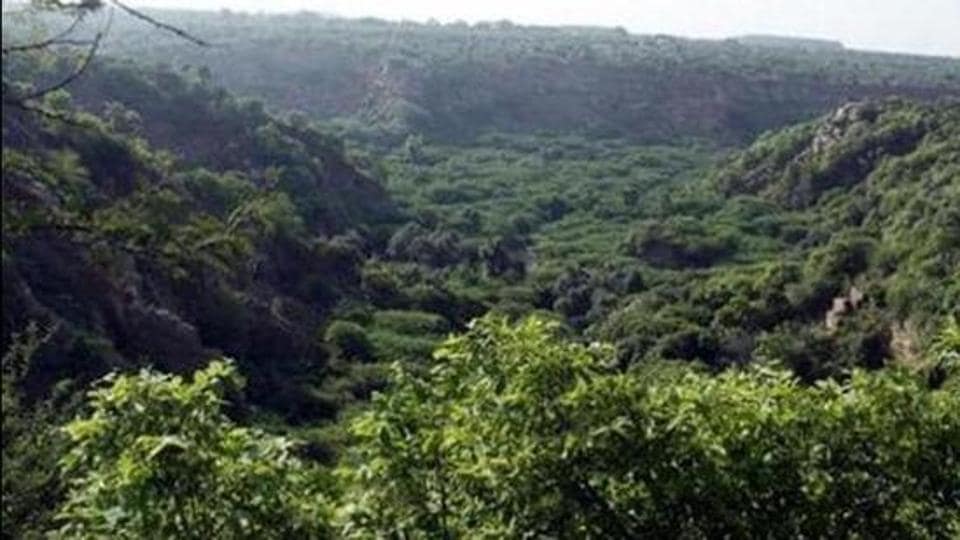
“The deforestation has started in jungles of Salhi village on Monday night. In the day time, the women were guarding the trees hence they axed them in the night. Around 2 lakh trees are to be axed,” said Alok Shukla, convener of the Chhattisgarh Bachao Andolan, who is working for forest rights in the area.
The approval by the Chhattisgarh government for 841.538 hectares of forest land for the Parsa mining project was granted on April 6. The state’s forest and climate change department granted approval for mining with 15 conditions, which are mentioned in the approval order.
Activists claimed that around 700 people will be displaced and around 840 hectares of dense forest will be destroyed due to the Parsa mining project. According to the 2009 census of the forest department, around 95,000 trees were expected to be axed but in 2022, the number of trees would be around 2 lakh, they added.
The Parsa coal block has been allocated to Rajasthan Rajya Vidyut Utpadan Nigam Limited (RRVUNL) while coal mine developer-cum-operator (MDO) operations have been awarded to Adani Enterprises through competitive bidding.
Shukla said that on April 6, the final approval for the project was given by the state government in complete violation of provisions given under the fifth schedule of constitution, PESA 1996 and Forest Rights Act, 2006.
“The forest clearances for the Parsa coal mine are based on forged gram sabha documents which were never investigated by the state government even after demands from us,” he said.
Adani Enterprises did not respond to HT’s query over the ongoing deforestation drive.
Last year, the biodiversity study conducted by ICFRE in consultation with Wildlife Institute of India, in Hasdeo Arand Coalfield, to assess the floral and faunal biodiversity of coalfield comprising 23 coal blocks recommended that total 14 coalfields may not be recommended for mining keeping in view of conserving the relatively dense moist-dry deciduous sal dominated forest tracts that provide home forest for elephants.
Hasdeo Arand is one of the largest contiguous stretches of very dense forest in central India spanning 170,000 hectare and has 23 coal blocks. In 2009, the environment ministry categorised Hasdeo Arand to be a “No-Go” zone for mining because of its rich forest cover but opened it again to mining because the policy was not finalised.
Elephants have a significant presence throughout the year, and are an important part of a large migratory corridor. Hasdeo Aranya forests are the catchment of Hasdeo River, Mahanadi’s largest tributary, which is critical for perennial river flow. It is also the watershed of Hasdeo Bango reservoir and thus critical for irrigation of 3 lakh hectare double-cropped land in the “rice-bowl” state of Chhattisgarh.
-kW0H-U20214218012MgB-250x250%40HT-Web.jpg)


