PATNA
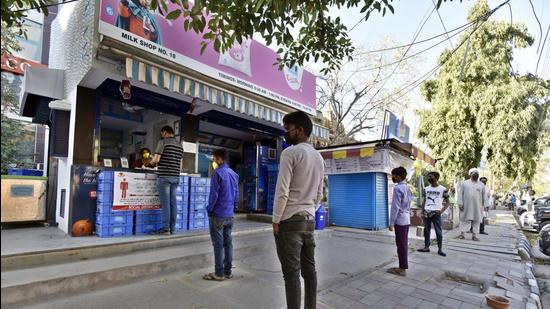
The floods and the coronavirus pandemic have dealt a double blow to farmers, affecting not only their crops but also milk production, turning back Bihar from a milk surplus to a milk deficit state, officials have said.
The average daily milk procurement of the Bihar State Milk Co-operative Federation Ltd (COMFED), the largest milk federation in eastern India, is down 18% since the pre-Covid period of 2019-20 and 23% as compared to 2018-19.
In numbers, COMFED’s average daily fresh milk procurement is now down to 14 lakh litres from 17 lakh litres in 2019-20 and 18.20 lakh litres in 2018-19, when Bihar was a milk surplus state, said officials requesting anonymity.
In fact, Bihar had to source milk from Karnataka and Odisha last year to bridge its demand supply gap.
Dwindling collection
In terms of month-wise comparison, the early floods in June have led to 12.5% shortfall in COMFED’s overall milk procurement as compared to the same month last year. However, the shortfall is 22% during July this year as compared to April 2020, the first month after the March 25 lockdown, when supplies peaked to 18 lakh litres per day. The closure of sweet shops during lockdown had left farmers with no option but to sell their surplus milk to cooperatives, said industry sources.
Gradually, as migrants began to return home during the pandemic, the farmers were unable to spare as much milk as they used to earlier and the supply to cooperatives began to plummet.
{{/usCountry}}Gradually, as migrants began to return home during the pandemic, the farmers were unable to spare as much milk as they used to earlier and the supply to cooperatives began to plummet.
{{/usCountry}}The early floods in 15 of 38 districts of Bihar this year have contributed to a sharp decline in milk procurement in the flood-hit districts. Muzaffarpur suffered the highest 56% dip. The negative growth varies between 20% and 54% in Munger, Lakhisarai, Madhubani, Samastipur, East Champaran (Motihari), Sitamarhi, Sheohar, Darbhanga, Khagaria, Kishanganj and Katihar districts, said officials familiar with the matter.
Similarly, milk production had dropped by 20% in Patna, Magadh and Saran divisions.
Areas of concern
The floods this year have not allowed the cattle to graze. Besides, most fodder and cattle feed, available with the farmers, have also gone waste in floods, which have led to the death of 43 people and affected a population of 30.62 lakh in 2,104 villages. With cattle already under stress, standing in floodwaters, their yield has gone down. Cows, which used to give 12 litres of milk, are now giving an average six litres a day.
What has not helped the farmers is the inward migration during the pandemic, lack of cattle vaccination and de-worming for the last two years, leading to death of many cattle, and inadequate provision of fodder by the government.
For farmers, the cost of milk production has gone up with increase in dry fodder price from ₹2 per kg in 2010 to ₹6 in 2020. In flood-hit districts, it had shot up to ₹15-16 a kg. Similarly, price of green fodder had doubled to ₹2 per kg and that of cattlefeed from ₹12 to ₹24 per kg during the same period. The price of diesel has also more than doubled from ₹36 a litre in 2010.
Farmers’ demand
The farmers have been pressing for government-managed outlet selling dry fodder at ₹5 per kg, as prevailing in dry fodder surplus districts. They are also demanding increase in the price of milk and reduction in cattlefeed prices.
The COMFED last revised milk prices by an average ₹2 per litre in February this year, with its 1 litre pouch of Sudha cow milk costing ₹43, as against some other reputed brands selling at ₹45.
Despite adverse conditions, government intervention has been minimal, especially in terms of providing cattlefeed and milk subsidy to farmers between 2020 and 2021. It has also failed to arrange adequate dry fodder and cattlefeed at equitable rate.
Vinod Singh Gunjiyal, director, animal and fisheries resources, did not respond to phone calls and text messages.
While the annualised average procurement has gone down, the sale of milk has increased by 13% — up from 15 lakh litres a day in 2019-20 to the current daily average of 17 lakh litres.
To meet the demand and supply gap of fresh milk, the COMFED uses nearly 20% to 30% reconstituted milk or milk powder, a standard practice in the industry.
“The shortfall in our milk procurement is primarily due to floods and the return of the migrants during the pandemic, as a result of which consumption of milk in rural areas has increased. We are meeting the shortfall in procurement of fresh milk from the milk powder produced and stored during the period of milk glut. This is the standard industry norm,” said Shikha Srivastava, managing director, COMFED.
“The cycle of hitting the trough from a peak comes every 3-5 years and is not unique to Bihar. Many other states are also facing a decline in the procurement of fresh milk. We are still trying our best to facilitate milk procurement even from flood-hit areas by arranging boats to ferry supplies. We hope to get over the recession soon,” she said.