E-Paper



Himanta Biswa Sarma vs Gaurav Gogoi: Assam’s electoral arena set for a tense face-off
Gogoi’s entry into active politics in 2014 coincided with Sarma’s growing ambition within the Congress, eventually prompting his switch to the BJP in 2015.

 Prefer HTon Google


Assam chief minister Himanta Biswa Sarma and state Congress president Gaurav Gogoi are locked in a high-stakes, deeply personal contest as the state heads to assembly polls on April 9, with the Bharatiya Janata Party (BJP)-led alliance seeking a third straight term and the opposition attempting a comeback.
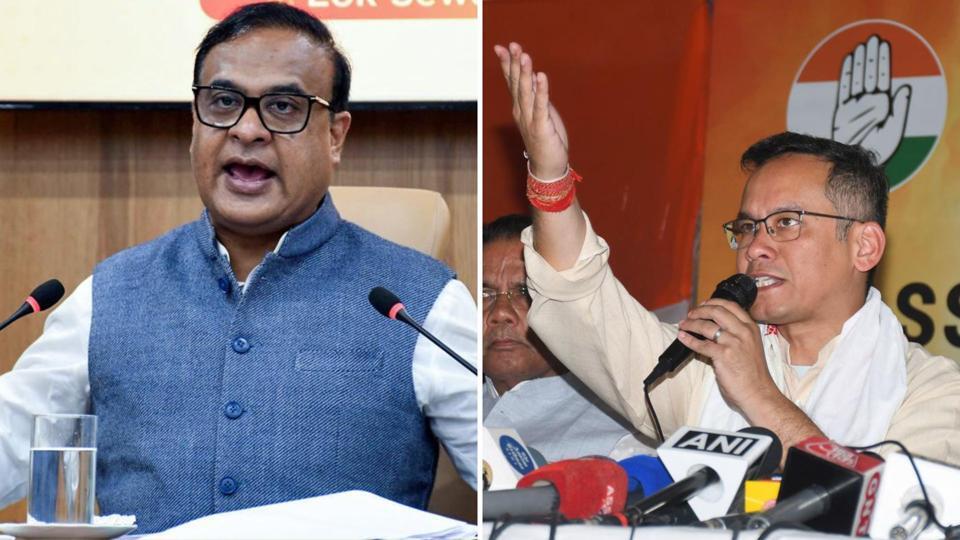
Sarma brings three decades of electoral experience, having led several successful campaigns for both the Congress and the BJP after switching sides in 2015. However, this is the first time the 57-year-old is contesting as a sitting chief minister, raising the stakes significantly.
In contrast, Gogoi, 43, the son of former chief minister Tarun Gogoi, has won three successive Lok Sabha elections since entering politics in 2014. This election marks his Assembly debut, as he leads a Congress attempting a revival after a string of defeats and defections.
Sarma has predicted a sweeping victory for the BJP and its National Democratic Alliance (NDA) allies, projecting “90-plus” seats, while Gogoi has avoided specifying numbers but has expressed confidence in halting what he describes as the BJP’s “juggernaut” in the state.
The rivalry between the two leaders, however, has a personal dimension. Gogoi’s entry into active politics in 2014 coincided with Sarma’s growing ambition within the Congress, eventually prompting his switch to the BJP in 2015, months before the assembly elections. Since then, Gogoi has repeatedly accused Sarma of “backstabbing” his father after being entrusted with key portfolios in successive Congress governments since 2001.
Since becoming chief minister in 2021, Sarma has cultivated the image of a decisive leader delivering development and welfare while projecting himself as a protector of indigenous Assamese interests through measures such as eviction drives targeting alleged illegal settlers, including Bengali-speaking Muslims.
“Sarma has used fear and development as a two-pronged strategy to win support across Assam. The roads, flyovers, bridges, investments and beneficiary schemes are one aspect while the other is playing on the threat-perception among Assamese from outsiders. He is projecting that only BJP can give development and protection from cultural aggression,” said Kaustubh Deka, professor of political science at Dibrugarh University.
Sarma has also expanded the BJP’s base by inducting several Congress leaders, including MP Pradyut Bordoloi and former state chief Bhupen Kumar Borah. At the same time, he has targeted Gogoi with allegations of being a “Pakistani agent” and questioned the British citizenship of his wife and children.
“The assumption that Sarma is the only leader who can deliver on promises has been manufactured in a big way. The very substance and meaning of democracy has been reduced to personal politics. What you see in Assam with Sarma is a miniature version of Modi at Centre,” said Akhil Ranjan Dutta, professor of political science at Gauhati University.
“Schemes given by the government are no longer seen as impersonal and impartial. It’s as if these schemes are there because Sarma is the CM and no longer seen as something done by the collective leadership of the party. There is a projection of a personality cult. That has been exploited by Sarma to the fullest,” he added.
Sarma has also fashioned a personal connection by projecting himself as ‘Mama’ (maternal uncle) to the masses, frequently sharing images and videos interacting with ‘bhagins’ (nephews and nieces) on social media. This persona, observers say, allows him to make unconventional political remarks.
“Recently Sarma commented on the marital status of Assam Jatiya Parishad president Lurinjyoti Gogoi and assured that he (Sarma) will find a bride for him. These things are not said by others in such positions. But Sarma uses these tactics to keep opponents confined to certain narratives, and trapping them in that,” Dutta said.
However, Gogoi has largely avoided being drawn into such exchanges, instead projecting himself as a clean and composed leader while countering corruption allegations against the chief minister, including those outlined in a Congress “charge sheet”.
“The way it unfolded, Gogoi should have been trapped. Had it been someone else, they would have fallen for that tactic. But Gogoi, while maintaining his innocence, didn’t let the allegations distract him and they disappeared even before the election campaign picked up,” said Dutta.
“That shows maturity on the part of Gogoi and never getting provoked or responding in an offensive way. And it has made Sarma very desperate many times,” he added.
Sarma is contesting from his stronghold of Jalukbari, which he has represented five times since 2001, while Gogoi has entered the fray from Jorhat, where he is currently the Lok Sabha MP.
With campaigning set to end on April 7, both leaders are criss-crossing the state by helicopter, holding rallies and roadshows to reach as many voters as possible. The results will be announced on May 4.