E-Paper



Lightning caused deaths of 18 elephants in Assam: Report
The report, submitted to the state government on Thursday, has been compiled after studying other reports by experts and agencies


Lightning killed 18 elephants in Assam’s Nagaon district on May 12, according to the final report on the deaths, ruling out poisoning, electrocution by humans, or disease as their causes.
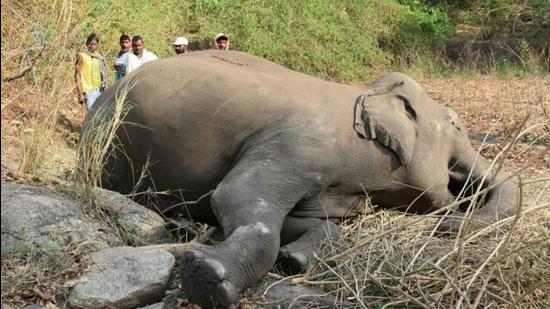
The report, submitted to the state government on Thursday, has been compiled after studying other reports by experts and agencies. “It is natural that when such a big incident like this happens some people will think the deaths to be an outcome of human intervention. But the reports of government agencies and experts show the deaths were caused by lightning,” Assam forest minister Parimal Suklabaidya said.
Guwahati’s North-Eastern Regional Disease Diagnostic Laboratory cited post-mortems of the elephants and also concluded the elephants died due to lightning. “As per in situ spot evidence, the death of the elephants in the herd may not be attributed to any infectious pathological agent or any toxin or poison.”
Also Read | Man-animal conflicts claim 14 lives in Kerala this year
Meteorological data obtained from Meghalaya-based North East Space Application Centre confirmed that lightning had taken place in Nagaon on May 12.
Since poisoning and electrocution by farmers to protect their crops from the pachyderms have been reported in Assam, it was suspected humans may have been responsible for the May 12 deaths.
“The sudden and tragic deaths of 18 elephants may not be attributed to retaliatory killing by poisoning or electrocution or any deadly disease but to the cause of accidental electrocution by lighting that occurred on the fateful day of May 12 with a strong negative lightning flash with a peak current of 39,000 amperes at 9:28 am,” the final report said.
The state government also consulted national and international experts and organisations by submitting photographic and video evidence of the site and the carcasses. “They pointed out that in there have been such mass deaths of animals due to lightning such as the one in Africa where around 400 wild buffaloes died,” said chief wildlife warden M K Yadava.